Working group
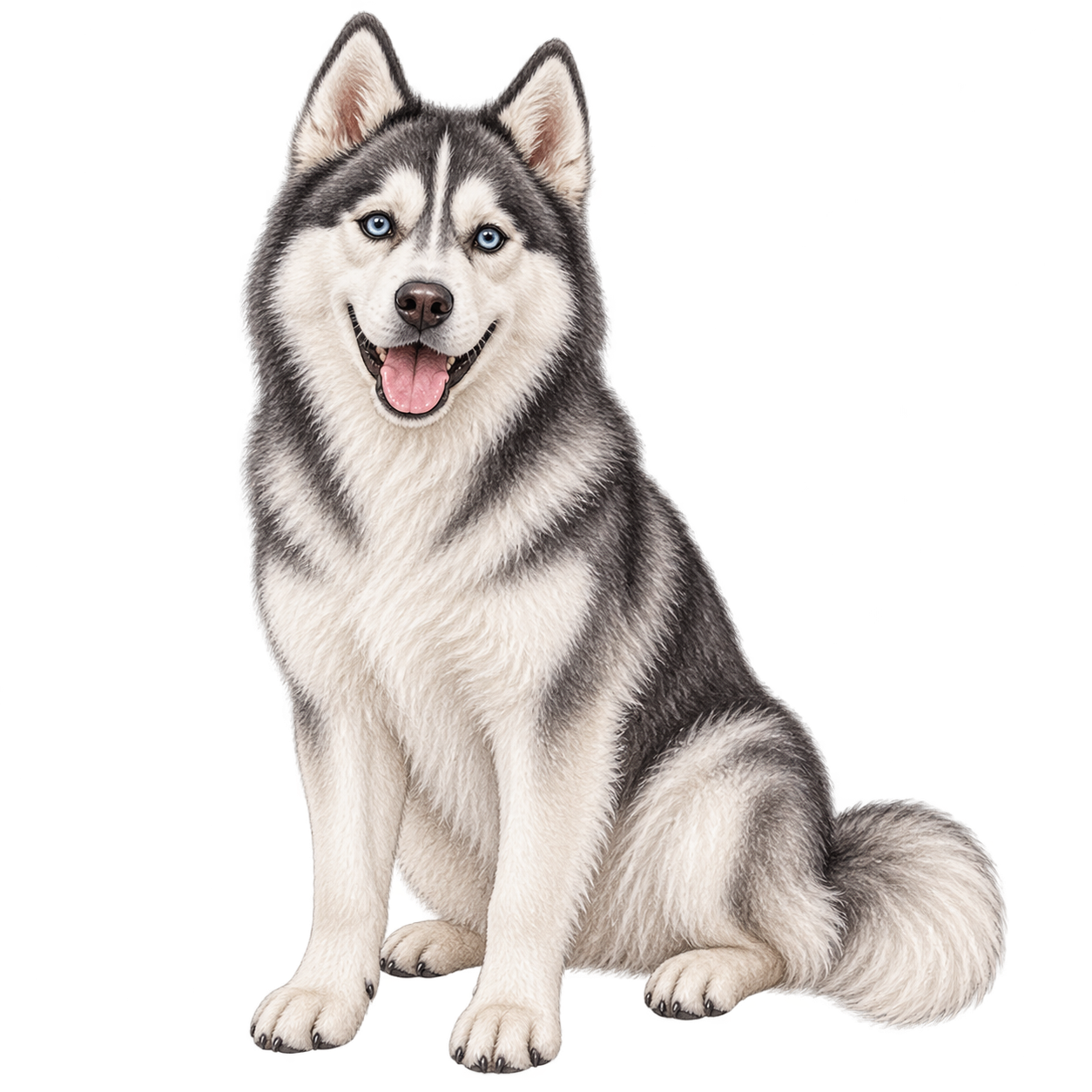
Siberian Husky
Friendly, athletic and free-spirited — a sled dog built to run.
Siberian Huskies are energetic, friendly sled dogs with striking looks. They are social and gentle, but independent, escape-prone and vocal, and they need lots of exercise and secure containment.
- Height
- 20–23.5 in51–60 cm
- Weight
- 35–60 lb16–27 kg
- Life expectancy
- 12–14 years
- Size
- Medium
- Group
- Working
- Origin
- Siberia
Coat: Medium-length, dense double coat. Colours: Black and white, Grey and white, Red and white, Agouti, Sable, White.
At a glance
Ratings describe typical dogs of the breed on a 1–5 scale. Individual dogs vary with lines, upbringing and training.
Temperament
Huskies are outgoing, playful and good-natured. They love people, usually get along with other dogs and are rarely aggressive. They make poor guard dogs.
They were bred to run long distances and think independently, so recall is unreliable and escape attempts are common. Many howl and “talk”. Strong prey drive toward small animals.
Living with a Siberian Husky
Exercise
Needs two hours of vigorous exercise daily. Excellent for running, hiking and sledding.
Grooming
Weekly brushing; massive seasonal shedding (“blowing coat”).
Training
Smart but independent. Keep training varied and use a lead or secure area.
Kids & other pets
Great with children and other dogs; may chase cats and small animals.
Time alone
Bored Huskies howl, dig and escape. Secure fencing is essential.
Home fit
Best suited to a house with secure outdoor space; apartment living is hard on this breed and its neighbours.
Is a Siberian Husky right for you?
Take the Breed Fit quiz to see how a Siberian Husky matches your home, schedule and tolerance for shedding, barking and exercise — or find out which breed matches your personality with Dogsona.
Health
With good breeding and care, a Siberian Husky typically lives 12–14 years. These are the conditions most associated with the breed — not a prediction for any individual dog.
Juvenile cataracts
Inherited cataracts can appear from under a year old; annual eye exams catch them early.
Progressive retinal atrophy
An X-linked form occurs in the breed.
Hip dysplasia
Less common than in many large breeds, but screened parents still reduce the risk.
Hypothyroidism
An underactive thyroid causing weight gain and coat problems; treatable with daily medication.
Zinc-responsive dermatosis
A skin condition requiring zinc supplementation.
Ask a breeder for
- Hip evaluation
- Annual eye examination
Sources: OFA CHIC breed requirements: Siberian Husky; Siberian Husky Club of America. This is general information, not veterinary advice — talk to your vet about your own dog.
Cost to own
After the first year, expect roughly $1,200–$2,500 a year for food, routine vet care, preventives, insurance and supplies (US estimate).
- Pet insurance for a puppy typically runs $30–$60 a month; premiums rise with age and breed risk.
History
The Chukchi people of Siberia bred Huskies as sled dogs capable of travelling long distances in extreme cold.
Huskies came to Alaska in the early 1900s. In 1925 teams of sled dogs, including Huskies led by Togo and Balto, carried diphtheria serum to Nome. The AKC recognised the breed in 1930.
Did you know?
- Huskies can have blue eyes, brown eyes or one of each.
- Togo ran the longest and most dangerous leg of the 1925 serum run.
- Huskies rarely bark but often howl.
Library guides for Siberian Husky owners
Grooming
Brushing
A brushing routine keeps Siberian Husky shedding under control.
Grooming
Bathing
How to bath a Siberian Husky without drying out the coat.
Training
Come (Recall)
High chase drive makes a reliable recall essential.
Training
Heel and Loose-Leash Walking
A strong Siberian Husky needs loose-lead manners early.
Exercise & Play
Fetch
A fast way to meet a high exercise need.
Exercise & Play
Dog Road Work
Structured conditioning for high-stamina dogs.
Similar breeds
Frequently asked questions
- Are Huskies good family dogs?
- Yes, for active families who can meet their exercise needs.
- Do Huskies shed a lot?
- Yes, heavily twice a year.
- Can Huskies be off lead?
- Rarely. They are prone to running off.