Working group
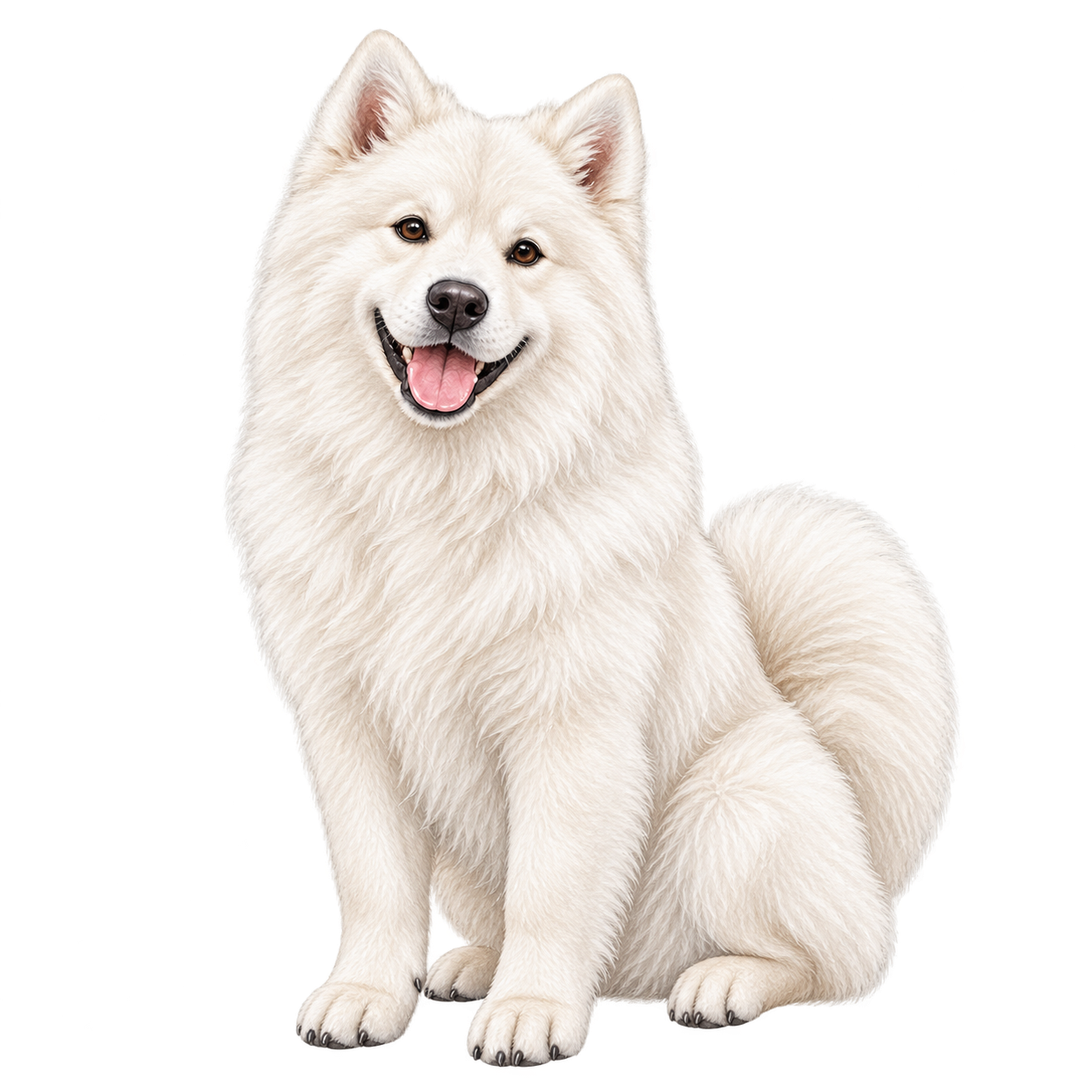
Samoyed
Smiling, sociable and snow-white — a friendly Arctic worker with a big coat.
Samoyeds are cheerful, people-loving spitz dogs bred to herd reindeer and pull sleds in Siberia. They are gentle family dogs, but they shed enormously, bark and need plenty of exercise.
- Height
- 19–23.5 in48–60 cm
- Weight
- 35–65 lb16–29 kg
- Life expectancy
- 12–14 years
- Size
- Medium
- Group
- Working
- Origin
- Siberia
Coat: Thick, weather-resistant double coat. Colours: White, Cream, Biscuit, White and biscuit.
At a glance
Ratings describe typical dogs of the breed on a 1–5 scale. Individual dogs vary with lines, upbringing and training.
Temperament
Samoyeds are friendly, playful and social. They adore their families, usually greet strangers warmly and are good with children and other dogs. The famous “Sammy smile” matches their temperament.
They are also independent, vocal and energetic. Bored Samoyeds dig, bark and chew. They do not like being left alone for long periods.
Living with a Samoyed
Exercise
Needs 60–90 minutes daily. Loves hiking, running and pulling. Avoid hard exercise in heat.
Grooming
Brush several times a week; daily during heavy sheds. The coat sheds “snow” throughout the house.
Training
Smart but independent. Reward-based training with lots of variety works best.
Kids & other pets
Excellent with children and other dogs — friendly, gentle and playful. Herding instincts can show as chasing or nipping in young dogs.
Time alone
Social dogs that dislike isolation. Left alone for long periods they howl, dig and chew; a companion dog or midday walk helps.
Home fit
Best suited to a house with secure outdoor space; apartment living is hard on this breed and its neighbours.
Is a Samoyed right for you?
Take the Breed Fit quiz to see how a Samoyed matches your home, schedule and tolerance for shedding, barking and exercise — or find out which breed matches your personality with Dogsona.
Health
With good breeding and care, a Samoyed typically lives 12–14 years. These are the conditions most associated with the breed — not a prediction for any individual dog.
Hip dysplasia
Screened parents reduce risk; keep Samoyeds lean and fit.
Samoyed hereditary glomerulopathy
An X-linked inherited kidney disease that mainly affects young males and causes early kidney failure.
Progressive retinal atrophy
An X-linked form occurs in the breed; DNA testing is available.
Diabetes mellitus
Samoyeds develop diabetes more often than average; watch for increased thirst and urination.
Hypothyroidism
An underactive thyroid causing weight gain and coat problems; treatable with daily medication.
Ask a breeder for
- Hip evaluation
- Eye examination
- Cardiac examination
- DNA test for X-linked PRA
Sources: OFA CHIC breed requirements: Samoyed; Samoyed Club of America. This is general information, not veterinary advice — talk to your vet about your own dog.
Cost to own
After the first year, expect roughly $1,200–$2,500 a year for food, routine vet care, preventives, insurance and supplies (US estimate).
- Professional grooming every 6–8 weeks adds roughly $500–$900 a year.
- Pet insurance for a puppy typically runs $30–$60 a month; premiums rise with age and breed risk.
History
The breed is named after the Samoyede (Nenets) people of Siberia, who used the dogs to herd reindeer, pull sleds and keep families warm at night.
Explorers brought Samoyeds to Europe in the late 1800s, and they took part in polar expeditions, including Roald Amundsen’s journey to the South Pole. The AKC recognised the breed in 1906.
Did you know?
- The upturned mouth — the “Sammy smile” — helps prevent drool freezing on the face.
- Samoyed fur can be spun into yarn.
- Samoyeds took part in early polar expeditions.
Library guides for Samoyed owners
Grooming
Brushing
Samoyed coats mat without regular brushing.
Grooming
Bathing
How to bath a Samoyed without drying out the coat.
Exercise & Play
Tug of War
An energy outlet that also builds impulse control.
Grooming
Ear Cleaning
Ear care matters for this coat and ear type.
Exercise & Play
Dog Walking
Getting daily walks right for a Samoyed.
Grooming
Nail Clipping
Every dog needs regular nail care.
Similar breeds
Frequently asked questions
- Do Samoyeds shed a lot?
- Yes, heavily — especially during seasonal sheds.
- Are Samoyeds good family dogs?
- Yes, they are friendly and gentle with children.
- Can Samoyeds live in hot climates?
- They can adapt with care, shade and air conditioning, but struggle in extreme heat.