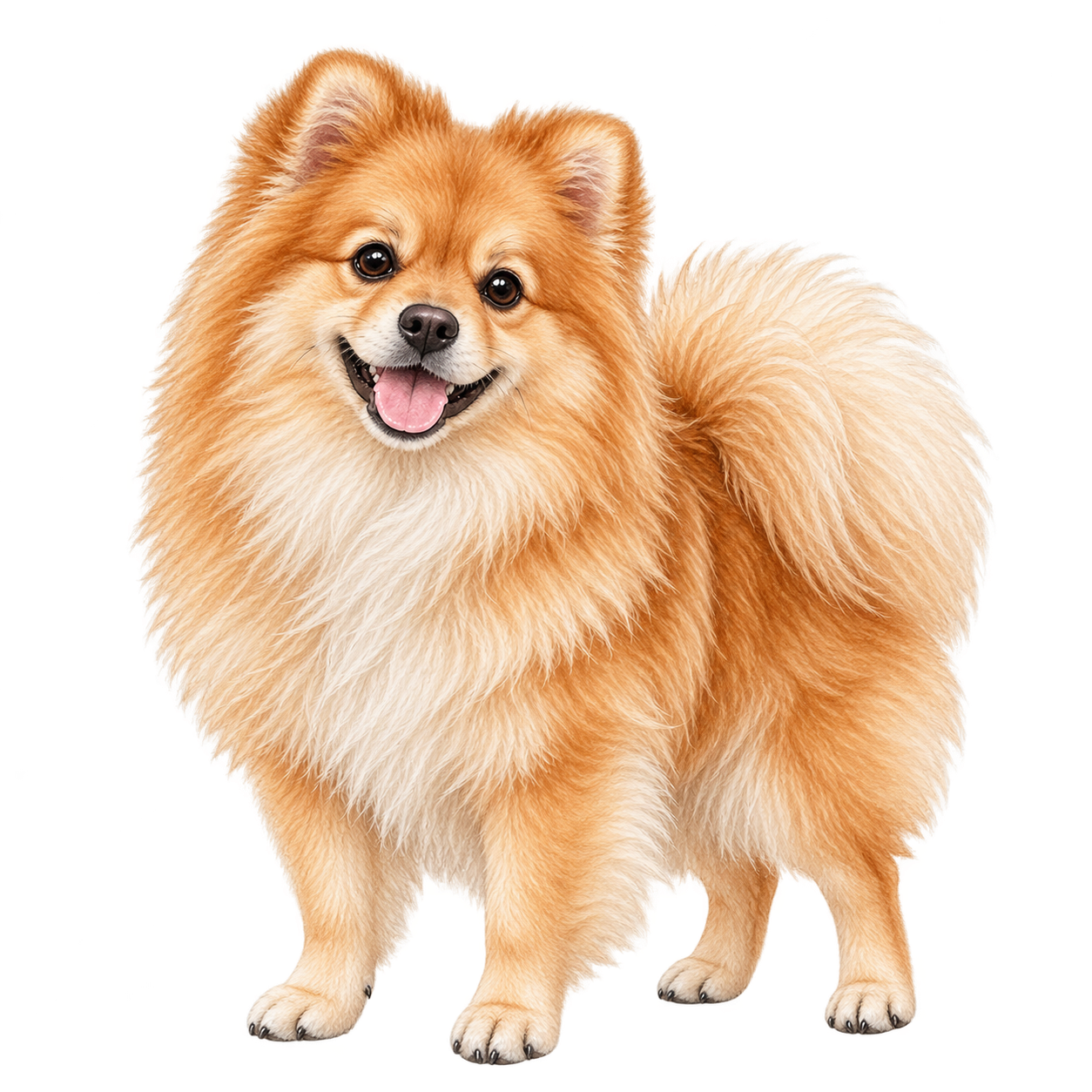
Toy group
Pomeranian
A fluffy, fearless toy spitz with a big bark and bigger confidence.
Pomeranians are tiny, extroverted spitz dogs with luxurious coats. They are lively, affectionate companions for adults and older children, but they are vocal, fragile and prone to dental and joint problems.
- Height
- 6–7 in15–18 cm
- Weight
- 3–7 lb1–3 kg
- Life expectancy
- 12–16 years
- Size
- Toy
- Group
- Toy
- Origin
- Pomerania (Germany and Poland)
Coat: Thick double coat with a profuse ruff. Colours: Orange, Cream, Black, White, Sable, Parti, Merle, Chocolate.
At a glance
Ratings describe typical dogs of the breed on a 1–5 scale. Individual dogs vary with lines, upbringing and training.
Temperament
Poms are bold, curious and lively, often acting much bigger than they are. They love attention, learn tricks quickly and make alert watchdogs.
They can be yappy, bossy with larger dogs and wary of strangers without socialisation. Their small size makes them easy to injure.
Living with a Pomeranian
Exercise
Two short walks and indoor play daily — 30 minutes or so. Poms are lively, but their small joints do not need long mileage.
Grooming
Brush several times a week; heavy seasonal shedding. Daily tooth brushing is important.
Training
Smart and quick to learn. House-training takes consistency. Teach a “quiet” cue.
Kids & other pets
Best with adults or older children who handle them gently. A fall from arms or furniture can break legs. Often bossy with larger dogs.
Time alone
Tolerates moderate alone time but may bark at noises. Start alone-time practice early and keep them away from window perches.
Home fit
Adapts well to apartments and smaller homes when daily needs are met.
Is a Pomeranian right for you?
Take the Breed Fit quiz to see how a Pomeranian matches your home, schedule and tolerance for shedding, barking and exercise — or find out which breed matches your personality with Dogsona.
Health
With good breeding and care, a Pomeranian typically lives 12–16 years. These are the conditions most associated with the breed — not a prediction for any individual dog.
Patellar luxation
Loose kneecaps are common in Poms; watch for skipping or hopping on a back leg.
Tracheal collapse
Causes a honking cough; use a harness.
Alopecia X
A coat condition causing hair loss, sometimes called “black skin disease”.
Dental disease
Crowded teeth need daily brushing.
Hypoglycaemia
Puppies can develop low blood sugar.
Ask a breeder for
- Patella evaluation
- Cardiac examination
- Eye examination
Sources: OFA CHIC breed requirements: Pomeranian; American Pomeranian Club. This is general information, not veterinary advice — talk to your vet about your own dog.
Cost to own
After the first year, expect roughly $900–$1,800 a year for food, routine vet care, preventives, insurance and supplies (US estimate).
- Professional grooming every 6–8 weeks adds roughly $500–$900 a year.
- Pet insurance for a puppy typically runs $30–$60 a month; premiums rise with age and breed risk.
History
Pomeranians descend from larger Arctic spitz dogs used for herding and sledding. They are named after Pomerania, a region on the Baltic coast.
Queen Victoria popularised smaller Poms in the late 1800s, and breeders reduced the size dramatically. The AKC recognised the breed in 1888.
Did you know?
- Two Pomeranians survived the sinking of the Titanic.
- Early Pomeranians weighed up to 30 lb.
- Queen Victoria’s favourite Pomeranian, Turi, was reportedly at her bedside when she died in 1901.
Library guides for Pomeranian owners
Grooming
Brushing
Pomeranian coats mat without regular brushing.
Grooming
Bathing
How to bath a Pomeranian without drying out the coat.
Grooming
Ear Cleaning
Ear care matters for this coat and ear type.
Exercise & Play
Dog Walking
Getting daily walks right for a Pomeranian.
Grooming
Nail Clipping
Every dog needs regular nail care.
New Dog Owners
How to find a reputable dog breeder
What to ask a Pomeranian breeder about health screening.
Similar breeds

Frequently asked questions
- Are Pomeranians good with kids?
- Better with older children; they are fragile and may snap if handled roughly.
- Do Pomeranians shed?
- Yes, especially during seasonal sheds.
- Do Pomeranians bark a lot?
- They are alert and vocal; training helps.