Working group
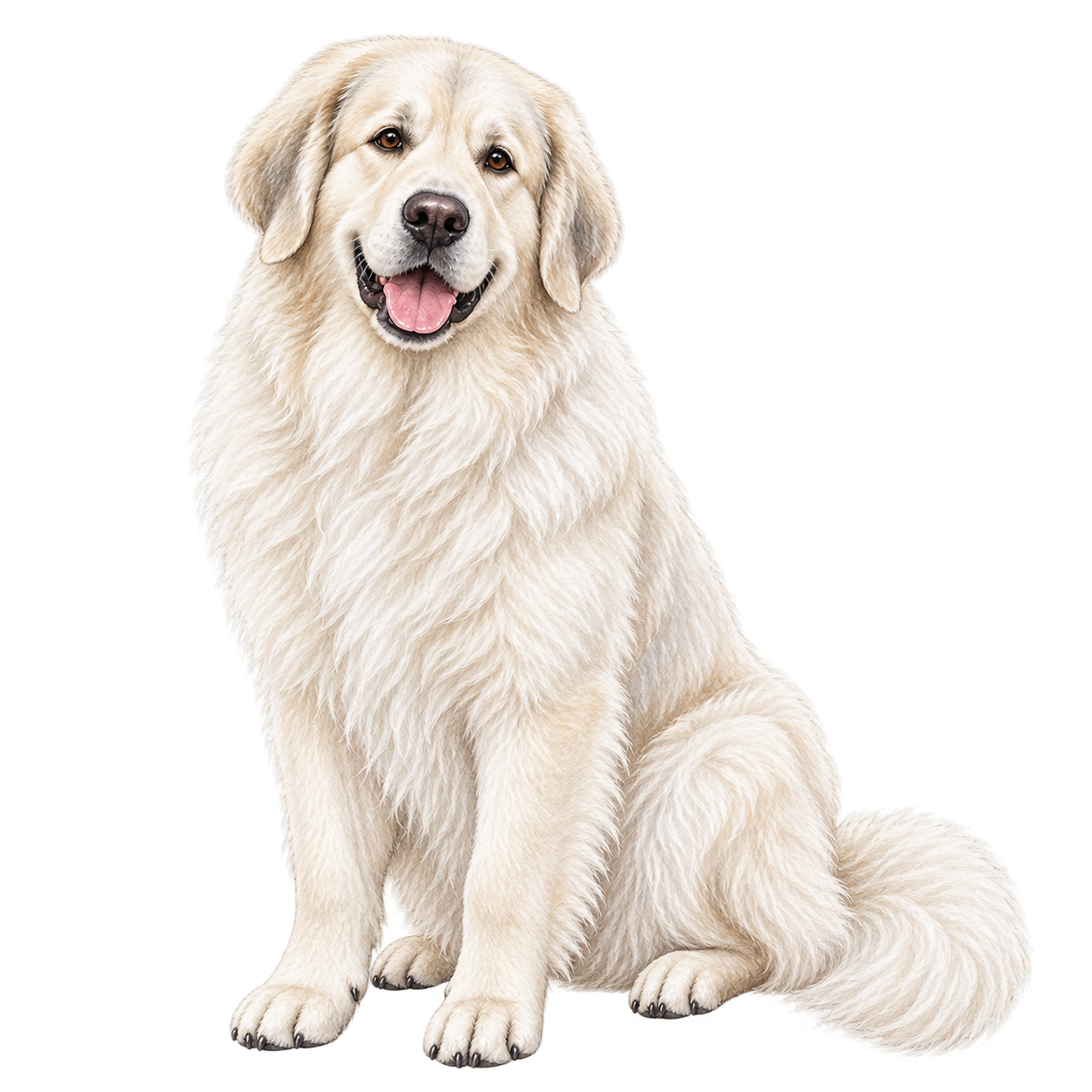
Great Pyrenees
Calm, majestic and independent — a livestock guardian at heart.
Great Pyrenees are serene, patient guardians bred to protect sheep from wolves and bears. They are gentle with family but independent, protective and nocturnal barkers who need secure fencing and a tolerant owner.
- Height
- 25–32 in64–81 cm
- Weight
- 85–160 lb39–73 kg
- Life expectancy
- 10–12 years
- Size
- Giant
- Group
- Working
- Origin
- Pyrenees Mountains (France and Spain)
Coat: Long, thick, weather-resistant double coat. Colours: White, White with badger, grey, tan or reddish markings.
At a glance
Ratings describe typical dogs of the breed on a 1–5 scale. Individual dogs vary with lines, upbringing and training.
Temperament
Pyrs are calm, affectionate and devoted to “their” flock — which at home means family and pets. They are patient with children and often gentle with small animals they know.
They were bred to make decisions alone, so they are not eager-to-please. They patrol, bark (especially at night) at perceived threats and may wander if not fenced. Recall is notoriously unreliable.
Living with a Great Pyrenees
Exercise
Moderate: 30–60 minutes of walking daily. They prefer patrolling to running. Keep them cool in summer.
Grooming
Brush weekly, daily during heavy sheds. The coat sheds dirt well but produces lots of hair. Check the double rear dewclaws.
Training
Independent and slow to respond. Keep training short, patient and reward-based. Always use a lead or secure fencing.
Kids & other pets
Gentle and protective with children and pets. May be wary of unfamiliar dogs and people.
Time alone
Comfortable alone if they have a territory to watch, but may bark a lot.
Home fit
Best suited to a house with secure outdoor space; apartment living is hard on this breed and its neighbours.
Is a Great Pyrenees right for you?
Take the Breed Fit quiz to see how a Great Pyrenees matches your home, schedule and tolerance for shedding, barking and exercise — or find out which breed matches your personality with Dogsona.
Health
With good breeding and care, a Great Pyrenees typically lives 10–12 years. These are the conditions most associated with the breed — not a prediction for any individual dog.
Hip dysplasia
Common in giant breeds; screened parents help.
Patellar luxation
Occurs more than expected for the breed size.
Gastric dilatation-volvulus (bloat)
A risk in deep-chested breeds.
Osteosarcoma
Bone cancer is more common in giant breeds.
Canine multifocal retinopathy
An inherited eye condition; DNA testing is available.
Ask a breeder for
- Hip evaluation
- Patella evaluation
- Elbow evaluation
- DNA test for canine multifocal retinopathy
Sources: OFA CHIC breed requirements: Great Pyrenees; Great Pyrenees Club of America. This is general information, not veterinary advice — talk to your vet about your own dog.
Cost to own
After the first year, expect roughly $2,000–$4,000 a year for food, routine vet care, preventives, insurance and supplies (US estimate).
- Food, medication and anaesthesia are dosed by weight, so every vet visit costs more for a big dog.
- Pet insurance for a puppy typically runs $30–$60 a month; premiums rise with age and breed risk.
History
Great Pyrenees guarded flocks in the Pyrenees Mountains for centuries. In the 17th century French nobility adopted them as estate guardians, and the Dauphin declared the breed the Royal Dog of France in 1675.
The breed nearly vanished in its homeland in the early 1900s but was rebuilt from mountain stock. The AKC recognised it in 1933. Pyrs still work as livestock guardians worldwide.
Did you know?
- Great Pyrenees have double dewclaws on their hind legs.
- They were declared the Royal Dog of France in 1675.
- Livestock guardian Pyrs often work alone with their flock for days.
Library guides for Great Pyrenees owners
Grooming
Brushing
A brushing routine keeps Great Pyrenees shedding under control.
Grooming
Bathing
How to bath a Great Pyrenees without drying out the coat.
Training
Come (Recall)
High chase drive makes a reliable recall essential.
Training
Heel and Loose-Leash Walking
A strong Great Pyrenees needs loose-lead manners early.
Grooming
Ear Cleaning
Ear care matters for this coat and ear type.
Exercise & Play
Dog Walking
Getting daily walks right for a Great Pyrenees.
Similar breeds
Frequently asked questions
- Do Great Pyrenees bark a lot?
- Yes, especially at night. It is part of their guardian instinct.
- Are Great Pyrenees good family dogs?
- Yes, for patient owners who accept independence and barking. They are gentle with children.
- Can Great Pyrenees be off lead?
- Rarely. They tend to roam and ignore recall.