Working group
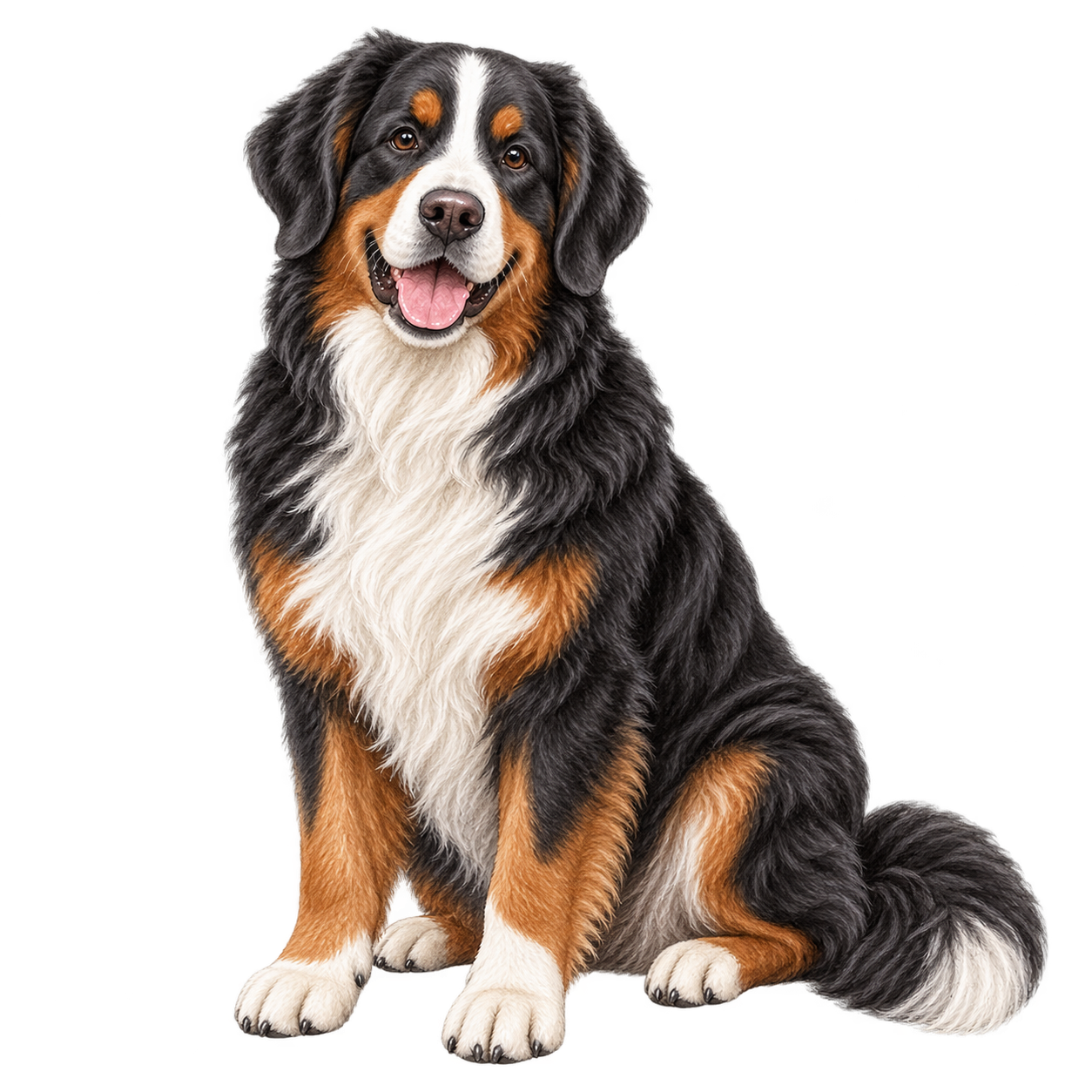
Bernese Mountain Dog
A gentle giant in a tricolour coat — calm, loyal and devoted to family.
Bernese Mountain Dogs are good-natured Swiss farm dogs with a calm, affectionate temperament. They are superb family companions, but their size, heavy shedding, heat sensitivity and short lifespan need to be understood before you commit.
- Height
- 23–27.5 in58–70 cm
- Weight
- 70–115 lb32–52 kg
- Life expectancy
- 7–10 years
- Size
- Giant
- Group
- Working
- Origin
- Switzerland
Coat: Thick, moderately long double coat. Colours: Tricolour: black, rust and white.
At a glance
Ratings describe typical dogs of the breed on a 1–5 scale. Individual dogs vary with lines, upbringing and training.
Temperament
Berners are gentle, patient and deeply attached to their people. They are usually friendly with visitors after a polite pause and very tolerant of children. Most are moderately active outdoors and calm indoors once past adolescence.
They can be sensitive and slow to mature, and some are shy without good early socialisation. As puppies they grow quickly into powerful dogs, so early lead manners are essential.
Living with a Bernese Mountain Dog
Exercise
About an hour of moderate exercise daily — walks, hikes, cart pulling. Avoid heat and humidity; Berners overheat easily.
Grooming
Brush several times a week and daily during seasonal sheds. Berners shed a lot. Check ears, trim feet and keep nails short.
Training
Willing and sensitive; reward-based training works best. Teach loose-lead walking and polite greetings while the puppy is still small.
Kids & other pets
Outstanding with children and generally friendly with other dogs and pets.
Time alone
Berners want to be with their people and can become anxious or destructive when isolated for long periods.
Home fit
Best suited to a house with secure outdoor space; apartment living is hard on this breed and its neighbours.
Is a Bernese Mountain Dog right for you?
Take the Breed Fit quiz to see how a Bernese Mountain Dog matches your home, schedule and tolerance for shedding, barking and exercise — or find out which breed matches your personality with Dogsona.
Health
With good breeding and care, a Bernese Mountain Dog typically lives 7–10 years. These are the conditions most associated with the breed — not a prediction for any individual dog.
Cancer
Berners have one of the highest cancer rates of any breed, especially histiocytic sarcoma. Ask breeders about the ages and causes of death in their lines.
Hip and elbow dysplasia
Common; screened parents and controlled puppy growth help.
Degenerative myelopathy
A progressive spinal disease; DNA testing identifies at-risk dogs.
Gastric dilatation-volvulus (bloat)
Deep-chested giants are at elevated risk.
Cranial cruciate ligament tears
Heavy, fast-growing dogs are prone to knee injuries.
Ask a breeder for
- Hip and elbow evaluation
- Eye and cardiac examinations
- DNA test for degenerative myelopathy
Sources: OFA CHIC breed requirements: Bernese Mountain Dog; Bernese Mountain Dog Club of America; Berner-Garde Foundation. This is general information, not veterinary advice — talk to your vet about your own dog.
Cost to own
After the first year, expect roughly $2,000–$4,000 a year for food, routine vet care, preventives, insurance and supplies (US estimate).
- Professional grooming every 6–8 weeks adds roughly $500–$900 a year.
- Food, medication and anaesthesia are dosed by weight, so every vet visit costs more for a big dog.
- Pet insurance for a puppy typically runs $30–$60 a month; premiums rise with age and breed risk.
History
The breed descends from mastiff-type dogs brought to Switzerland by the Romans. In the canton of Bern, farmers used them to drive cattle, guard farms and pull carts of milk and cheese to market — earning the name “Dürrbächler” after a local inn.
By the late 1800s the breed was in decline. Professor Albert Heim and others championed it, and a Swiss club formed in 1907. The AKC recognised the Bernese in 1937.
Did you know?
- Berners still compete in drafting (cart-pulling) events.
- The Bernese is one of four Swiss Sennenhund breeds, alongside the Greater Swiss, Appenzeller and Entlebucher.
- The white “Swiss kiss” on the neck is a prized marking.
Library guides for Bernese Mountain Dog owners
Grooming
Brushing
Bernese Mountain Dog coats mat without regular brushing.
Grooming
Bathing
How to bath a Bernese Mountain Dog without drying out the coat.
Training
Heel and Loose-Leash Walking
A strong Bernese Mountain Dog needs loose-lead manners early.
Grooming
Ear Cleaning
Ear care matters for this coat and ear type.
Exercise & Play
Dog Walking
Getting daily walks right for a Bernese Mountain Dog.
Grooming
Nail Clipping
Every dog needs regular nail care.
Similar breeds
Frequently asked questions
- How long do Bernese Mountain Dogs live?
- Typically 7 to 10 years, largely due to cancer. Choosing a breeder who tracks longevity matters.
- Do Bernese Mountain Dogs shed a lot?
- Yes, heavily and year-round, with bigger seasonal moults.
- Are Berners good with kids?
- Yes — they are famously gentle and patient with children.