Working group
Greater Swiss Mountain Dog
The largest Swiss mountain dog — a gentle, hard-working family giant.
Greater Swiss Mountain Dogs, or “Swissies”, are big, strong drafting and farm dogs with a short tricolour coat. They are affectionate and good with families, but powerful, slow to mature and prone to some serious health issues.
- Height
- 23.5–28.5 in60–72 cm
- Weight
- 85–140 lb39–64 kg
- Life expectancy
- 8–11 years
- Size
- Giant
- Group
- Working
- Origin
- Switzerland
Coat: Short, dense double coat. Colours: Tricolour: black, rust and white.
At a glance
Ratings describe typical dogs of the breed on a 1–5 scale. Individual dogs vary with lines, upbringing and training.
Temperament
Swissies are loyal, gentle and eager to be with their family. They are usually good with children and make alert, confident watchdogs with a big bark.
They mature slowly and can be boisterous and pushy as adolescents. Many love food and will steal it. Early lead training matters because adults are very strong.
Living with a Greater Swiss Mountain Dog
Exercise
About an hour a day of walks, hikes and drafting or carting. Avoid hot weather and forced exercise while young.
Grooming
Weekly brushing; heavy shedding twice a year. The short coat is otherwise easy to maintain.
Training
Willing but sometimes stubborn; reward-based training and early socialisation work well. Teach calm manners early.
Kids & other pets
Excellent with children and usually fine with other dogs, though big and boisterous when young.
Time alone
Swissies want to be with their people; long isolation can lead to chewing or barking.
Home fit
Best suited to a house with secure outdoor space; apartment living is hard on this breed and its neighbours.
Is a Greater Swiss Mountain Dog right for you?
Take the Breed Fit quiz to see how a Greater Swiss Mountain Dog matches your home, schedule and tolerance for shedding, barking and exercise — or find out which breed matches your personality with Dogsona.
Health
With good breeding and care, a Greater Swiss Mountain Dog typically lives 8–11 years. These are the conditions most associated with the breed — not a prediction for any individual dog.
Splenic torsion and bloat
The spleen or stomach can twist; both are emergencies. Learn the warning signs.
Hip and elbow dysplasia
Screened parents reduce the risk of joint disease.
Epilepsy
Idiopathic seizures occur in the breed and are managed with medication.
Lick fits
Episodes of frantic licking and swallowing, possibly linked to gastrointestinal upset.
Urinary incontinence
More common in spayed females; usually manageable with medication.
Ask a breeder for
- Hip and elbow evaluation
- Shoulder (OCD) evaluation
- Eye examination
Sources: OFA CHIC breed requirements: Greater Swiss Mountain Dog; Greater Swiss Mountain Dog Club of America. This is general information, not veterinary advice — talk to your vet about your own dog.
Cost to own
After the first year, expect roughly $2,000–$4,000 a year for food, routine vet care, preventives, insurance and supplies (US estimate).
- Food, medication and anaesthesia are dosed by weight, so every vet visit costs more for a big dog.
- Pet insurance for a puppy typically runs $30–$60 a month; premiums rise with age and breed risk.
History
The Swissy is the oldest and largest of the four Swiss Sennenhund breeds. It worked on Swiss farms pulling carts, driving cattle and guarding homes, and was sometimes called the “poor man’s horse”.
By 1900 the breed was nearly gone. Professor Albert Heim championed its revival in 1908, and it was recognised in Switzerland in 1909. The AKC recognised the Greater Swiss Mountain Dog in 1995.
Did you know?
- Swissies are the largest of the four Swiss mountain dog breeds.
- They were known as the “poor man’s horse” for pulling carts.
- The breed was revived largely through the work of Professor Albert Heim.
Library guides for Greater Swiss Mountain Dog owners
Training
Heel and Loose-Leash Walking
A strong Greater Swiss Mountain Dog needs loose-lead manners early.
Exercise & Play
Tug of War
An energy outlet that also builds impulse control.
Exercise & Play
Dog Walking
Getting daily walks right for a Greater Swiss Mountain Dog.
Grooming
Nail Clipping
Every dog needs regular nail care.
New Dog Owners
How to find a reputable dog breeder
What to ask a Greater Swiss Mountain Dog breeder about health screening.
New Dog Owners
The real cost of a puppy: what to budget before you bring one home
Budget for the first year and beyond.
Similar breeds
Frequently asked questions
- Swissy vs Bernese Mountain Dog?
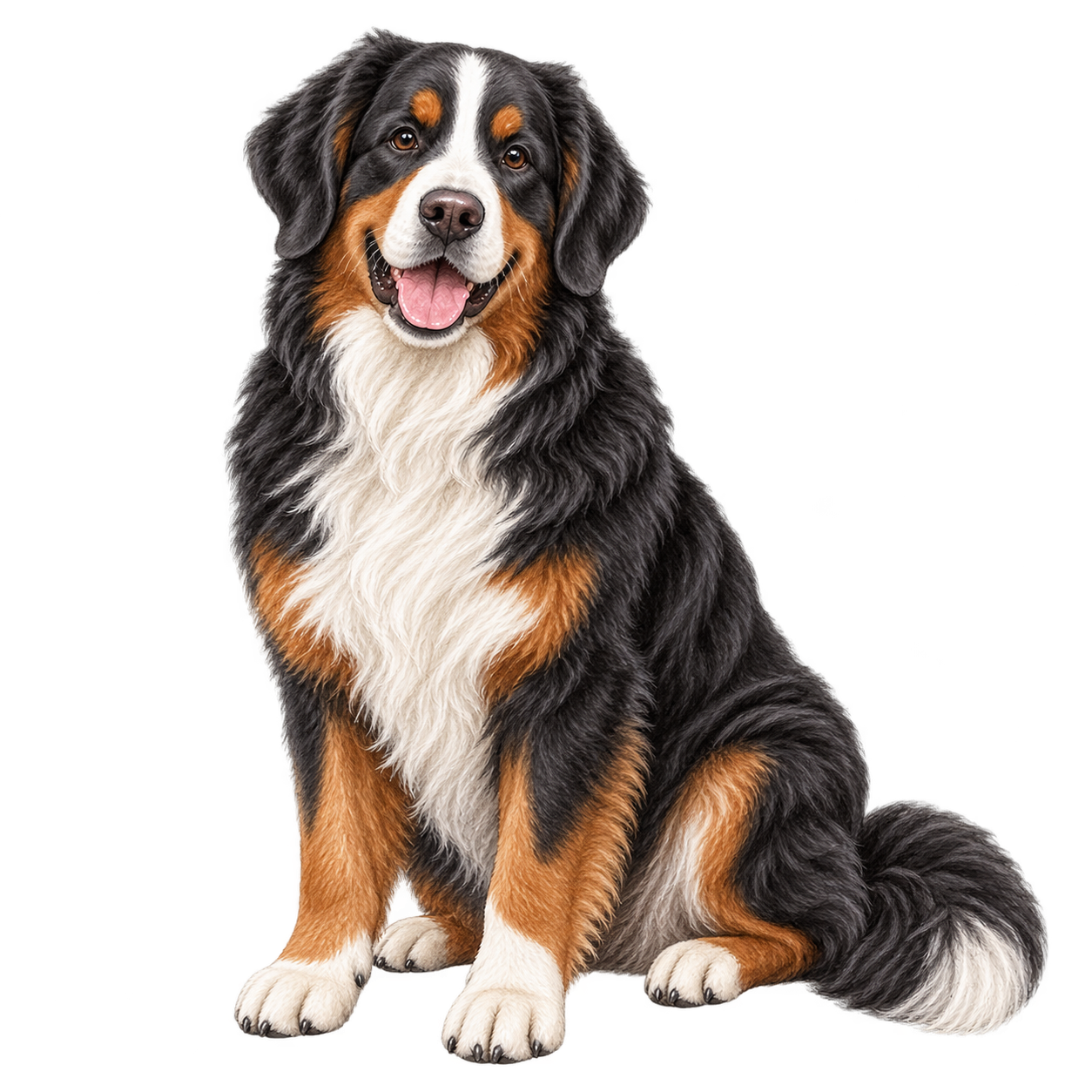
- Swissies have a short coat and are slightly larger; Berners have a long coat. Both are gentle family dogs.
- Are Greater Swiss Mountain Dogs good family dogs?
- Yes — they are affectionate and good with children, with enough space and exercise.
- Do Swissies shed?
- Yes, moderately year-round and heavily twice a year.