Working group
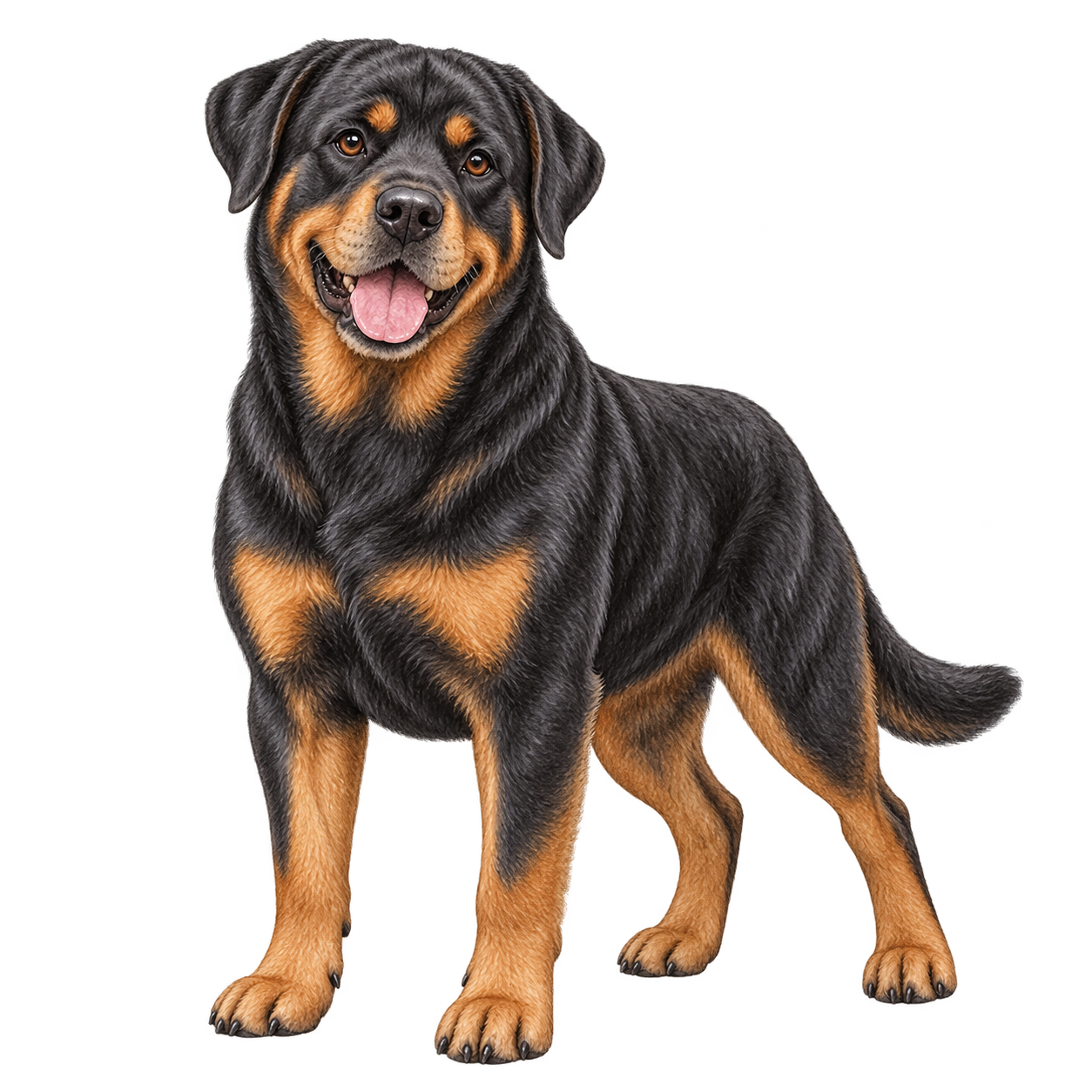
Rottweiler
Confident, loyal and powerful — a calm guardian with a soft side.
Rottweilers are strong, intelligent working dogs bred to drive cattle and guard property. They are devoted, affectionate family dogs when well bred and trained, but their strength and protectiveness require responsible ownership.
- Height
- 22–27 in56–69 cm
- Weight
- 80–135 lb36–61 kg
- Life expectancy
- 9–10 years
- Size
- Large
- Group
- Working
- Origin
- Rottweil, Germany
Coat: Short, coarse double coat. Colours: Black and tan, Black and mahogany, Black and rust.
At a glance
Ratings describe typical dogs of the breed on a 1–5 scale. Individual dogs vary with lines, upbringing and training.
Temperament
Rottweilers are calm, confident and courageous. They bond closely with their families and can be playful and clownish at home. They are naturally reserved with strangers and protective of their home.
Without early socialisation and consistent training, that protectiveness can become a problem. They can be dominant with other dogs. They need an owner who is calm, consistent and committed.
Living with a Rottweiler
Exercise
At least an hour of daily exercise, including walks and training. Avoid forced running while young.
Grooming
Weekly brushing with a rubber curry or bristle brush; heavier shedding in spring and autumn. Check ears and trim nails regularly.
Training
Essential. Start socialisation and obedience early, and keep training consistent throughout life.
Kids & other pets
Loyal and protective with their own children; supervise with young kids due to size. Can be selective with other dogs.
Time alone
Tolerates moderate alone time with exercise and secure fencing.
Home fit
Best suited to a house with secure outdoor space; apartment living is hard on this breed and its neighbours.
Is a Rottweiler right for you?
Take the Breed Fit quiz to see how a Rottweiler matches your home, schedule and tolerance for shedding, barking and exercise — or find out which breed matches your personality with Dogsona.
Health
With good breeding and care, a Rottweiler typically lives 9–10 years. These are the conditions most associated with the breed — not a prediction for any individual dog.
Osteosarcoma
Bone cancer is more common in Rottweilers than most breeds.
Hip and elbow dysplasia
Screened parents help reduce risk.
Subaortic stenosis
An inherited narrowing below the aortic valve that strains the heart; parents should be cleared by a cardiologist.
Cranial cruciate ligament tears
Common in heavy, muscular dogs.
Juvenile laryngeal paralysis and polyneuropathy (JLPP)
An inherited neurological disease; DNA testing is available.
Ask a breeder for
- Hip and elbow evaluation
- Cardiac examination
- Eye examination
- DNA test for JLPP
Sources: OFA CHIC breed requirements: Rottweiler; American Rottweiler Club. This is general information, not veterinary advice — talk to your vet about your own dog.
Cost to own
After the first year, expect roughly $1,500–$3,000 a year for food, routine vet care, preventives, insurance and supplies (US estimate).
- Food, medication and anaesthesia are dosed by weight, so every vet visit costs more for a big dog.
- Pet insurance for a puppy typically runs $30–$60 a month; premiums rise with age and breed risk.
History
Rottweilers descend from Roman drover dogs that accompanied armies across the Alps. In the German town of Rottweil, they drove cattle to market and guarded butchers’ money — earning the name “Rottweiler Metzgerhund” (butcher’s dog).
When railways replaced cattle drives, the breed declined, but it found new roles as a police and military dog. The AKC recognised the Rottweiler in 1931.
Did you know?
- Rottweilers were among the first breeds used as police dogs.
- They were once used to pull carts for butchers.
- Many Rottweilers “rumble” — a low, contented grumble when happy.
Library guides for Rottweiler owners
Training
Heel and Loose-Leash Walking
A strong Rottweiler needs loose-lead manners early.
Exercise & Play
Hide and Seek
Brain work that tires busy minds.
Exercise & Play
Tug of War
An energy outlet that also builds impulse control.
Exercise & Play
Dog Walking
Getting daily walks right for a Rottweiler.
Grooming
Nail Clipping
Every dog needs regular nail care.
New Dog Owners
How to find a reputable dog breeder
What to ask a Rottweiler breeder about health screening.
Similar breeds
Frequently asked questions
- Are Rottweilers good family dogs?
- Yes, when well bred, socialised and trained. They are affectionate and protective.
- Are Rottweilers aggressive?
- They are protective, not inherently aggressive. Poor socialisation can create problems.
- How big do Rottweilers get?
- Males weigh around 95–135 lb and females 80–100 lb.