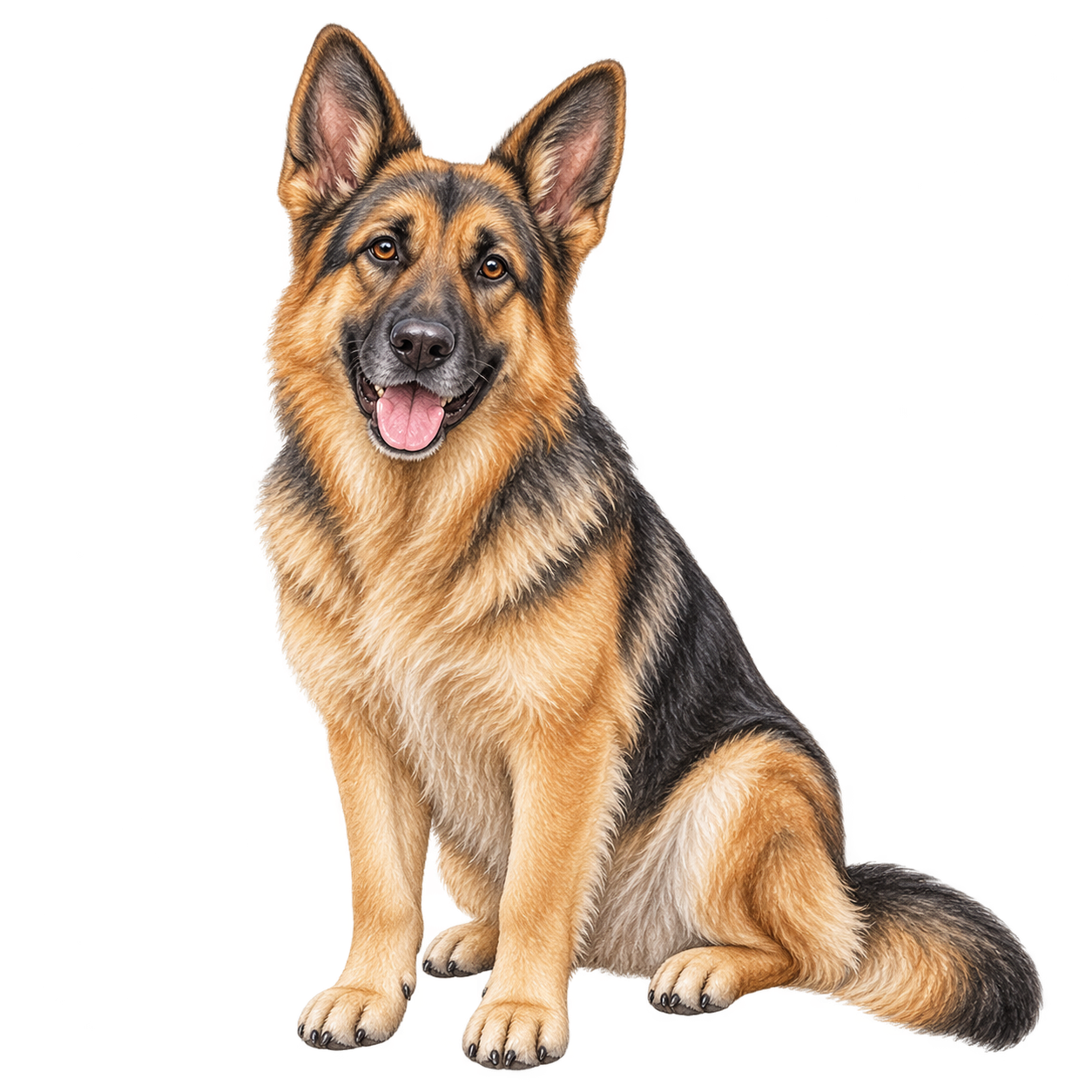
Herding group
German Shepherd Dog
Loyal, clever and serious about its job — the archetypal working dog.
German Shepherds are intelligent, versatile working dogs devoted to their family and naturally watchful with strangers. They reward committed owners with extraordinary partnership, but they need training, structure and real work every day.
- Height
- 22–26 in56–66 cm
- Weight
- 50–90 lb23–41 kg
- Life expectancy
- 7–10 years
- Size
- Large
- Group
- Herding
- Origin
- Germany
Coat: Medium-length double coat (a long-coat variety also exists). Colours: Black and tan, Black and red, Sable, Black, Bi-colour.
At a glance
Ratings describe typical dogs of the breed on a 1–5 scale. Individual dogs vary with lines, upbringing and training.
Temperament
A well-bred German Shepherd is confident, steady and deeply bonded to its people. The breed is naturally protective and reserved with strangers — polite rather than friendly — and tends to attach closely to one or two family members. They learn quickly and like knowing what is expected of them.
Without enough exercise, training and early socialisation, that alertness can tip into nervousness, reactivity or over-guarding. Working lines (common in police and sport homes) have more drive and need an experienced handler; show and pet lines are usually easier to live with but still far from a couch dog.
Living with a German Shepherd Dog
Exercise
At least 90 minutes of activity a day for most adults, including off-lead running where safe, training sessions and mental work like tracking or scent games.
Grooming
Sheds constantly and heavily twice a year — they are nicknamed “German shedders”. Brush several times a week with an undercoat rake; long coats need extra attention.
Training
Highly trainable and eager for structure. Start socialisation early with many calm new people, places and dogs, and keep training ongoing through adolescence. Avoid harsh methods, which can create anxiety.
Kids & other pets
Protective and loyal with their own children when raised with them, though their size and herding instincts need supervision with toddlers. Can be selective with other dogs, especially same-sex dogs.
Time alone
Tolerates moderate alone time once mature if well exercised, but boredom quickly turns into chewing, barking or digging.
Home fit
Best suited to a house with secure outdoor space; apartment living is hard on this breed and its neighbours.
Is a German Shepherd Dog right for you?
Take the Breed Fit quiz to see how a German Shepherd Dog matches your home, schedule and tolerance for shedding, barking and exercise — or find out which breed matches your personality with Dogsona.
Health
With good breeding and care, a German Shepherd Dog typically lives 7–10 years. These are the conditions most associated with the breed — not a prediction for any individual dog.
Hip and elbow dysplasia
Historically very common; buy only from parents with screened hips and elbows.
Degenerative myelopathy (DM)
A progressive spinal cord disease of older dogs; the SOD1 DNA test identifies at-risk dogs.
Gastric dilatation-volvulus (bloat)
A life-threatening emergency in deep-chested breeds. Feed smaller meals and avoid hard exercise right after eating.
Exocrine pancreatic insufficiency (EPI)
The pancreas stops producing digestive enzymes, causing weight loss; managed with enzyme supplements.
Pannus
Chronic inflammation of the cornea, worsened by UV light; manageable with lifelong eye drops.
Ask a breeder for
- Hip and elbow evaluation (OFA, PennHIP, SV or BVA/KC)
- DNA test for degenerative myelopathy (SOD1)
- Cardiac and temperament evaluation recommended by the parent club
Sources: OFA CHIC breed requirements: German Shepherd Dog; German Shepherd Dog Club of America. This is general information, not veterinary advice — talk to your vet about your own dog.
Cost to own
After the first year, expect roughly $1,500–$3,000 a year for food, routine vet care, preventives, insurance and supplies (US estimate).
- Food, medication and anaesthesia are dosed by weight, so every vet visit costs more for a big dog.
- Pet insurance for a puppy typically runs $30–$60 a month; premiums rise with age and breed risk.
History
Captain Max von Stephanitz set out in the 1890s to standardise the varied herding dogs of Germany into one utilitarian working breed. In 1899 he registered Horand von Grafrath as the first German Shepherd and founded the breed club (SV), with “utility and intelligence” as its motto.
As herding declined, von Stephanitz promoted the breed for police and military work. Shepherds served widely in both World Wars; to shed German associations, the UK renamed the breed “Alsatian” until 1977. Today they remain a leading police, military, search-and-rescue and guide dog breed.
Did you know?
- The first guide dog school in the US, The Seeing Eye, trained German Shepherds.
- Rin Tin Tin, rescued from a WWI battlefield, became one of Hollywood’s biggest stars of the 1920s.
- The AKC’s official name for the breed is “German Shepherd Dog”.
Library guides for German Shepherd Dog owners
Grooming
Brushing
A brushing routine keeps German Shepherd Dog shedding under control.
Training
Heel and Loose-Leash Walking
A strong German Shepherd Dog needs loose-lead manners early.
Exercise & Play
Fetch
A fast way to meet a high exercise need.
Exercise & Play
Dog Road Work
Structured conditioning for high-stamina dogs.
Exercise & Play
Hide and Seek
Brain work that tires busy minds.
Training
Place / Go to Mat
Teaching a settle helps dogs that struggle to switch off.
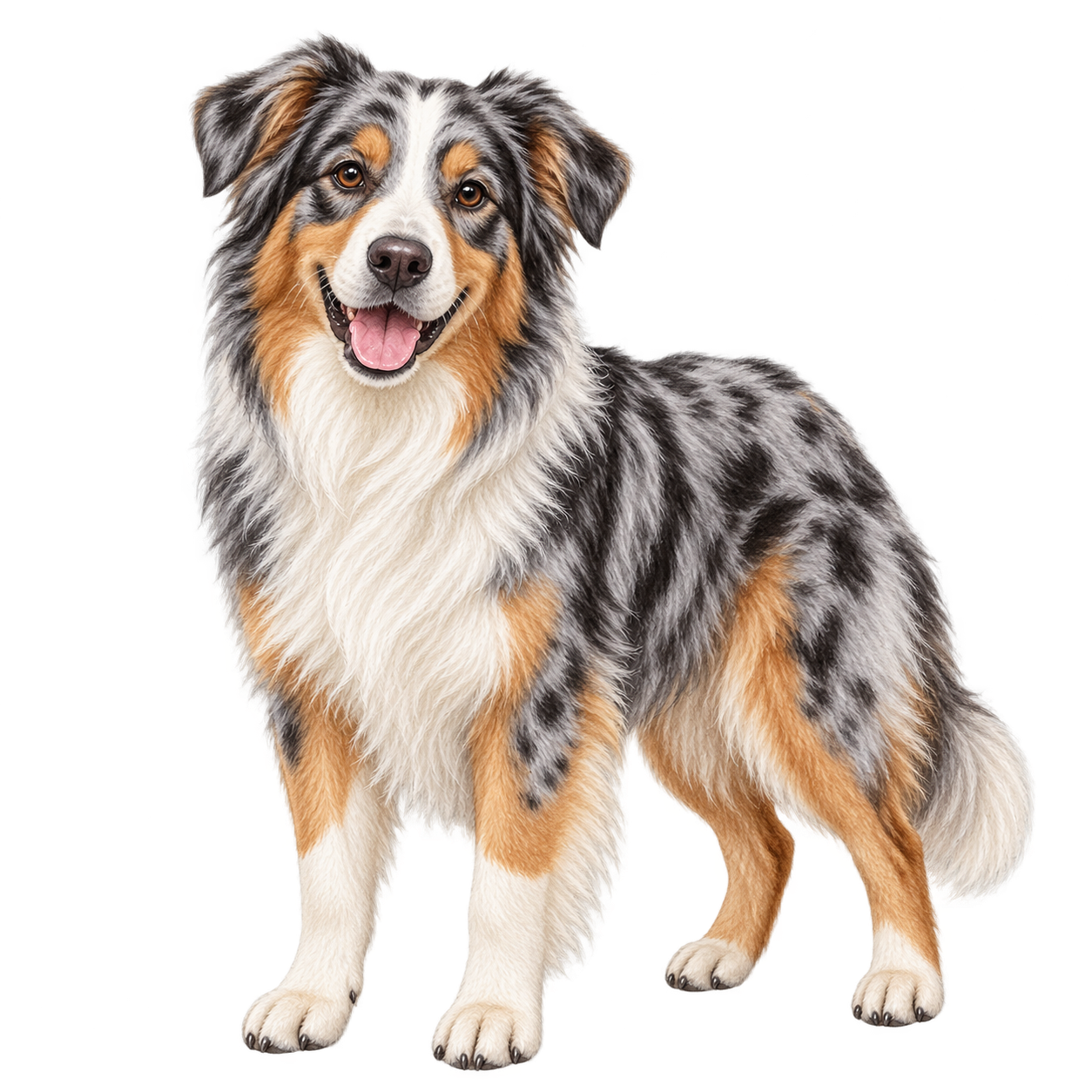
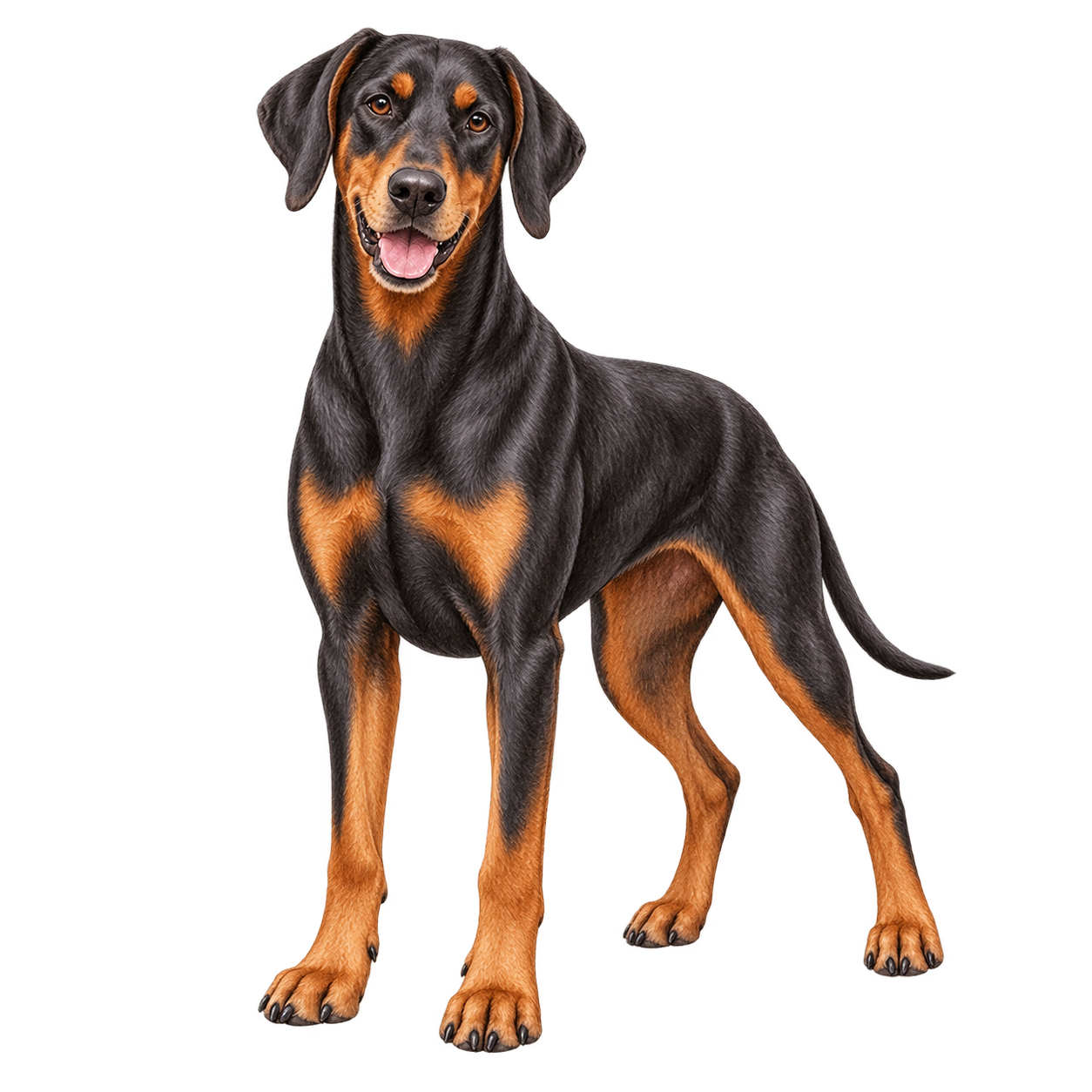
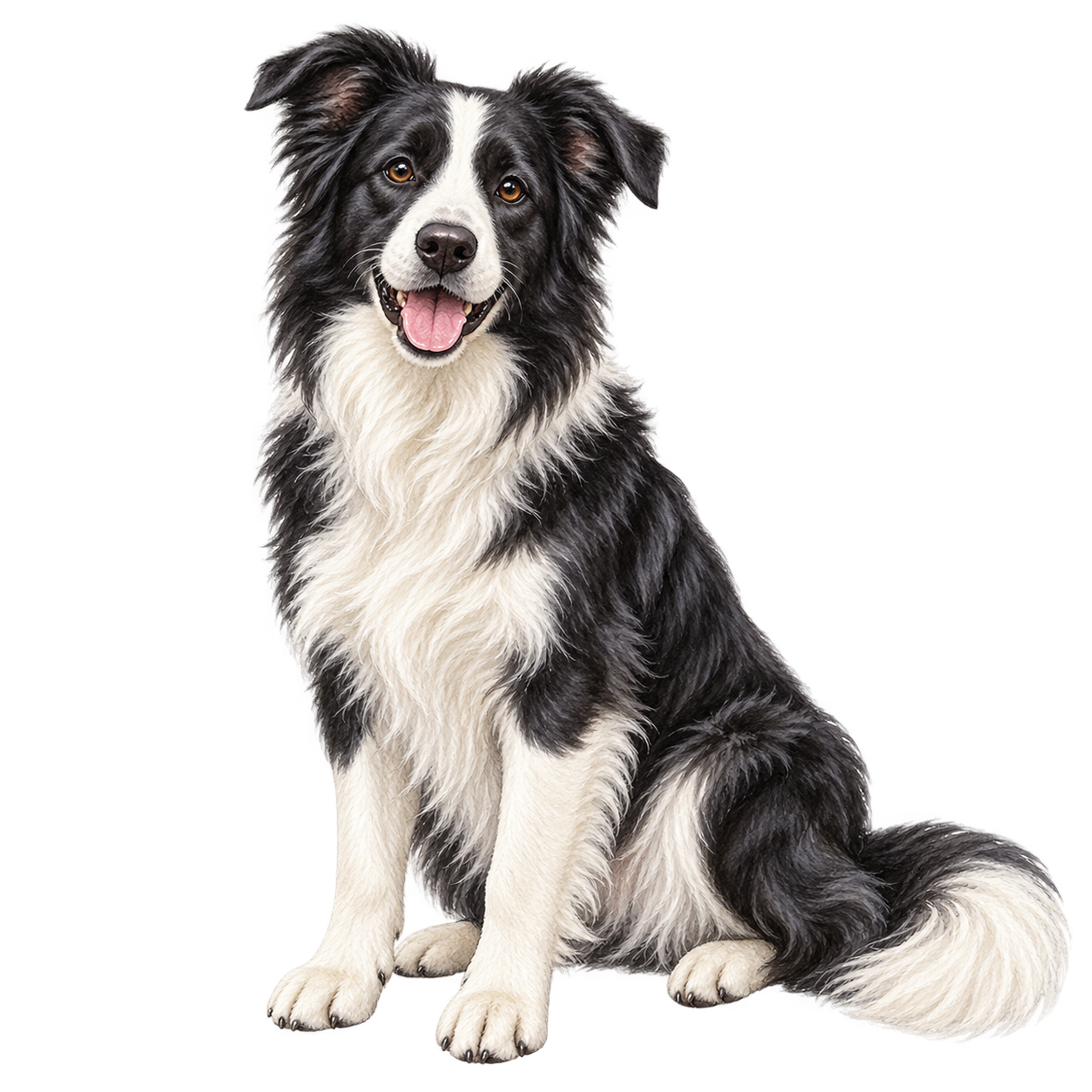
Similar breeds
Frequently asked questions
- Are German Shepherds good family dogs?
- Yes, for active families who will train and socialise them. They are loyal and protective, but they need daily work and clear structure.
- Are German Shepherds aggressive?
- A well-bred, well-socialised Shepherd is confident and discerning, not aggressive. Poor breeding, too little socialisation or boredom can produce reactivity.
- How much exercise does a German Shepherd need?
- Around 90 minutes to two hours daily, mixing physical exercise with training or scent work.
- Are German Shepherds good for first-time owners?
- They can be, if you commit to training classes and daily exercise. Working-line dogs are better suited to experienced handlers.