Herding group
Beauceron
France’s powerful all-round shepherd — confident, protective and double-dewclawed.
Beaucerons are large, athletic French herding and guard dogs. They are loyal, intelligent and courageous, but also strong-willed and protective, and they need an experienced, active owner.
- Height
- 24–27.5 in61–70 cm
- Weight
- 70–110 lb32–50 kg
- Life expectancy
- 10–12 years
- Size
- Large
- Group
- Herding
- Origin
- France
Coat: Short, dense, coarse double coat. Colours: Black and tan (“bas rouge”), Harlequin (grey, black and tan).
At a glance
Ratings describe typical dogs of the breed on a 1–5 scale. Individual dogs vary with lines, upbringing and training.
Temperament
Beaucerons are calm, confident and deeply loyal to their family. They are natural guardians and often wary of strangers. With their own people they can be affectionate and playful.
They are intelligent and self-assured and will test inconsistent owners. They mature slowly — often not until three — and need extensive socialisation, exercise and structured training.
Living with a Beauceron
Exercise
Needs 90 minutes or more of vigorous daily exercise plus mental work. Excellent in herding, tracking and protection sports.
Grooming
Minimal: weekly brushing, more during seasonal sheds. Keep an eye on the double rear dewclaws and nails.
Training
Clever and capable but strong-willed; firm, fair, consistent reward-based training from puppyhood is essential.
Kids & other pets
Loyal and protective with their own family; better with older children. Can be dominant with other dogs.
Time alone
Needs company and a job; long isolation leads to destructiveness or excessive guarding.
Home fit
Best suited to a house with secure outdoor space; apartment living is hard on this breed and its neighbours.
Is a Beauceron right for you?
Take the Breed Fit quiz to see how a Beauceron matches your home, schedule and tolerance for shedding, barking and exercise — or find out which breed matches your personality with Dogsona.
Health
With good breeding and care, a Beauceron typically lives 10–12 years. These are the conditions most associated with the breed — not a prediction for any individual dog.
Hip dysplasia
Screened parents reduce the risk of joint disease.
Gastric dilatation-volvulus (bloat)
A deep-chested breed at risk; learn the warning signs.
Dilated cardiomyopathy
A heart muscle disease reported in the breed; cardiac screening is recommended.
Eye disease
Inherited eye conditions occur; annual eye exams help.
Ask a breeder for
- Hip and elbow evaluation
- Eye examination
- Cardiac examination
Sources: OFA CHIC breed requirements: Beauceron; American Beauceron Club. This is general information, not veterinary advice — talk to your vet about your own dog.
Cost to own
After the first year, expect roughly $1,500–$3,000 a year for food, routine vet care, preventives, insurance and supplies (US estimate).
- Food, medication and anaesthesia are dosed by weight, so every vet visit costs more for a big dog.
- Pet insurance for a puppy typically runs $30–$60 a month; premiums rise with age and breed risk.
History
The Beauceron comes from the plains of La Beauce around Paris, where it herded large flocks of sheep and guarded farms. A standard was written in 1897, and the French called it “bas rouge” (red stockings) for its tan legs.
Beaucerons served the French army in both World Wars as messengers and in detecting mines. The AKC recognised the breed in 2007.
Did you know?
- Beaucerons must have double dewclaws on their hind legs to meet the breed standard.
- The French nicknamed them “bas rouge” for their tan “stockings”.
- Beaucerons served as messenger dogs on the WWI front lines.
Library guides for Beauceron owners
Training
Heel and Loose-Leash Walking
A strong Beauceron needs loose-lead manners early.
Exercise & Play
Fetch
A fast way to meet a high exercise need.
Exercise & Play
Dog Road Work
Structured conditioning for high-stamina dogs.
Exercise & Play
Hide and Seek
Brain work that tires busy minds.
Exercise & Play
Tug of War
An energy outlet that also builds impulse control.
Exercise & Play
Dog Walking
Getting daily walks right for a Beauceron.
Similar breeds
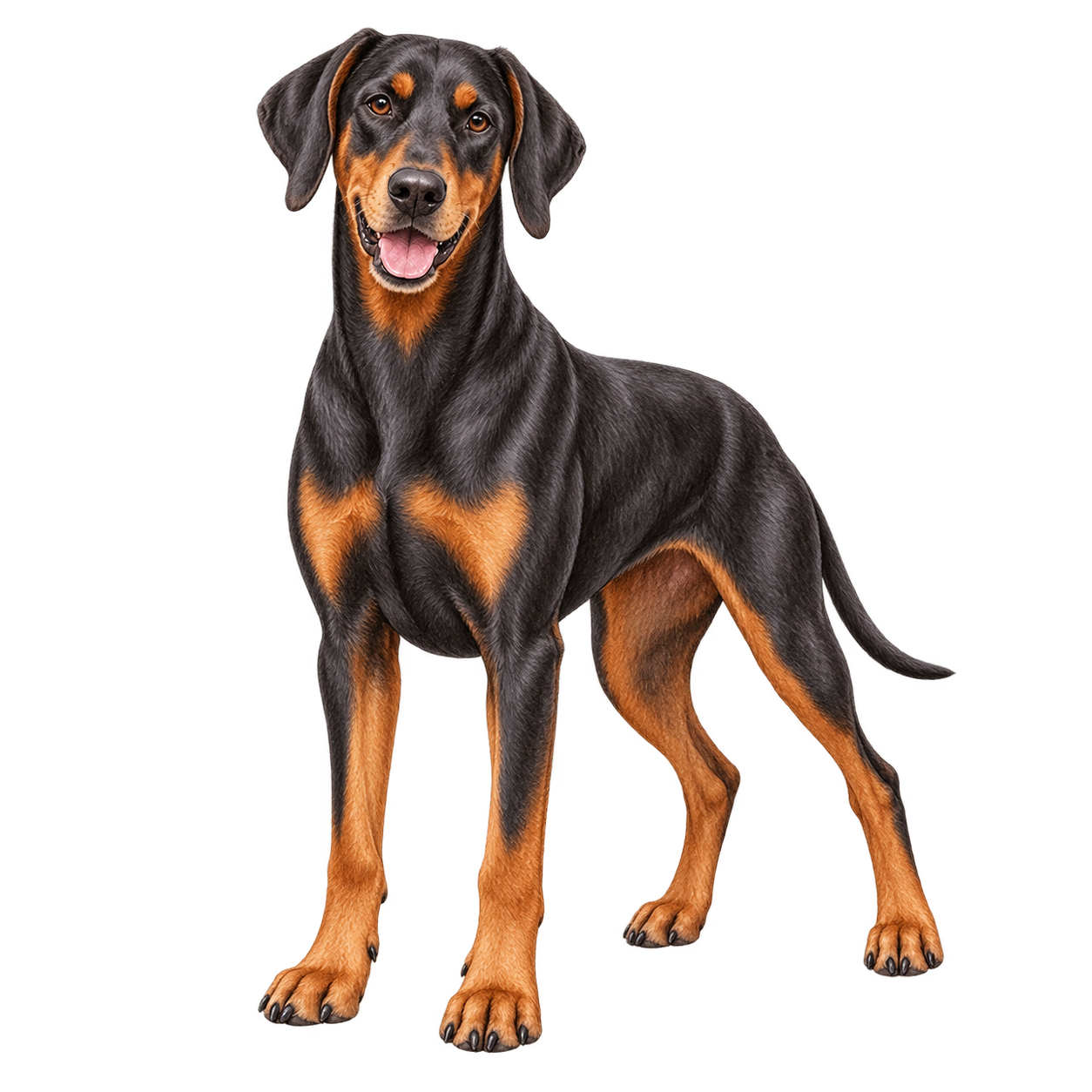
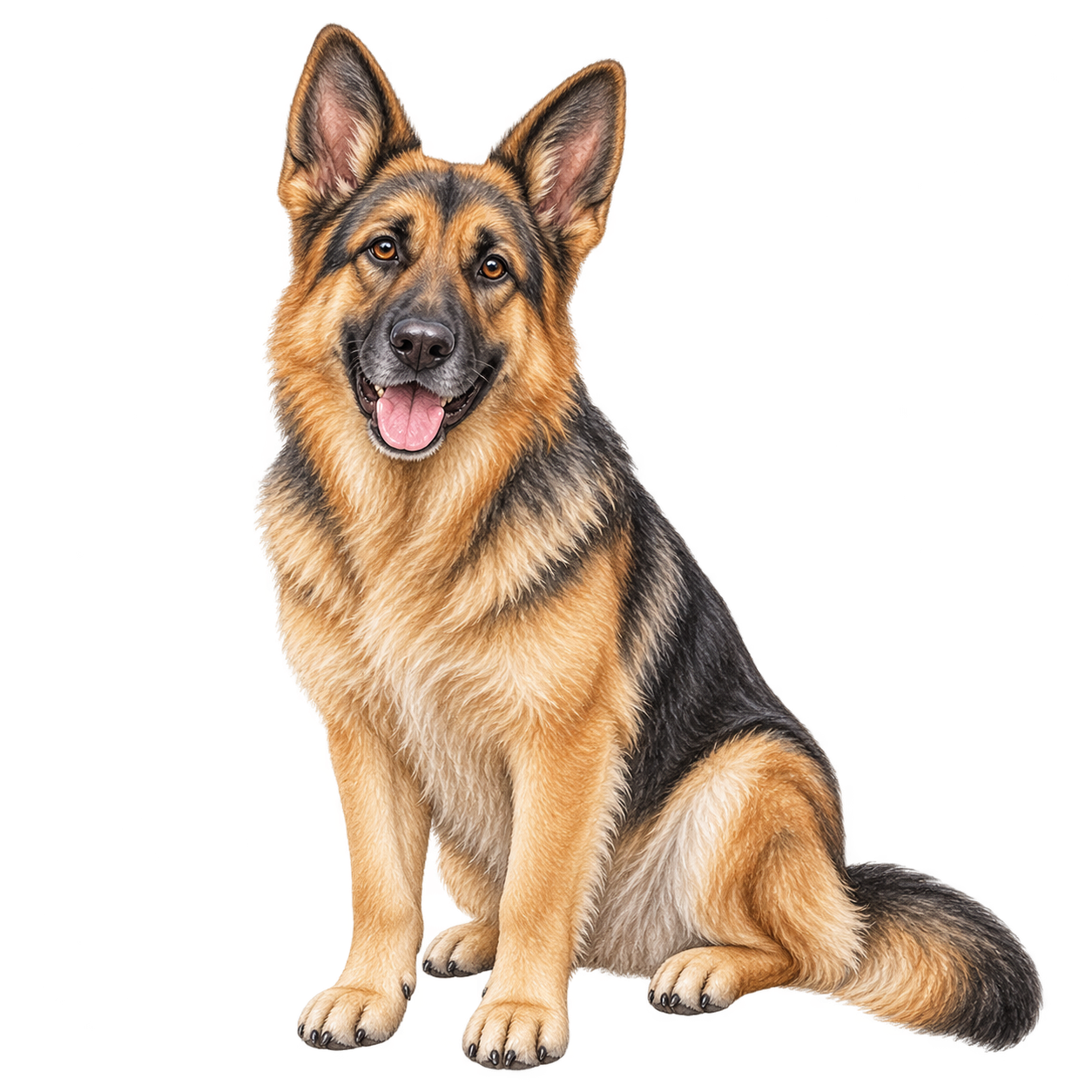
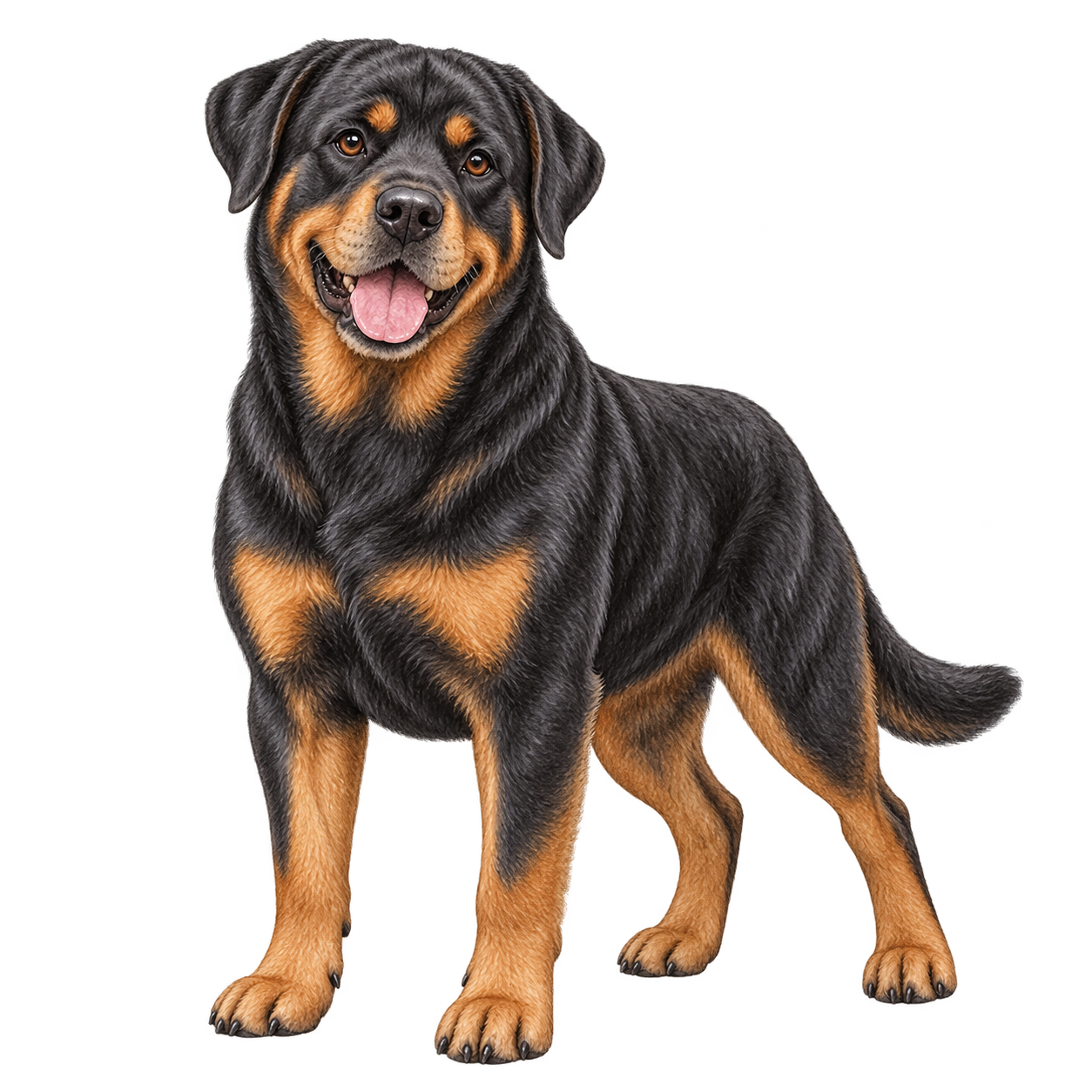
Frequently asked questions
- Are Beaucerons good family dogs?
- For experienced, active owners, yes. They are loyal and protective but demanding.
- Beauceron vs Doberman?
- They look similar, but Beaucerons are heavier herding dogs with double rear dewclaws and a more independent nature.
- Do Beaucerons shed?
- Moderately, with heavier seasonal sheds.