Crossbreeds
Yorkipoo
A tiny, lively companion with Yorkie spunk and Poodle smarts.
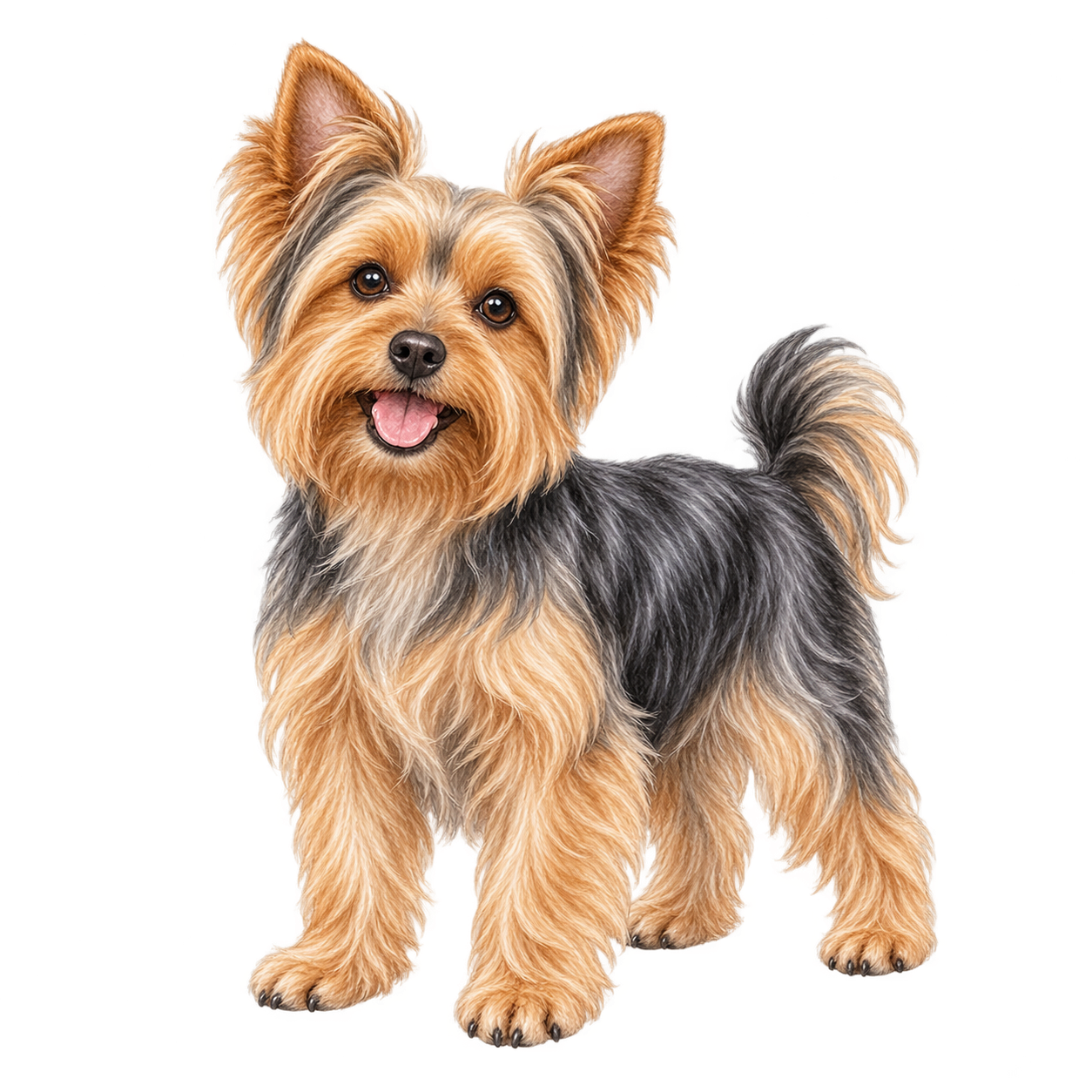
Yorkipoos combine the Yorkshire Terrier with the Toy Poodle. They are small, smart and affectionate, well suited to apartments, but they can be vocal and need regular grooming.
A Yorkshire Terrier × Toy Poodle cross. Not recognised by the AKC; size, coat and temperament vary more than in a purebred.
Parent breeds: Yorkshire Terrier × Poodle
- Height
- 7–15 in18–38 cm
- Weight
- 3–14 lb1–6 kg
- Life expectancy
- 12–15 years
- Size
- Toy
- Group
- Crossbreeds
- Origin
- United States
Coat: Silky, straight to curly coat; low shedding. Colours: Black, Tan, Silver, Cream, Chocolate, Parti.
At a glance
Ratings describe typical dogs of the breed on a 1–5 scale. Individual dogs vary with lines, upbringing and training.
Temperament
Yorkipoos are lively, affectionate and curious. They love to play and bond closely with their families.
The terrier side can make them bold, vocal and occasionally bossy with other dogs. Their tiny size needs careful handling.
Living with a Yorkipoo
Exercise
About 30 minutes of walks and play daily; they enjoy fetch and puzzle toys indoors.
Grooming
Brush several times a week and book professional grooming every six to eight weeks. Brush teeth daily.
Training
Clever and eager but sometimes stubborn; reward-based training works well. Teach a quiet cue.
Kids & other pets
Best with adults or gentle, older children. Usually fine with other small pets.
Time alone
Prefers company and may bark when left alone; build independence gradually.
Home fit
Adapts well to apartments and smaller homes when daily needs are met.
Is a Yorkipoo right for you?
Take the Breed Fit quiz to see how a Yorkipoo matches your home, schedule and tolerance for shedding, barking and exercise — or find out which breed matches your personality with Dogsona.
Health
With good breeding and care, a Yorkipoo typically lives 12–15 years. These are the conditions most associated with the breed — not a prediction for any individual dog.
Patellar luxation
Loose kneecaps are common in toy breeds.
Dental disease
Tiny mouths are prone to tartar; brush daily.
Tracheal collapse
Weak windpipe cartilage from Yorkie lines; use a harness.
Legg-Calvé-Perthes disease
Degeneration of the hip joint in young small dogs.
Ask a breeder for
- Both parents: patella evaluation
- Both parents: eye examination
- Yorkie parent: liver function testing
Sources: OFA health testing guidance for Yorkshire Terrier and Poodle; Yorkshire Terrier Club of America. This is general information, not veterinary advice — talk to your vet about your own dog.
Cost to own
After the first year, expect roughly $900–$1,800 a year for food, routine vet care, preventives, insurance and supplies (US estimate).
- Professional grooming every 6–8 weeks adds roughly $500–$900 a year.
- Pet insurance for a puppy typically runs $30–$60 a month; premiums rise with age and breed risk.
History
Yorkipoos were developed in the United States in the late 20th century as small, low-shedding companions.
Size varies considerably, from under 5 lb to about 14 lb, depending on the parents; multigenerational lines tend to be more predictable.
Did you know?
- Yorkipoos can weigh as little as 3 lb.
- Coat colour often changes as Yorkipoo puppies mature.
- They are sometimes called Yoodles.
Library guides for Yorkipoo owners
Grooming
Brushing
Yorkipoo coats mat without regular brushing.
Grooming
Bathing
How to bath a Yorkipoo without drying out the coat.
Grooming
Ear Cleaning
Ear care matters for this coat and ear type.
Exercise & Play
Dog Walking
Getting daily walks right for a Yorkipoo.
Grooming
Nail Clipping
Every dog needs regular nail care.
New Dog Owners
How to find a reputable dog breeder
What to ask a Yorkipoo breeder about health screening.
Similar breeds
Frequently asked questions
- Are Yorkipoos hypoallergenic?
- No dog is truly hypoallergenic, but Yorkipoos shed very little.
- Do Yorkipoos bark a lot?
- They can be vocal; training helps.
- Are Yorkipoos good with kids?
- Better with older, gentle children because they are fragile.