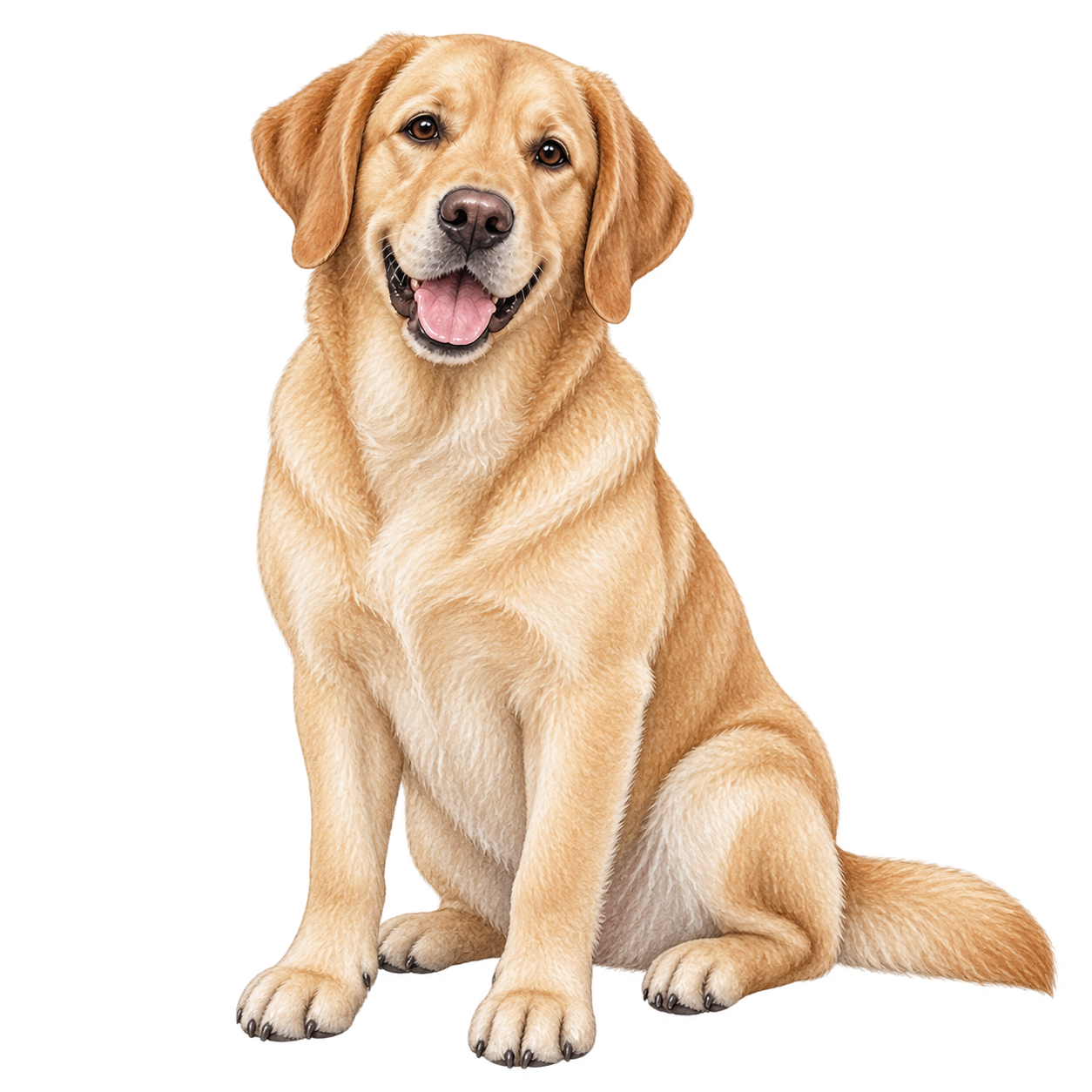
Sporting group
Labrador Retriever
Friendly, food-driven and forgiving — the benchmark family retriever.
The Labrador is an outgoing, sturdy retriever bred to work all day beside people. Labs are famously patient with children and forgiving of beginner mistakes, but they arrive with a long adolescence, a big appetite and a lot of hair.
- Height
- 21.5–24.5 in55–62 cm
- Weight
- 55–80 lb25–36 kg
- Life expectancy
- 11–14 years
- Size
- Large
- Group
- Sporting
- Origin
- Newfoundland (Canada), refined in Britain
Coat: Short, dense, water-resistant double coat. Colours: Black, Yellow, Chocolate.
At a glance
Ratings describe typical dogs of the breed on a 1–5 scale. Individual dogs vary with lines, upbringing and training.
Temperament
Labs are sociable almost to a fault. Most greet strangers, visitors and other dogs as friends, which makes them poor guard dogs and excellent family dogs. They were bred to take direction from a handler, so they tend to enjoy training and pick up routines quickly when food is involved — and food is nearly always involved.
That enthusiasm has a cost. Until two or three years old many Labs jump, mouth, pull on the lead and carry everything they find. Show-line (English) Labs are often stockier and calmer; field-line (American) Labs are leaner and need more work to settle. Either way, a Lab that is exercised and given jobs is a relaxed housemate; one that is under-occupied will find its own entertainment.
Living with a Labrador Retriever
Exercise
Plan on 60–90 minutes a day for an adult: brisk walks plus retrieving, swimming or scent games. Keep repetitive running and jumping moderate until growth plates close (around 12–18 months).
Grooming
The coat is easy to keep clean but sheds steadily all year and heavily twice a year. Brush weekly (daily during a moult), check floppy ears after swimming, and keep nails short.
Training
Highly trainable and food-motivated. Prioritise loose-lead walking, a calm greeting routine and a solid recall early, while the puppy is still small — an untrained 30 kg adolescent is hard to hold.
Kids & other pets
One of the most reliably child-friendly breeds, though adolescents can knock over toddlers. Usually good with other dogs and, with early introductions, with cats.
Time alone
Copes with a normal working day if well exercised beforehand, but bored Labs chew. Use a crate or dog-proofed room and puzzle feeders while they are young.
Home fit
Can manage in an apartment with committed daily exercise; a house with outdoor space is easier.
Is a Labrador Retriever right for you?
Take the Breed Fit quiz to see how a Labrador Retriever matches your home, schedule and tolerance for shedding, barking and exercise — or find out which breed matches your personality with Dogsona.
Health
With good breeding and care, a Labrador Retriever typically lives 11–14 years. These are the conditions most associated with the breed — not a prediction for any individual dog.
Hip and elbow dysplasia
The most significant orthopaedic concern; keeping a Lab lean markedly reduces the risk and severity of arthritis.
Obesity
Many Labs carry a POMC gene variant linked to increased hunger. Weigh food, count treats and keep ribs easy to feel.
Exercise-induced collapse (EIC)
An inherited condition causing hind-limb weakness after intense exercise. A DNA test identifies carriers and affected dogs.
Progressive retinal atrophy (prcd-PRA)
Inherited gradual vision loss; preventable through DNA testing of parents.
Ear infections
Floppy ears and frequent swimming trap moisture. Dry ears after water and check weekly.
Ask a breeder for
- Hip and elbow evaluation (OFA or BVA/KC)
- Annual eye examination by a veterinary ophthalmologist
- DNA tests: EIC, prcd-PRA and centronuclear myopathy (CNM)
Sources: OFA CHIC breed requirements: Labrador Retriever; Labrador Retriever Club, Inc.. This is general information, not veterinary advice — talk to your vet about your own dog.
Cost to own
After the first year, expect roughly $1,500–$3,000 a year for food, routine vet care, preventives, insurance and supplies (US estimate).
- Food, medication and anaesthesia are dosed by weight, so every vet visit costs more for a big dog.
- Pet insurance for a puppy typically runs $30–$60 a month; premiums rise with age and breed risk.
History
The breed descends from the St. John’s water dog, used by fishermen in Newfoundland in the 1700s and 1800s to haul nets and retrieve fish from icy water. English aristocrats, notably the Earls of Malmesbury and Dukes of Buccleuch, imported these dogs in the early 1800s and developed them into shooting retrievers.
The Kennel Club recognised the Labrador in 1903 and the AKC in 1917. Yellow and chocolate coats were once culled but became accepted in the early 1900s. The Lab was the AKC’s most-registered breed from 1991 to 2021 and remains one of the most common guide, assistance and detection dogs in the world.
Did you know?
- The thick “otter tail” works as a rudder when swimming.
- Their webbed toes and oily outer coat were shaped by retrieving in North Atlantic water.
- Yellow Labs range from pale cream to fox red — all are the same breed and colour class.
Library guides for Labrador Retriever owners
Grooming
Brushing
A brushing routine keeps Labrador Retriever shedding under control.
Training
Heel and Loose-Leash Walking
A strong Labrador Retriever needs loose-lead manners early.
Exercise & Play
Fetch
A fast way to meet a high exercise need.
Exercise & Play
Tug of War
An energy outlet that also builds impulse control.
Exercise & Play
Dog Walking
Getting daily walks right for a Labrador Retriever.
Grooming
Nail Clipping
Every dog needs regular nail care.
Similar breeds
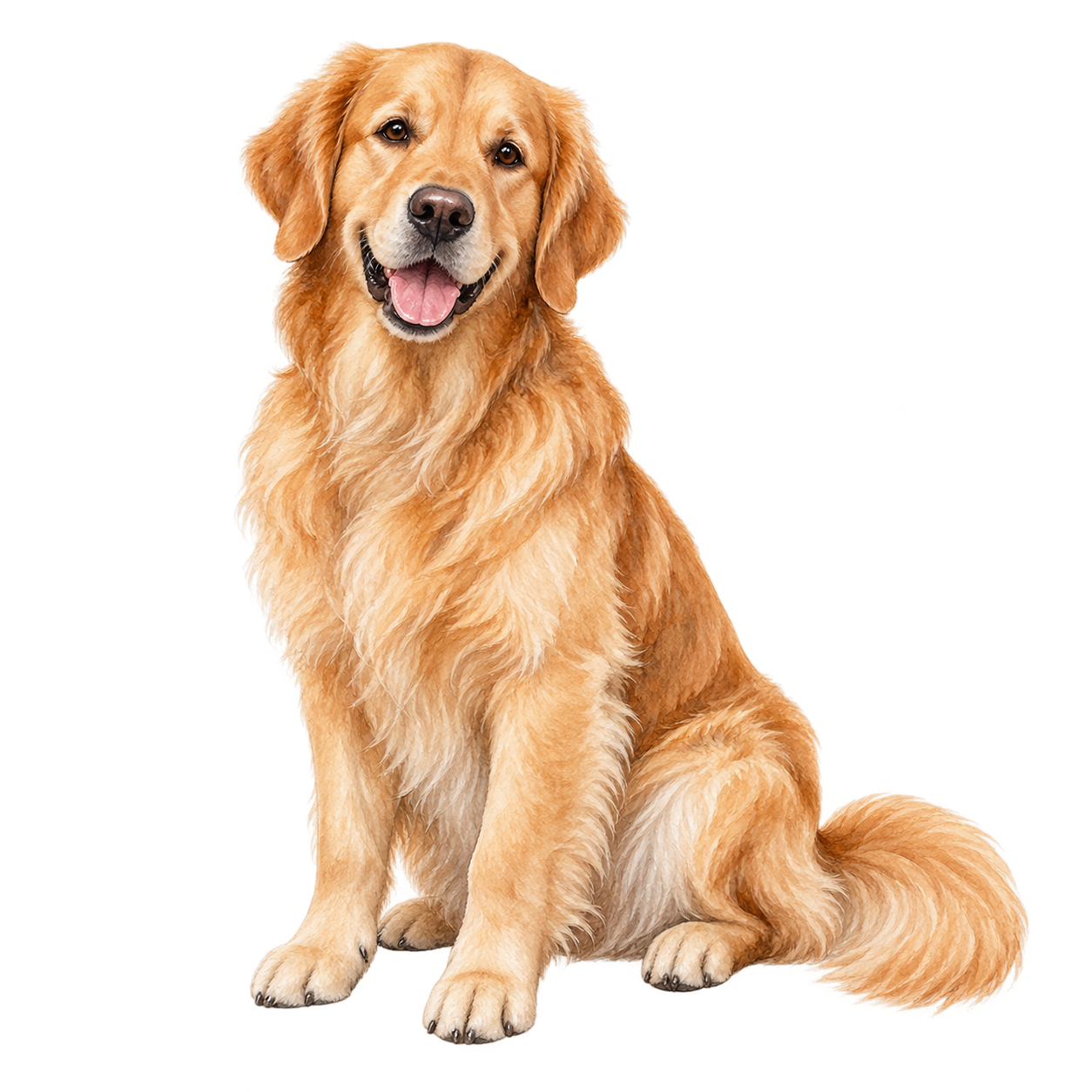
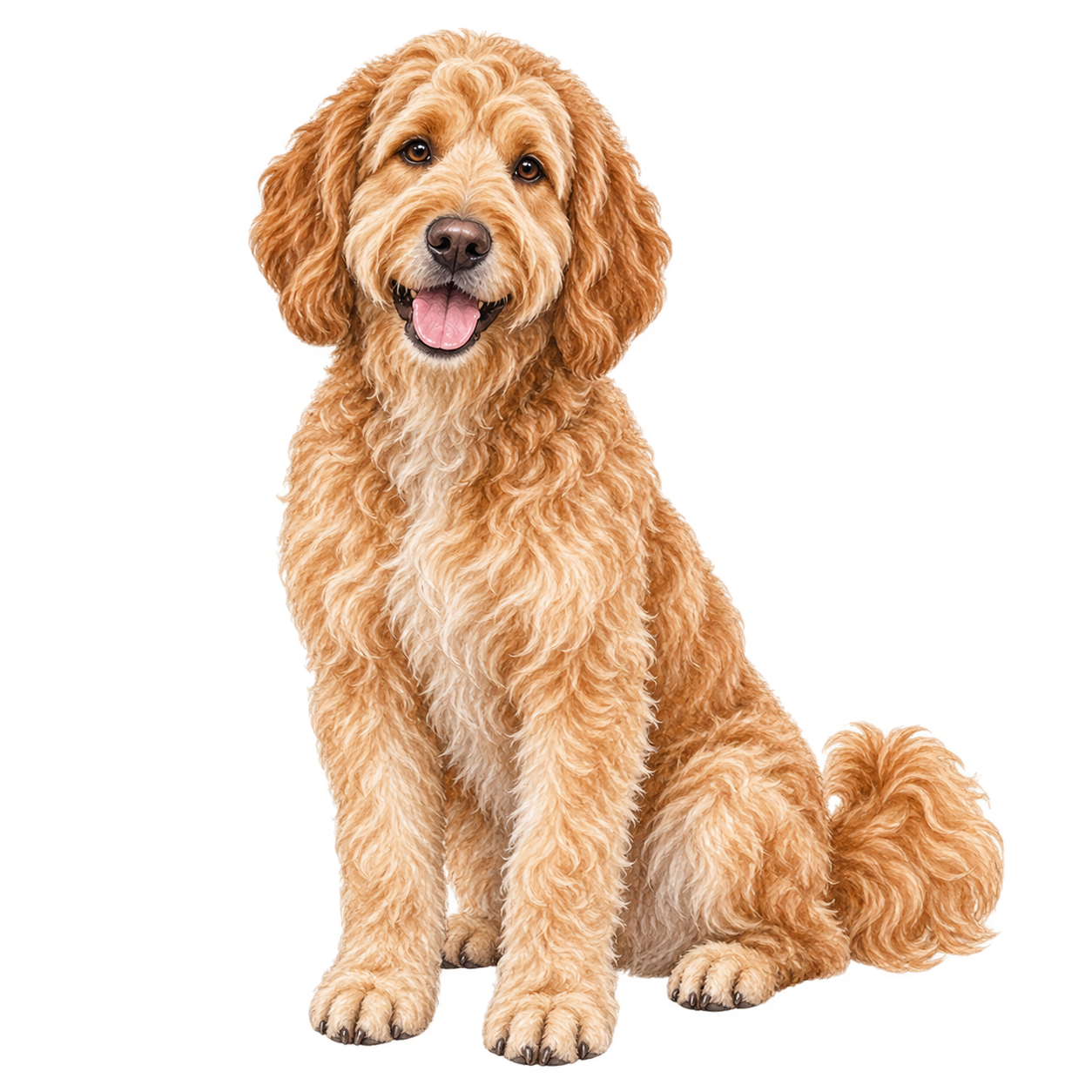
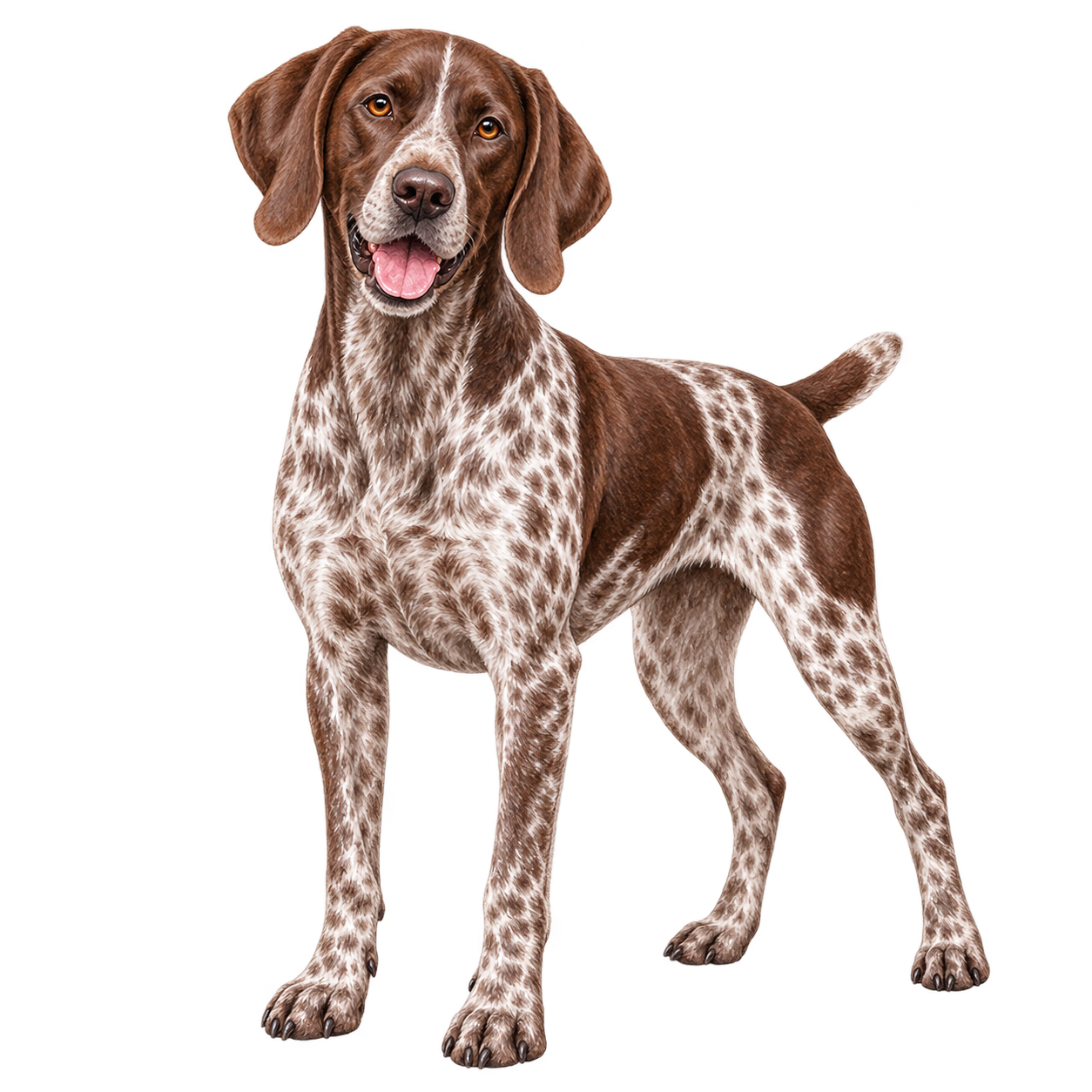
Frequently asked questions
- Are Labradors good for first-time owners?
- Yes, if you can meet their exercise needs. Labs forgive handling mistakes and learn quickly, but a first-time owner should budget time for adolescence and daily training.
- How much do Labradors shed?
- A lot. They shed year-round and “blow” their undercoat about twice a year. Weekly brushing and a good vacuum are part of owning one.
- When do Labradors calm down?
- Most settle noticeably between two and three years old. Consistent exercise and training shorten the wait; field-line dogs often stay busier for longer.
- Is there a difference between English and American Labs?
- They are one breed. “English” usually means show lines — broader, calmer — and “American” means field lines bred for working stamina and drive.