Sporting group
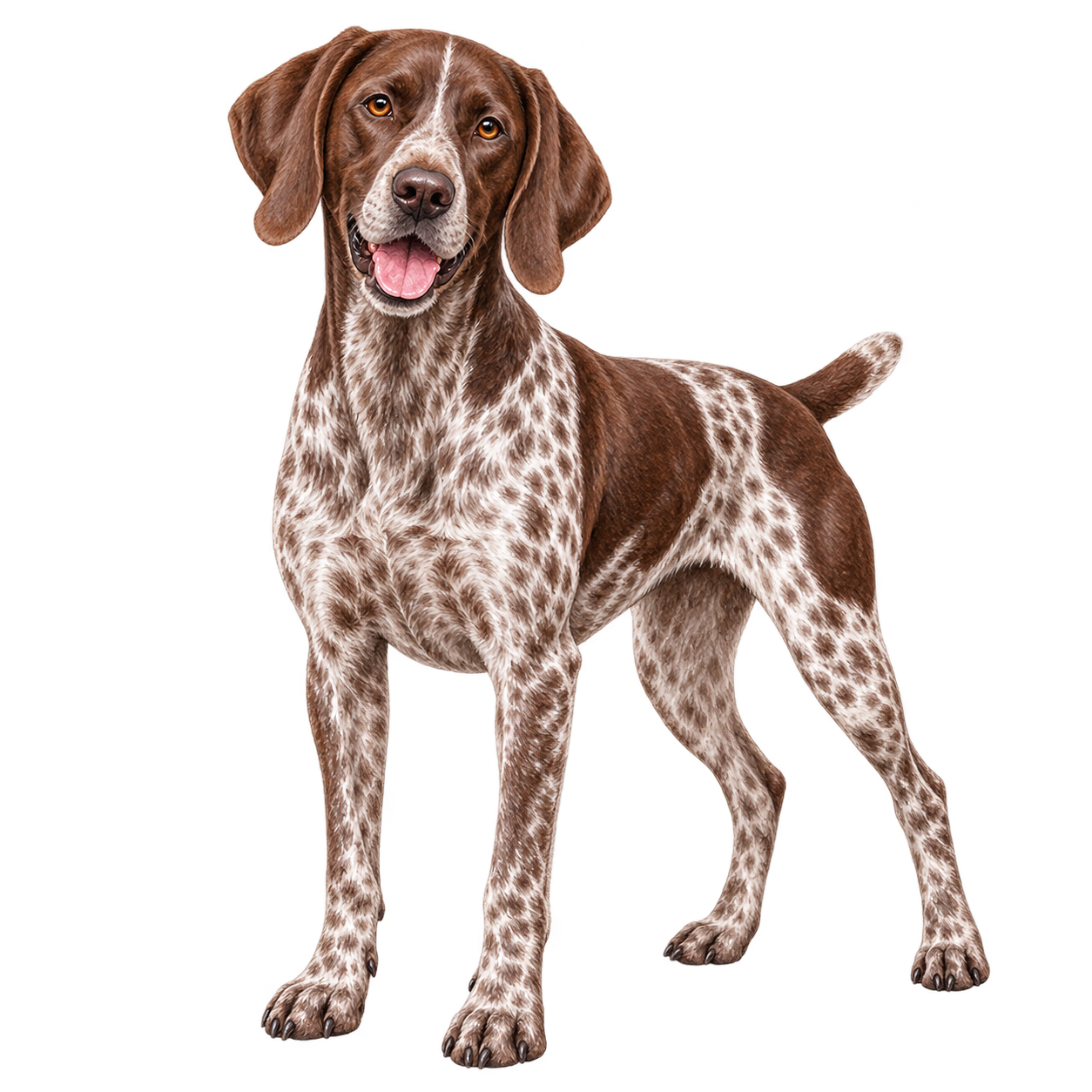
German Shorthaired Pointer
An all-round hunting athlete — keen, friendly and always ready to go.
German Shorthaired Pointers are versatile gun dogs bred to point, track and retrieve on land and water. They are affectionate and eager to please but have boundless energy and strong prey drive.
- Height
- 21–25 in53–64 cm
- Weight
- 45–70 lb20–32 kg
- Life expectancy
- 10–12 years
- Size
- Large
- Group
- Sporting
- Origin
- Germany
Coat: Short, dense, water-resistant coat. Colours: Liver, Liver and white, Liver roan, Black, Black and white.
At a glance
Ratings describe typical dogs of the breed on a 1–5 scale. Individual dogs vary with lines, upbringing and training.
Temperament
GSPs are friendly, enthusiastic and devoted to their families. They love to be busy and involved, whether hunting, running or training. Most are good with people and other dogs.
Their energy and prey drive are intense. Without daily exercise they become restless and destructive, and they may chase cats, birds and small animals. Many are vocal and prone to separation stress.
Living with a German Shorthaired Pointer
Exercise
Needs two hours of vigorous activity daily. Ideal for running, hiking, swimming and field sports.
Grooming
Weekly brushing; moderate shedding. Check ears and paws after outings.
Training
Very trainable and eager to please. Focus on recall, impulse control and a solid settle.
Kids & other pets
Great with active families and older children. Can be boisterous with toddlers. Often not suitable with small pets.
Time alone
Prone to separation anxiety and boredom if left for long periods.
Home fit
Best suited to a house with secure outdoor space; apartment living is hard on this breed and its neighbours.
Is a German Shorthaired Pointer right for you?
Take the Breed Fit quiz to see how a German Shorthaired Pointer matches your home, schedule and tolerance for shedding, barking and exercise — or find out which breed matches your personality with Dogsona.
Health
With good breeding and care, a German Shorthaired Pointer typically lives 10–12 years. These are the conditions most associated with the breed — not a prediction for any individual dog.
Hip dysplasia
Screened parents reduce risk; avoid repetitive high-impact running until growth plates close.
Gastric dilatation-volvulus (bloat)
Deep-chested breeds are at higher risk.
Cone degeneration
Inherited day blindness; DNA testing is available.
Von Willebrand disease type II
An inherited bleeding disorder with a DNA test.
Cancer
Lymphoma and mast cell tumours occur in the breed.
Ask a breeder for
- Hip evaluation
- Eye examination
- Cardiac examination
- DNA tests: cone degeneration and von Willebrand type II
Sources: OFA CHIC breed requirements: German Shorthaired Pointer; German Shorthaired Pointer Club of America. This is general information, not veterinary advice — talk to your vet about your own dog.
Cost to own
After the first year, expect roughly $1,500–$3,000 a year for food, routine vet care, preventives, insurance and supplies (US estimate).
- Food, medication and anaesthesia are dosed by weight, so every vet visit costs more for a big dog.
- Pet insurance for a puppy typically runs $30–$60 a month; premiums rise with age and breed risk.
History
German hunters in the 1800s wanted one dog that could do it all: point birds, track wounded game, retrieve from water and guard the home. They crossed old Spanish pointers and German hunting hounds, later adding English Pointer for speed and style.
The breed’s German club formed in 1872. GSPs arrived in the US in the 1920s, and the AKC recognised them in 1930.
Did you know?
- GSPs have webbed feet that make them strong swimmers.
- A GSP named CJ won Best in Show at Westminster in 2016.
- They were bred to “point” — freeze with a raised paw — to show hunters where birds are hiding.
Library guides for German Shorthaired Pointer owners
Training
Come (Recall)
High chase drive makes a reliable recall essential.
Exercise & Play
Fetch
A fast way to meet a high exercise need.
Exercise & Play
Dog Road Work
Structured conditioning for high-stamina dogs.
Exercise & Play
Hide and Seek
Brain work that tires busy minds.
Training
Place / Go to Mat
Teaching a settle helps dogs that struggle to switch off.
Exercise & Play
Tug of War
An energy outlet that also builds impulse control.
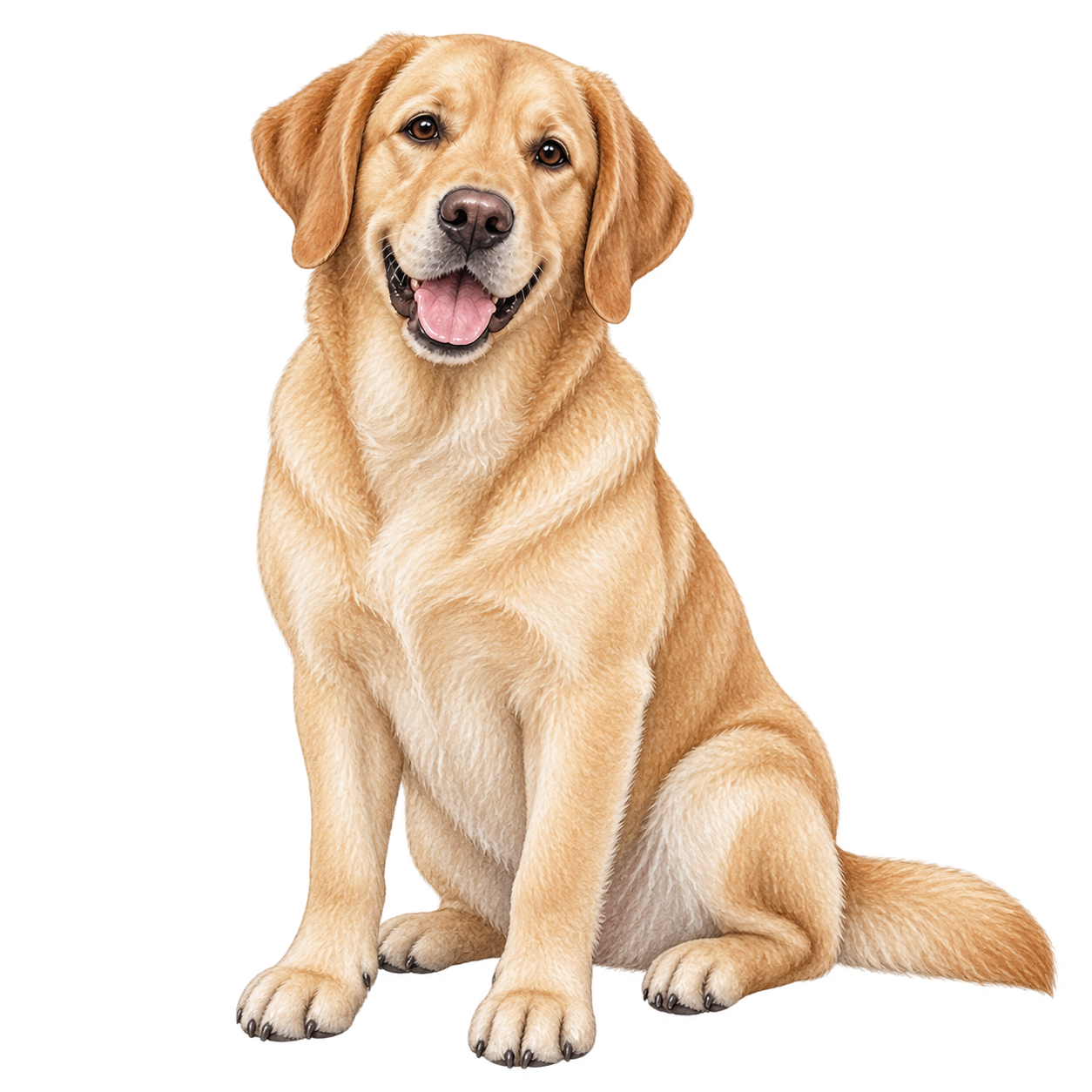
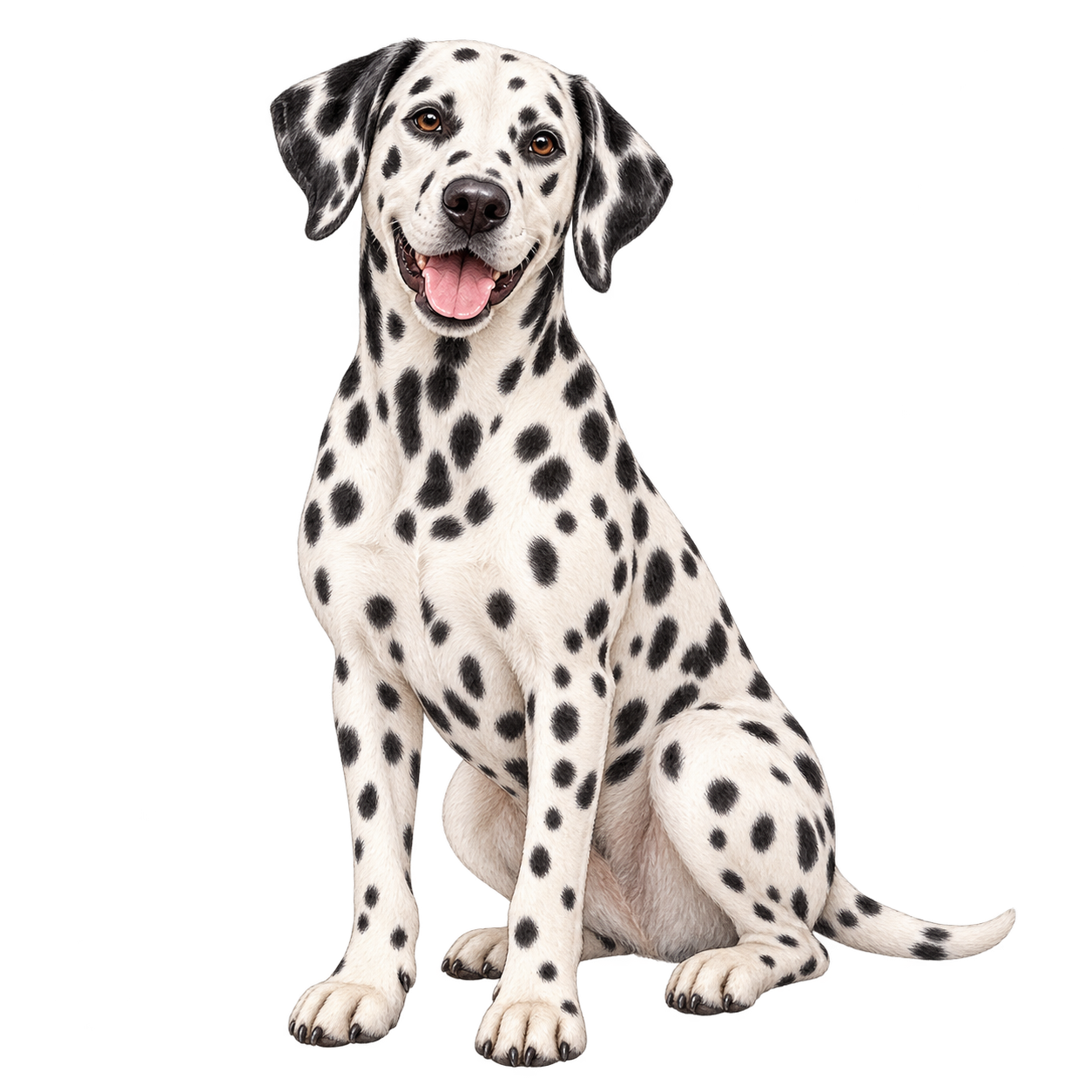
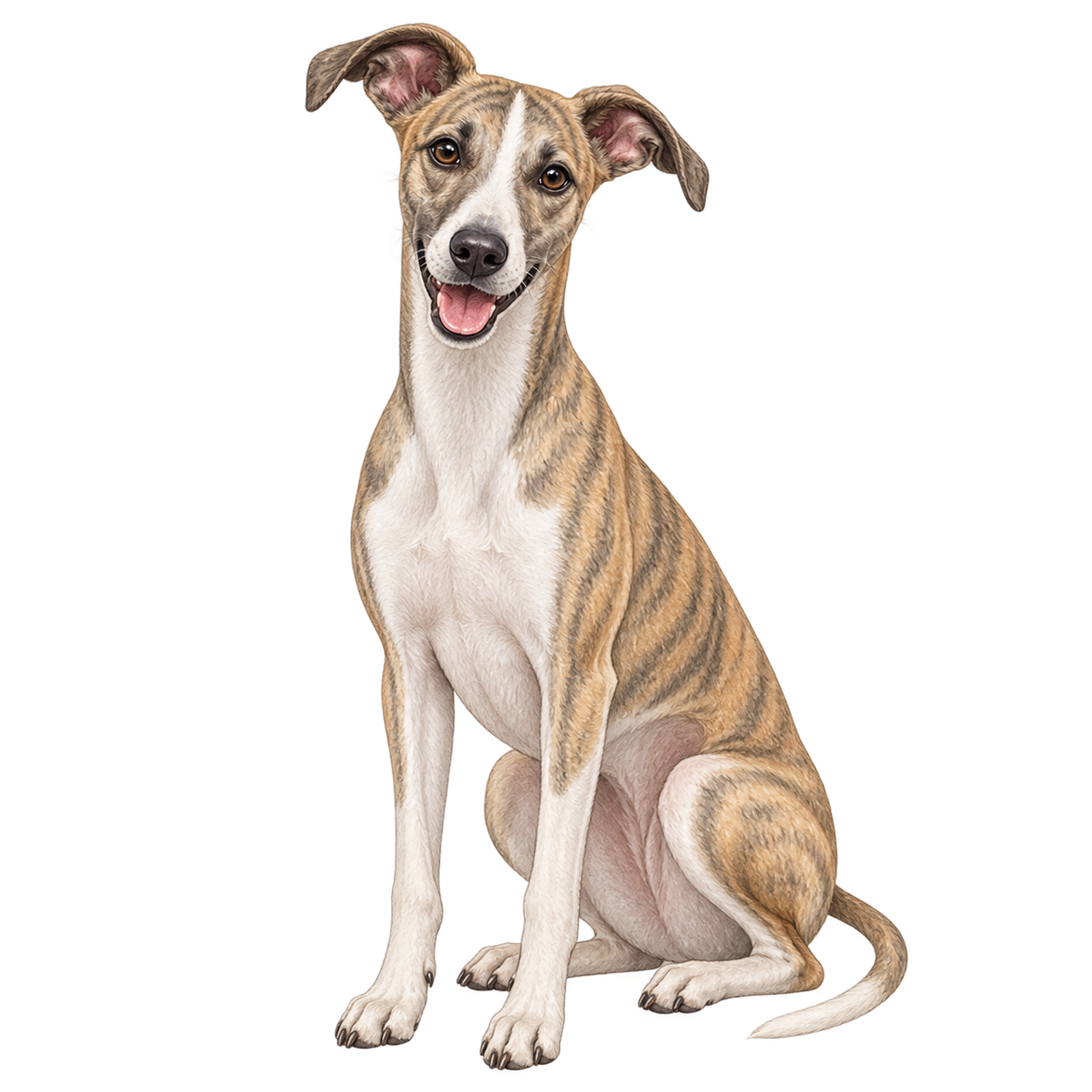
Similar breeds
Frequently asked questions
- Are GSPs good family dogs?
- Yes, for very active families. They are friendly but need lots of exercise.
- Do German Shorthaired Pointers shed?
- Moderately. Weekly brushing keeps it under control.
- Can a GSP live in an apartment?
- Only with exceptional exercise. Most do better with outdoor space.