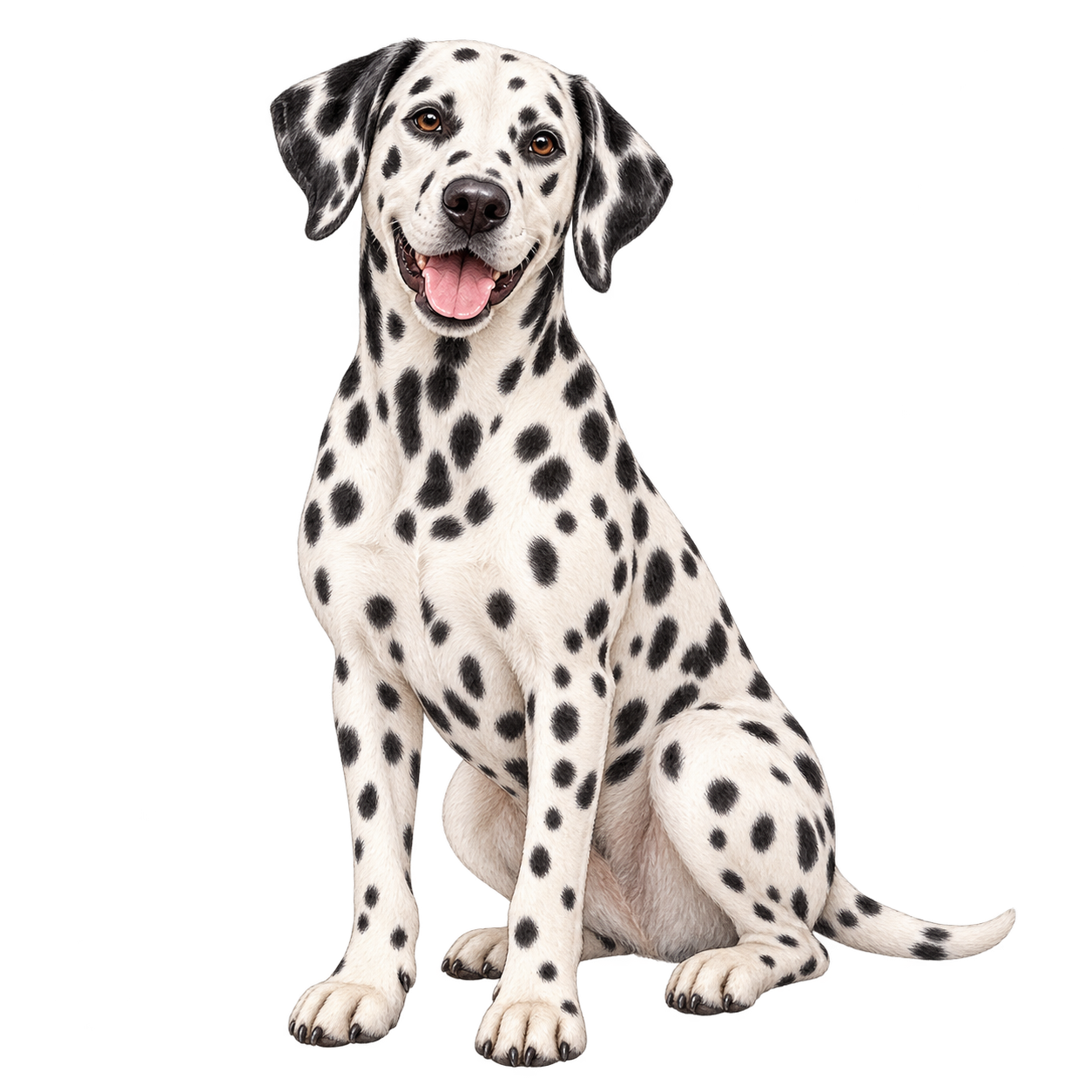
Non-Sporting group
Dalmatian
Spotted, athletic and endlessly energetic — a coach dog built to run.
Dalmatians are high-energy, intelligent dogs bred to run alongside horse-drawn carriages. They are loyal and playful with family, but they need lots of exercise, shed heavily and have breed-specific health risks.
- Height
- 19–24 in48–61 cm
- Weight
- 45–70 lb20–32 kg
- Life expectancy
- 11–13 years
- Size
- Large
- Group
- Non-Sporting
- Origin
- Croatia (Dalmatia), developed in England
Coat: Short, dense, fine coat. Colours: White with black spots, White with liver spots.
At a glance
Ratings describe typical dogs of the breed on a 1–5 scale. Individual dogs vary with lines, upbringing and training.
Temperament
Dalmatians are lively, affectionate and alert. They bond closely with their family and can be reserved with strangers. They were bred as guardians of horses and carriages, so they make good watchdogs.
Their stamina is enormous, and under-exercised Dalmatians become destructive and hard to live with. They can be sensitive and may remember harsh treatment. Early socialisation helps avoid wariness.
Living with a Dalmatian
Exercise
Needs 90 minutes to two hours daily. Excellent running, hiking and canicross partners once fully grown.
Grooming
Short coat but heavy, constant shedding — the hairs weave into fabric. Brush several times a week.
Training
Smart and quick to learn with consistent, reward-based training. Can be independent.
Kids & other pets
Good with older children; boisterous with toddlers. Usually good with other dogs when socialised.
Time alone
Struggles with long periods alone, especially if under-exercised.
Home fit
Best suited to a house with secure outdoor space; apartment living is hard on this breed and its neighbours.
Is a Dalmatian right for you?
Take the Breed Fit quiz to see how a Dalmatian matches your home, schedule and tolerance for shedding, barking and exercise — or find out which breed matches your personality with Dogsona.
Health
With good breeding and care, a Dalmatian typically lives 11–13 years. These are the conditions most associated with the breed — not a prediction for any individual dog.
Deafness
Around 30% of Dalmatians have some hearing loss. Puppies should be BAER tested.
Urinary stones (hyperuricosuria)
Almost all Dalmatians carry a gene that raises uric acid, causing urate stones. Plenty of water and appropriate diet help.
Hip dysplasia
Screened parents reduce risk; keep your Dalmatian lean and build running distance gradually.
Skin allergies
Environmental and food allergies are common and often lifelong, causing itching, bumps and infections.
Hypothyroidism
An underactive thyroid causes weight gain, lethargy and coat problems; managed with daily medication.
Ask a breeder for
- BAER hearing test
- Hip evaluation
- Thyroid evaluation
- Eye examination
Sources: OFA CHIC breed requirements: Dalmatian; Dalmatian Club of America. This is general information, not veterinary advice — talk to your vet about your own dog.
Cost to own
After the first year, expect roughly $1,500–$3,000 a year for food, routine vet care, preventives, insurance and supplies (US estimate).
- Food, medication and anaesthesia are dosed by weight, so every vet visit costs more for a big dog.
- Pet insurance for a puppy typically runs $30–$60 a month; premiums rise with age and breed risk.
History
The breed’s name links it to Dalmatia, on Croatia’s Adriatic coast, though spotted dogs appear in art from many places. In Regency England Dalmatians became coach dogs, trotting beside carriages to guard horses and passengers.
In America they ran alongside horse-drawn fire engines, clearing the way and guarding the station — which is why they remain firehouse mascots. The AKC recognised the breed in 1888.
Did you know?
- Dalmatian puppies are born pure white; spots appear within a few weeks.
- The Low Uric Acid (LUA) Dalmatian was developed through a single Pointer cross in the 1970s.
- Spots are unique to each dog, like a fingerprint.
Library guides for Dalmatian owners
Grooming
Brushing
A brushing routine keeps Dalmatian shedding under control.
Exercise & Play
Fetch
A fast way to meet a high exercise need.
Exercise & Play
Dog Road Work
Structured conditioning for high-stamina dogs.
Training
Place / Go to Mat
Teaching a settle helps dogs that struggle to switch off.
Exercise & Play
Tug of War
An energy outlet that also builds impulse control.
Exercise & Play
Dog Walking
Getting daily walks right for a Dalmatian.
Similar breeds
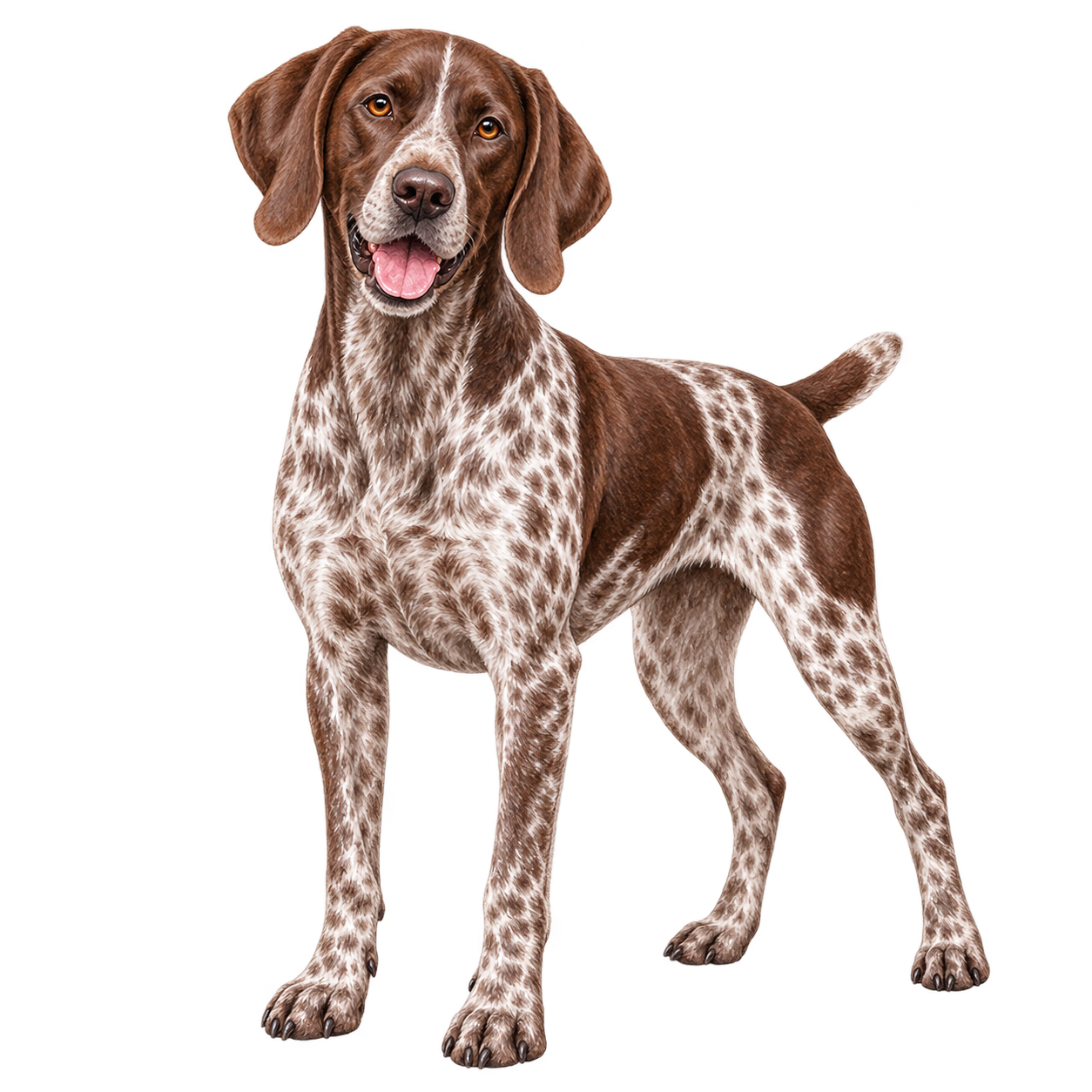
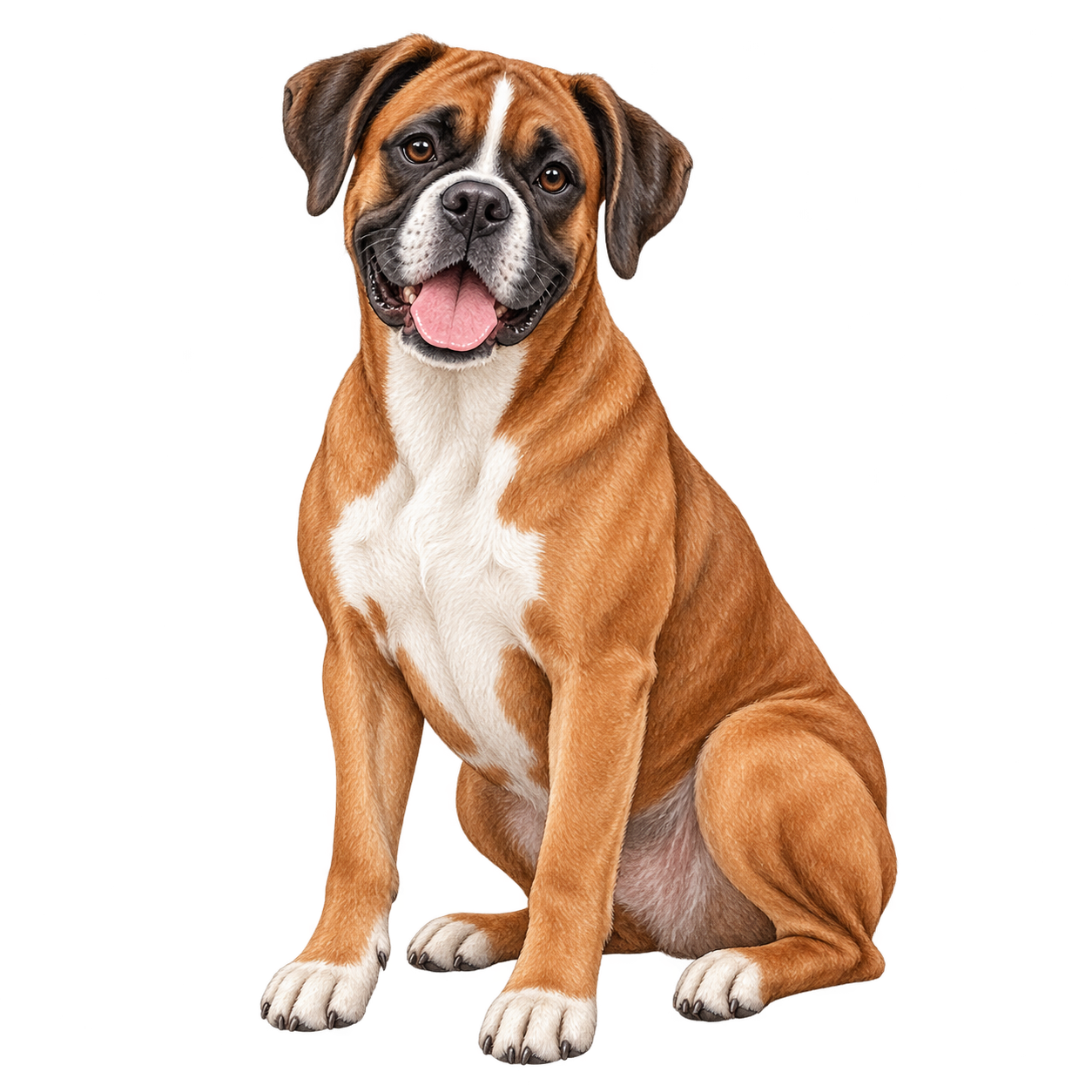
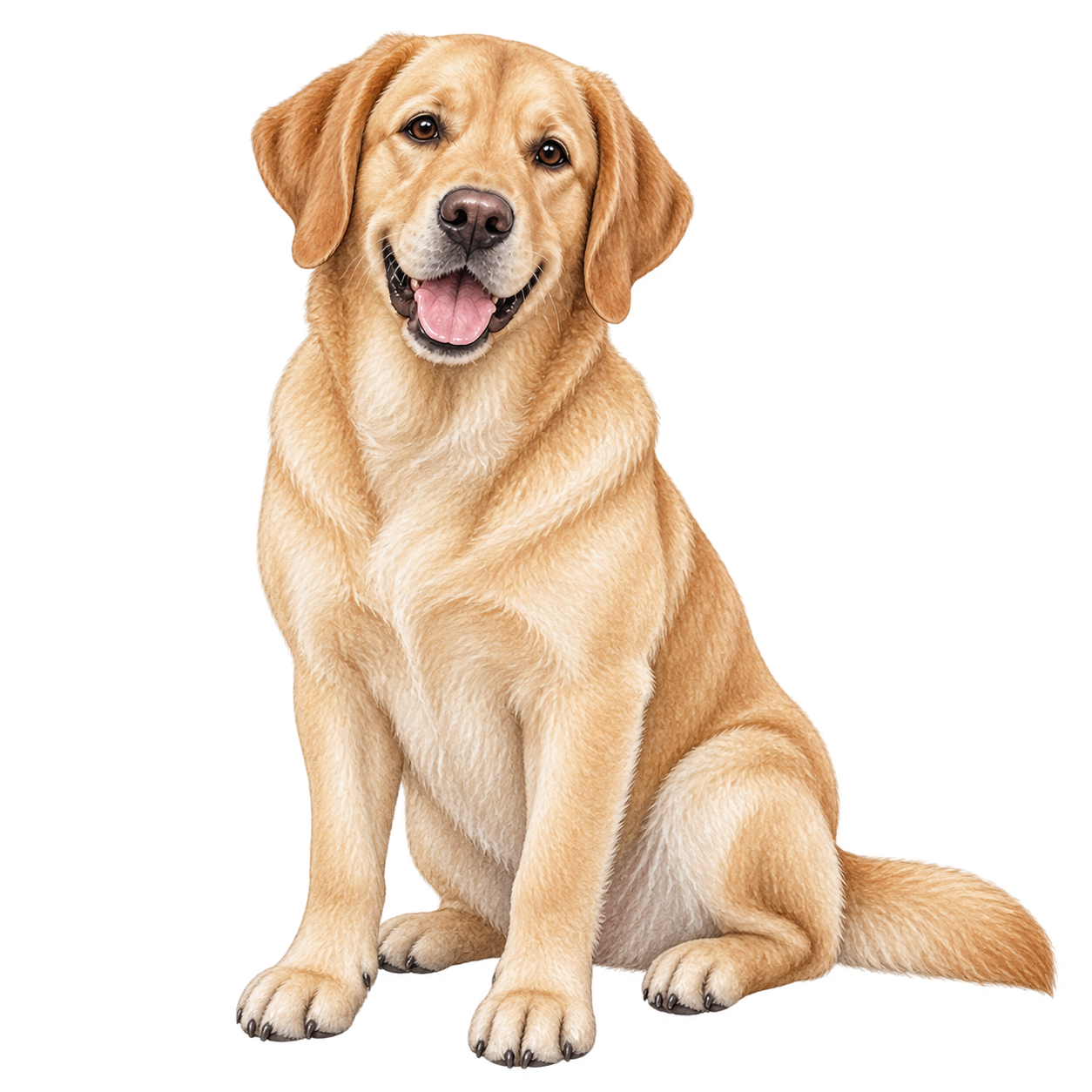
Frequently asked questions
- Are Dalmatians good family dogs?
- For active families, yes. They need lots of exercise and consistent training.
- Do Dalmatians shed a lot?
- Yes — constantly. Their short hairs stick to everything.
- Are Dalmatians often deaf?
- Deafness is common. Reputable breeders BAER test every puppy.