Working group
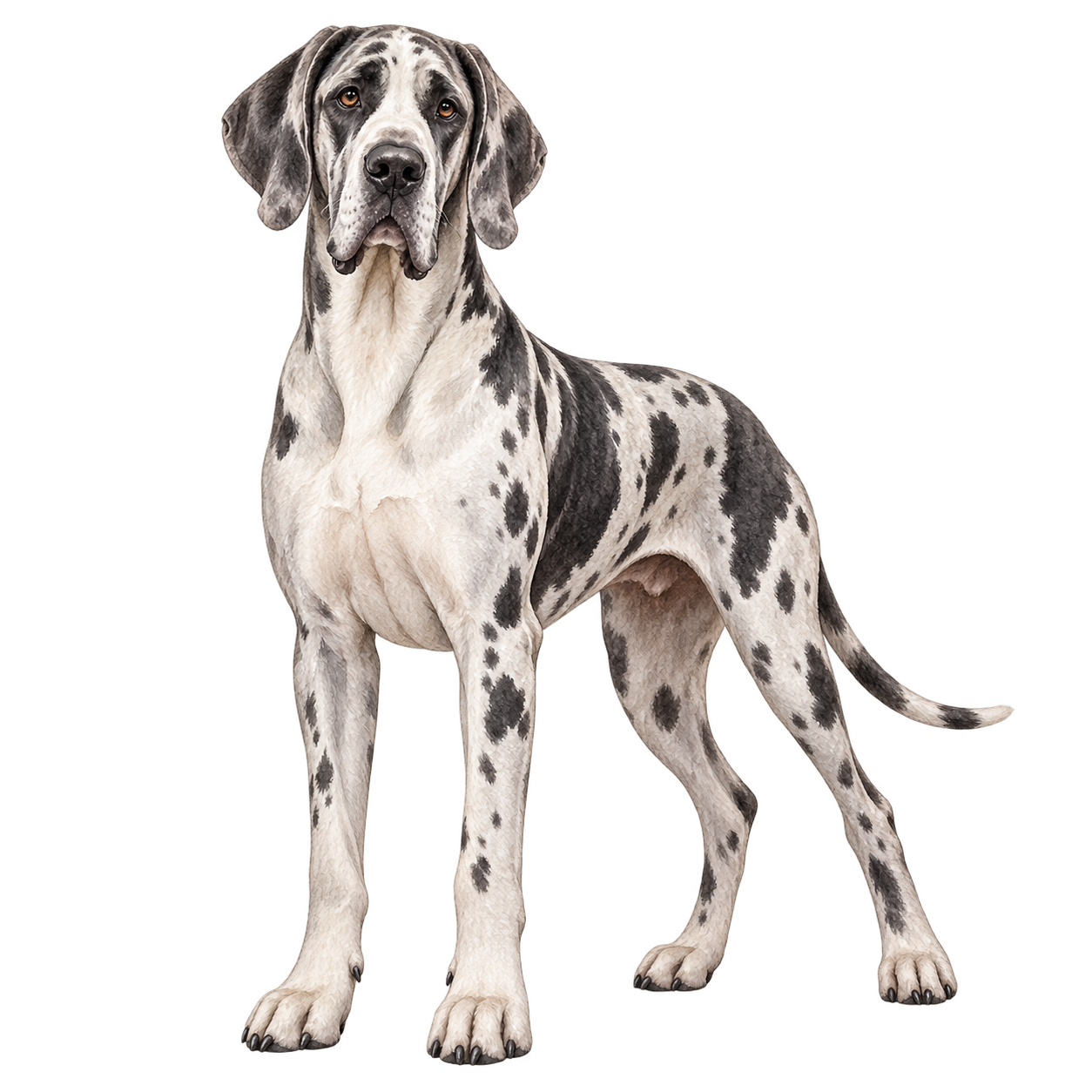
Great Dane
The Apollo of dogs — gentle, dignified and enormous.
Great Danes are giant, graceful dogs with a sweet, easygoing temperament. They are calmer indoors than many smaller breeds, but their size affects everything from car choice to vet bills, and their lifespan is short.
- Height
- 28–32 in71–81 cm
- Weight
- 110–175 lb50–79 kg
- Life expectancy
- 7–10 years
- Size
- Giant
- Group
- Working
- Origin
- Germany
Coat: Short, thick, smooth coat. Colours: Fawn, Brindle, Harlequin, Black, Blue, Mantle, Merle.
At a glance
Ratings describe typical dogs of the breed on a 1–5 scale. Individual dogs vary with lines, upbringing and training.
Temperament
Danes are friendly, patient and affectionate, often trying to be lap dogs despite their size. Most are gentle with children and polite with strangers, though they make impressive watchdogs.
Puppies grow extremely fast and are clumsy and boisterous. Without early lead training and manners, an adolescent Dane can easily knock people over. Some are sensitive or shy and need confident socialisation.
Living with a Great Dane
Exercise
Adults need about an hour of moderate exercise daily. Avoid forced running and jumping until growth finishes, around 18–24 months.
Grooming
Easy weekly brushing. Moderate shedding and some drool. Keep nails short to protect their feet.
Training
Essential from day one — a 150 lb dog needs manners. Reward-based training works well.
Kids & other pets
Gentle with children, though their size can topple toddlers. Usually good with other dogs.
Time alone
Tolerates moderate alone time; needs space to stretch out and a large crate or room.
Home fit
Best suited to a house with secure outdoor space; apartment living is hard on this breed and its neighbours.
Is a Great Dane right for you?
Take the Breed Fit quiz to see how a Great Dane matches your home, schedule and tolerance for shedding, barking and exercise — or find out which breed matches your personality with Dogsona.
Health
With good breeding and care, a Great Dane typically lives 7–10 years. These are the conditions most associated with the breed — not a prediction for any individual dog.
Gastric dilatation-volvulus (bloat)
Great Danes have the highest bloat risk of any breed. Many owners opt for a preventive gastropexy during spay or neuter.
Dilated cardiomyopathy (DCM)
A serious heart disease common in the breed.
Hip dysplasia
Screened parents and controlled puppy growth help.
Osteosarcoma
Bone cancer is more common in giant breeds.
Wobbler syndrome
Spinal compression in the neck causing an unsteady gait.
Ask a breeder for
- Hip evaluation
- Cardiac examination
- Thyroid evaluation
- Eye examination
Sources: OFA CHIC breed requirements: Great Dane; Great Dane Club of America. This is general information, not veterinary advice — talk to your vet about your own dog.
Cost to own
After the first year, expect roughly $2,000–$4,000 a year for food, routine vet care, preventives, insurance and supplies (US estimate).
- Food, medication and anaesthesia are dosed by weight, so every vet visit costs more for a big dog.
- Pet insurance for a puppy typically runs $30–$60 a month; premiums rise with age and breed risk.
History
Despite the name, Great Danes are German. They were developed from mastiff-type dogs as boarhounds — powerful enough to hold wild boar — and later became estate guardians and status symbols for German nobility.
Germany named the Deutsche Dogge its national dog in 1876. The AKC recognised the Great Dane in 1887.
Did you know?
- Great Danes have held the Guinness record for tallest dog several times; Zeus measured 44 in at the shoulder.
- Scooby-Doo is a Great Dane.
- Danes are nicknamed the “Apollo of dogs”.
Library guides for Great Dane owners
Training
Heel and Loose-Leash Walking
A strong Great Dane needs loose-lead manners early.
Grooming
Ear Cleaning
Ear care matters for this coat and ear type.
Exercise & Play
Dog Walking
Getting daily walks right for a Great Dane.
Grooming
Nail Clipping
Every dog needs regular nail care.
New Dog Owners
How to find a reputable dog breeder
What to ask a Great Dane breeder about health screening.
New Dog Owners
The real cost of a puppy: what to budget before you bring one home
Budget for the first year and beyond.
Similar breeds
Frequently asked questions
- Are Great Danes good apartment dogs?
- Surprisingly, they can be — they are calm indoors. Space, stairs and lifts need thought.
- How long do Great Danes live?
- Typically 7–10 years, due to bloat, heart disease and cancer.
- How much do Great Danes eat?
- Adults may eat 6–10 cups of food daily; feed large-breed puppy food to control growth.