Hound group
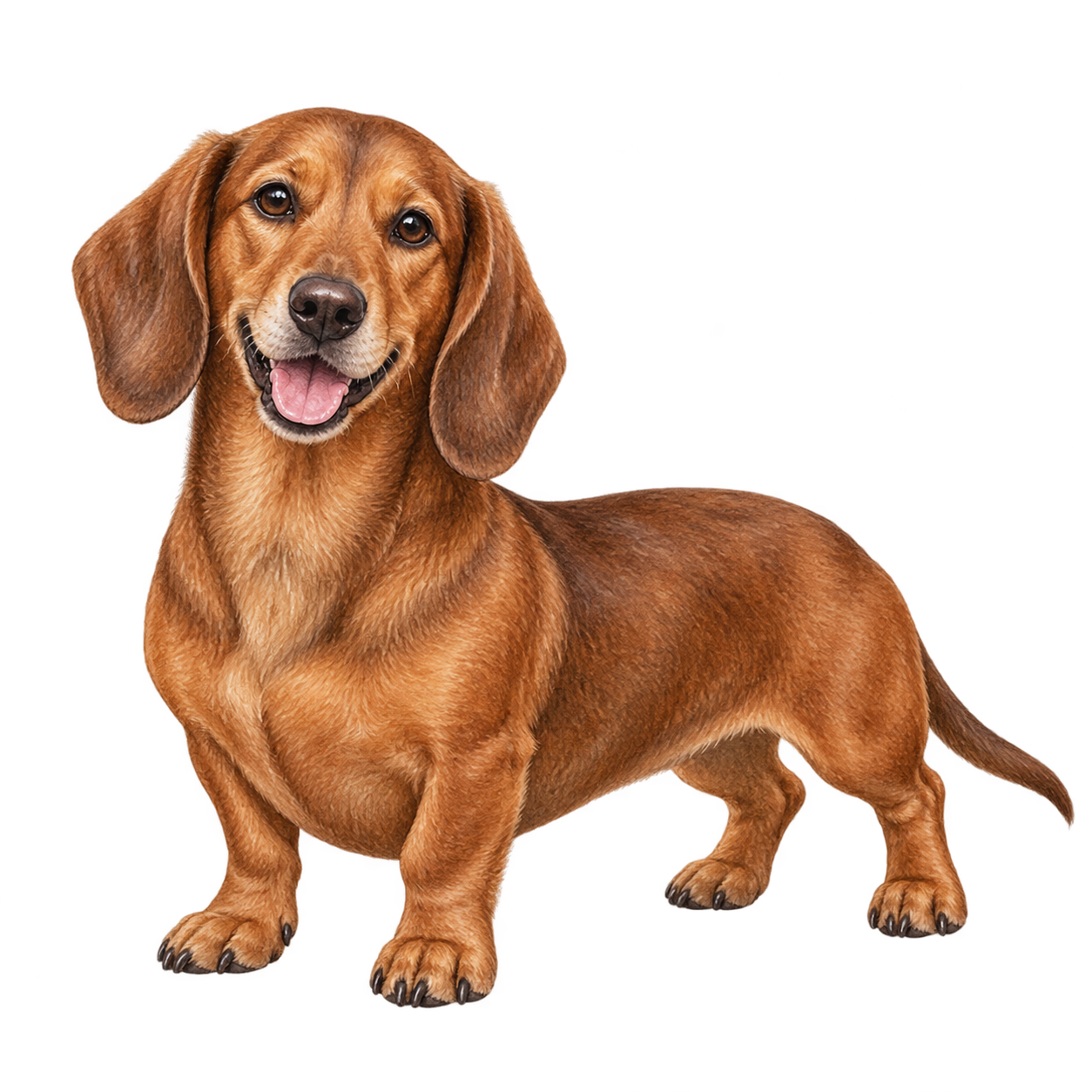
Dachshund
Brave, bold and long-bodied — a badger hound in a small package.
Dachshunds are courageous, clever hounds bred to go to ground after badgers. They are affectionate, entertaining companions, but stubborn, vocal and highly prone to back injuries that owners must actively prevent.
- Height
- 5–9 in13–23 cm
- Weight
- 8–32 lb4–15 kg
- Life expectancy
- 12–16 years
- Size
- Small
- Group
- Hound
- Origin
- Germany
Coat: Smooth, wirehaired or longhaired. Colours: Red, Cream, Black and tan, Chocolate and tan, Dapple, Brindle, Piebald.
At a glance
Ratings describe typical dogs of the breed on a 1–5 scale. Individual dogs vary with lines, upbringing and training.
Temperament
Dachshunds are loyal, playful and full of character. They love their families, enjoy burrowing under blankets and are surprisingly tough for their size. Many are excellent watchdogs with a big bark.
They were bred to work independently underground, so they can be headstrong, suspicious of strangers and prone to barking and digging. Some guard food or toys. Consistent, patient training and early socialisation make a big difference.
Varieties
- Standard
- 8–9 in tall, 16–32 lb.
- Miniature
- 5–6 in tall, 11 lb or under.
- Coats
- Smooth (most common), wirehaired (terrier-like, feisty) and longhaired (often softer-natured).
Living with a Dachshund
Exercise
Around 30–60 minutes of walking daily, depending on size. Keep them lean, and discourage jumping off furniture and using stairs; use ramps.
Grooming
Smooths need little; longhairs need regular brushing; wirehairs need hand-stripping two or three times a year.
Training
Smart but stubborn. Short, food-rewarded sessions work. House-training can be slow, especially in cold or wet weather.
Kids & other pets
Good with respectful older children. Handle carefully — always support the back and rear when lifting.
Time alone
Copes with a few hours alone, but bored Dachshunds bark, dig at carpets and chew. A crate or safe room and a long-lasting chew help.
Home fit
Can manage in an apartment with committed daily exercise; a house with outdoor space is easier.
Is a Dachshund right for you?
Take the Breed Fit quiz to see how a Dachshund matches your home, schedule and tolerance for shedding, barking and exercise — or find out which breed matches your personality with Dogsona.
Health
With good breeding and care, a Dachshund typically lives 12–16 years. These are the conditions most associated with the breed — not a prediction for any individual dog.
Intervertebral disc disease (IVDD)
Around one in four Dachshunds develops disc problems. Keep them lean, limit jumping and seek help immediately for pain or wobbliness.
Obesity
Extra weight greatly increases back strain.
Progressive retinal atrophy (cord1-PRA)
Inherited blindness in Miniature Dachshunds; DNA testing is available.
Lafora disease
A progressive form of epilepsy seen in Miniature Wirehaired Dachshunds; DNA testing identifies carriers.
Double-dapple defects
Breeding two dapples risks blindness and deafness; reputable breeders avoid it.
Ask a breeder for
- Eye examination
- Patella evaluation
- DNA tests: cord1-PRA (miniatures) and Lafora (wirehairs)
- Spinal disc calcification X-ray scoring where available
Sources: OFA CHIC breed requirements: Dachshund; Dachshund Club of America; Dachshund Breed Council (UK) IVDD programme. This is general information, not veterinary advice — talk to your vet about your own dog.
Cost to own
After the first year, expect roughly $1,000–$2,000 a year for food, routine vet care, preventives, insurance and supplies (US estimate).
- Pet insurance for a puppy typically runs $30–$60 a month; premiums rise with age and breed risk.
History
Dachshunds were developed in Germany from the 1600s to hunt badgers — “Dachs” means badger and “Hund” means dog. Their long bodies, strong forelegs and loud bark let them dig into dens and signal hunters above ground.
Smaller Dachshunds were bred for rabbits. The breed became popular in Britain after Queen Victoria kept them and was recognised by the AKC in 1885.
Did you know?
- A Dachshund named Waldi was the first official Olympic mascot, at the 1972 Munich Games.
- The Dachshund’s loud bark was bred on purpose so hunters could hear it underground.
- Pablo Picasso and Andy Warhol both owned Dachshunds.
Library guides for Dachshund owners
Training
Come (Recall)
High chase drive makes a reliable recall essential.
Exercise & Play
Dog Walking
Getting daily walks right for a Dachshund.
Grooming
Nail Clipping
Every dog needs regular nail care.
New Dog Owners
How to find a reputable dog breeder
What to ask a Dachshund breeder about health screening.
New Dog Owners
The real cost of a puppy: what to budget before you bring one home
Budget for the first year and beyond.
Similar breeds
Frequently asked questions
- Are Dachshunds good with kids?
- They can be, with older children who handle them gently and support their backs.
- How do I protect my Dachshund’s back?
- Keep them slim, use ramps instead of stairs, prevent jumping off furniture and lift with both hands under chest and rear.
- Do Dachshunds bark a lot?
- Yes — they are alert watchdogs with a big voice.