Non-Sporting group
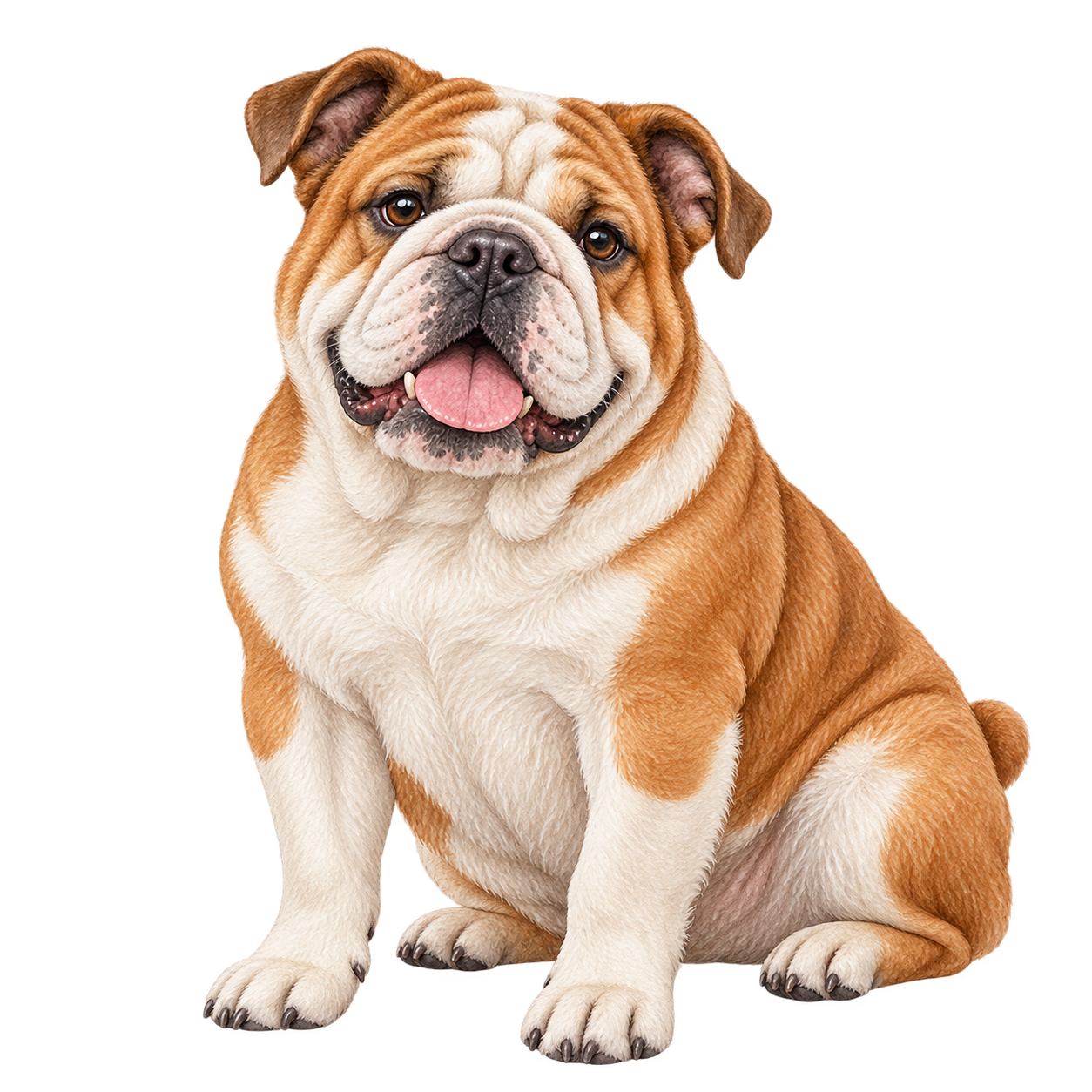
Bulldog
Dignified, docile and devoted — a sofa companion with serious health needs.
Bulldogs are calm, affectionate and famously gentle, but their exaggerated build brings breathing, skin, joint and birthing problems. They suit relaxed homes that can manage heat, vet bills and daily fold care.
- Height
- 14–15 in36–38 cm
- Weight
- 40–50 lb18–23 kg
- Life expectancy
- 8–10 years
- Size
- Medium
- Group
- Non-Sporting
- Origin
- England
Coat: Short, fine, smooth coat. Colours: Brindle, Fawn, Red, White, Piebald, Fallow.
At a glance
Ratings describe typical dogs of the breed on a 1–5 scale. Individual dogs vary with lines, upbringing and training.
Temperament
Modern Bulldogs are sweet, dependable and courageous. They are content with short walks and long naps, bond strongly with their people and are usually patient with children.
They can be stubborn and are not built for athletic activity. Some guard food or toys, and many are sensitive to heat and exertion. Their loud snoring is common but is a sign of airway restriction.
Living with a Bulldog
Exercise
Two or three short walks and gentle play daily. Avoid heat, humidity and strenuous activity. Never leave a Bulldog in a warm car, and supervise near water.
Grooming
Clean and dry facial folds, the tail pocket and any skin creases several times a week. Weekly brushing handles the coat.
Training
Food-motivated but stubborn. Keep sessions short and positive. Use a harness rather than a collar.
Kids & other pets
Gentle and patient with children and generally good with other pets.
Time alone
Tolerates moderate alone time but needs air conditioning in warm weather.
Home fit
Adapts well to apartments and smaller homes when daily needs are met.
Is a Bulldog right for you?
Take the Breed Fit quiz to see how a Bulldog matches your home, schedule and tolerance for shedding, barking and exercise — or find out which breed matches your personality with Dogsona.
Health
With good breeding and care, a Bulldog typically lives 8–10 years. These are the conditions most associated with the breed — not a prediction for any individual dog.
Brachycephalic obstructive airway syndrome (BOAS)
Narrow nostrils, elongated soft palate and small trachea restrict breathing. Surgery may be needed.
Skin fold dermatitis
Deep folds trap moisture and bacteria; clean them regularly.
Hip dysplasia
Very common in the breed — most Bulldogs show abnormal hips on X-ray, though many cope well if kept lean.
Cherry eye and entropion
Eyelid problems that often need surgical correction.
Birthing difficulties
Most Bulldogs are born by caesarean section.
Ask a breeder for
- Respiratory function (BOAS) grading
- Cardiac and patella evaluation
- Tracheal evaluation
- DNA test for hyperuricosuria
Sources: OFA CHIC breed requirements: Bulldog; Bulldog Club of America; University of Cambridge BOAS Research Group. This is general information, not veterinary advice — talk to your vet about your own dog.
Cost to own
After the first year, expect roughly $1,200–$2,500 a year for food, routine vet care, preventives, insurance and supplies (US estimate).
- Flat-faced breeds often need airway surgery or specialist care; insurance premiums are higher.
- Pet insurance for a puppy typically runs $30–$60 a month; premiums rise with age and breed risk.
History
Bulldogs were bred in England for bull-baiting, a blood sport banned in 1835. Afterwards fanciers kept the breed alive by selecting for gentler temperament and a more exaggerated shape.
The Bulldog Club was founded in England in 1875, and the AKC recognised the breed in 1886. The Bulldog became a symbol of British tenacity and is a mascot for many schools, including Yale.
Did you know?
- Yale’s bulldog mascot, Handsome Dan, dates back to 1889.
- Bulldogs are the breed most associated with Winston Churchill’s wartime image.
- The loose skin on the face was once thought to channel blood away from the eyes during baiting.
Library guides for Bulldog owners
Grooming
Ear Cleaning
Ear care matters for this coat and ear type.
Exercise & Play
Dog Walking
Getting daily walks right for a Bulldog.
Grooming
Nail Clipping
Every dog needs regular nail care.
New Dog Owners
How to find a reputable dog breeder
What to ask a Bulldog breeder about health screening.
New Dog Owners
The real cost of a puppy: what to budget before you bring one home
Budget for the first year and beyond.
Similar breeds
Frequently asked questions
- Are Bulldogs good apartment dogs?
- Yes, they are calm and quiet indoors — but they need air conditioning and short, cool walks.
- Why do Bulldogs have short lifespans?
- Breathing, heart, skin and joint problems linked to their build shorten average lifespan to around 8–10 years.
- Can Bulldogs swim?
- Most cannot. Use a life jacket and supervise around water.