Toy group
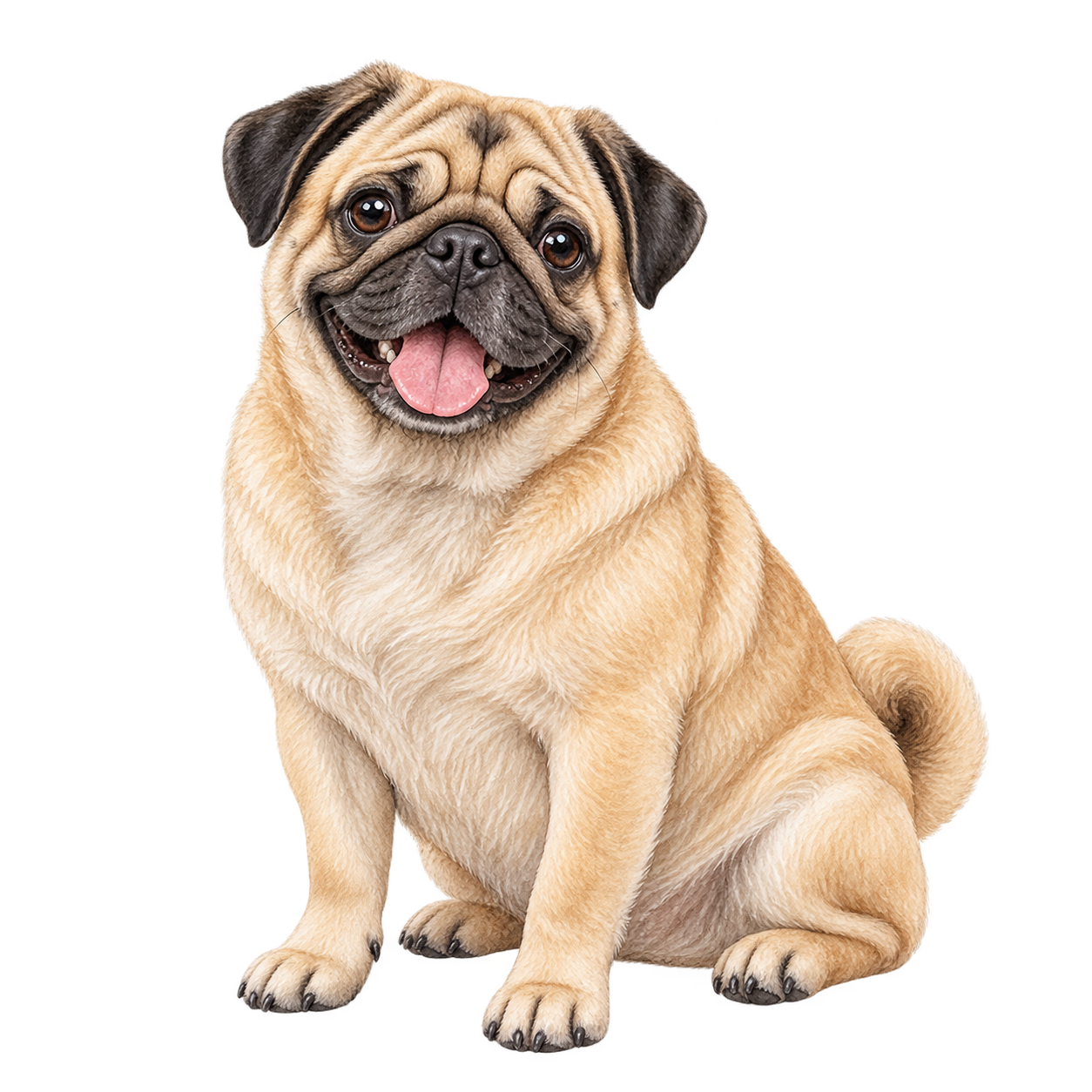
Pug
Charming, comical and devoted — a lap dog with serious health needs.
Pugs are affectionate, playful companions bred for centuries to be lap dogs. They are easygoing and good with families, but their flat faces bring breathing, eye and heat problems that owners must manage.
- Height
- 10–13 in25–33 cm
- Weight
- 14–18 lb6–8 kg
- Life expectancy
- 13–15 years
- Size
- Small
- Group
- Toy
- Origin
- China
Coat: Short, fine, smooth double coat. Colours: Fawn, Black, Silver fawn, Apricot fawn.
At a glance
Ratings describe typical dogs of the breed on a 1–5 scale. Individual dogs vary with lines, upbringing and training.
Temperament
Pugs are sociable, loving and eager to please. They follow their people around, enjoy company and usually get along with children and other pets.
They can be stubborn and are prone to weight gain. Many snore and struggle with heat, exercise and anaesthesia.
Living with a Pug
Exercise
Short walks and play, 30–45 minutes daily. Avoid heat and humidity.
Grooming
Brush weekly; Pugs shed more than expected. Clean facial wrinkles daily.
Training
Food-motivated but can be stubborn. Keep sessions short and fun.
Kids & other pets
Excellent with children and other pets — sturdy, tolerant and playful. Teach children not to squeeze or carry them, which strains breathing.
Time alone
Pugs prefer company and often follow owners room to room. They tolerate moderate alone time, but need a cool room in warm weather.
Home fit
Adapts well to apartments and smaller homes when daily needs are met.
Is a Pug right for you?
Take the Breed Fit quiz to see how a Pug matches your home, schedule and tolerance for shedding, barking and exercise — or find out which breed matches your personality with Dogsona.
Health
With good breeding and care, a Pug typically lives 13–15 years. These are the conditions most associated with the breed — not a prediction for any individual dog.
Brachycephalic obstructive airway syndrome (BOAS)
Restricted breathing is common. Choose puppies with open nostrils and parents with BOAS grading.
Eye injuries
Prominent eyes are prone to ulcers and proptosis.
Pug dog encephalitis
A fatal inflammatory brain disease; a DNA risk test is available.
Spinal malformations
Hemivertebrae can cause neurological problems.
Obesity
Extra weight worsens breathing problems.
Ask a breeder for
- Respiratory function (BOAS) grading
- Eye examination
- Patella and hip evaluation
- DNA test for Pug dog encephalitis risk
Sources: OFA CHIC breed requirements: Pug; Pug Dog Club of America; University of Cambridge BOAS Research Group. This is general information, not veterinary advice — talk to your vet about your own dog.
Cost to own
After the first year, expect roughly $1,000–$2,000 a year for food, routine vet care, preventives, insurance and supplies (US estimate).
- Flat-faced breeds often need airway surgery or specialist care; insurance premiums are higher.
- Pet insurance for a puppy typically runs $30–$60 a month; premiums rise with age and breed risk.
History
Pugs originated in China more than 2,000 years ago as companions to emperors. Dutch traders brought them to Europe in the 1500s, where they became favourites of the House of Orange — a Pug named Pompey is said to have saved William the Silent from assassins.
Pugs became fashionable across European courts: Josephine Bonaparte’s Pug, Fortune, famously bit Napoleon on their wedding night. Victorian breeders standardised the breed, and the AKC recognised it in 1885.
Did you know?
- A group of Pugs is called a “grumble”.
- The Latin motto “Multum in parvo” — much in little — describes the breed.
- Pugs were painted by Hogarth and Goya.
Library guides for Pug owners
Grooming
Brushing
A brushing routine keeps Pug shedding under control.
Exercise & Play
Dog Walking
Getting daily walks right for a Pug.
Grooming
Nail Clipping
Every dog needs regular nail care.
New Dog Owners
How to find a reputable dog breeder
What to ask a Pug breeder about health screening.
New Dog Owners
The real cost of a puppy: what to budget before you bring one home
Budget for the first year and beyond.
Similar breeds
Frequently asked questions
- Are Pugs good apartment dogs?
- Yes — they are small and calm indoors, but need air conditioning in summer.
- Do Pugs shed?
- Yes, more than most people expect for a short coat.
- Do Pugs have breathing problems?
- Many do. Choose a breeder who selects for open airways.