Working group
Alaskan Malamute
An Arctic freight hauler — friendly, powerful and built for the cold.
Alaskan Malamutes are strong, heavy-boned sled dogs bred to pull loads over long distances. They are affectionate and friendly with people, but independent, strong pullers with high prey drive and an enormous shedding coat.
- Height
- 23–25 in58–64 cm
- Weight
- 75–85 lb34–39 kg
- Life expectancy
- 10–14 years
- Size
- Large
- Group
- Working
- Origin
- Alaska, United States
Coat: Thick, coarse, weatherproof double coat. Colours: Grey and white, Black and white, Sable and white, Red and white, Seal and white, All white.
At a glance
Ratings describe typical dogs of the breed on a 1–5 scale. Individual dogs vary with lines, upbringing and training.
Temperament
Malamutes are playful, loving and usually friendly with everyone, including strangers — they make poor guard dogs. They enjoy family life and often “talk” with woo-woo vocalisations rather than barking.
They are independent thinkers bred to make decisions on the trail, so training takes patience. Many are dominant with other dogs, and their prey drive makes cats and small pets risky. Bored Malamutes dig, howl and escape.
Living with a Alaskan Malamute
Exercise
Needs 90 minutes or more of vigorous daily activity. Hiking, pulling sports and skijoring are ideal; avoid hard exercise in heat.
Grooming
Brush several times a week and daily during the heavy seasonal coat blow. Never shave the double coat — it insulates against heat too.
Training
Clever but independent; short, varied, reward-based sessions work best. Teach loose-lead walking early — adults pull with great strength.
Kids & other pets
Affectionate and usually good with children, though boisterous. Often best with opposite-sex dogs; unsafe with small pets.
Time alone
Bored Malamutes dig, howl and escape. Secure, dig-proof fencing and exercise before absences are essential.
Home fit
Best suited to a house with secure outdoor space; apartment living is hard on this breed and its neighbours.
Is a Alaskan Malamute right for you?
Take the Breed Fit quiz to see how a Alaskan Malamute matches your home, schedule and tolerance for shedding, barking and exercise — or find out which breed matches your personality with Dogsona.
Health
With good breeding and care, a Alaskan Malamute typically lives 10–14 years. These are the conditions most associated with the breed — not a prediction for any individual dog.
Hip dysplasia
Screened parents reduce the risk of joint disease in this heavy-boned breed.
Alaskan Malamute polyneuropathy
An inherited nerve disease causing weakness; a DNA test is available.
Hypothyroidism
An underactive thyroid causing weight gain and coat problems; managed with medication.
Cataracts
Inherited cataracts occur; annual eye exams are recommended.
Chondrodysplasia
An inherited form of dwarfism affecting the legs; breeders screen their lines.
Ask a breeder for
- Hip evaluation
- Eye examination
- Thyroid evaluation
- DNA test for polyneuropathy
Sources: OFA CHIC breed requirements: Alaskan Malamute; Alaskan Malamute Club of America. This is general information, not veterinary advice — talk to your vet about your own dog.
Cost to own
After the first year, expect roughly $1,500–$3,000 a year for food, routine vet care, preventives, insurance and supplies (US estimate).
- Food, medication and anaesthesia are dosed by weight, so every vet visit costs more for a big dog.
- Pet insurance for a puppy typically runs $30–$60 a month; premiums rise with age and breed risk.
History
The breed is named after the Mahlemut, an Inupiaq people of northwestern Alaska, who relied on these dogs to haul heavy sleds, hunt seals and help hold off polar bears. Malamutes are among the oldest Arctic sled dog types.
During the Klondike Gold Rush many Malamutes were crossbred, and the breed was later restored from remaining lines. Malamutes served on Admiral Byrd’s Antarctic expeditions and in WWII. The AKC recognised the breed in 1935; it is Alaska’s state dog.
Did you know?
- The Alaskan Malamute is Alaska’s official state dog.
- Malamutes are built for strength rather than speed — they hauled freight, not racing sleds.
- Many Malamutes “talk” with howls and woo-woos instead of barking.
Library guides for Alaskan Malamute owners
Grooming
Brushing
A brushing routine keeps Alaskan Malamute shedding under control.
Grooming
Bathing
How to bath a Alaskan Malamute without drying out the coat.
Training
Come (Recall)
High chase drive makes a reliable recall essential.
Training
Heel and Loose-Leash Walking
A strong Alaskan Malamute needs loose-lead manners early.
Exercise & Play
Fetch
A fast way to meet a high exercise need.
Exercise & Play
Dog Road Work
Structured conditioning for high-stamina dogs.
Similar breeds
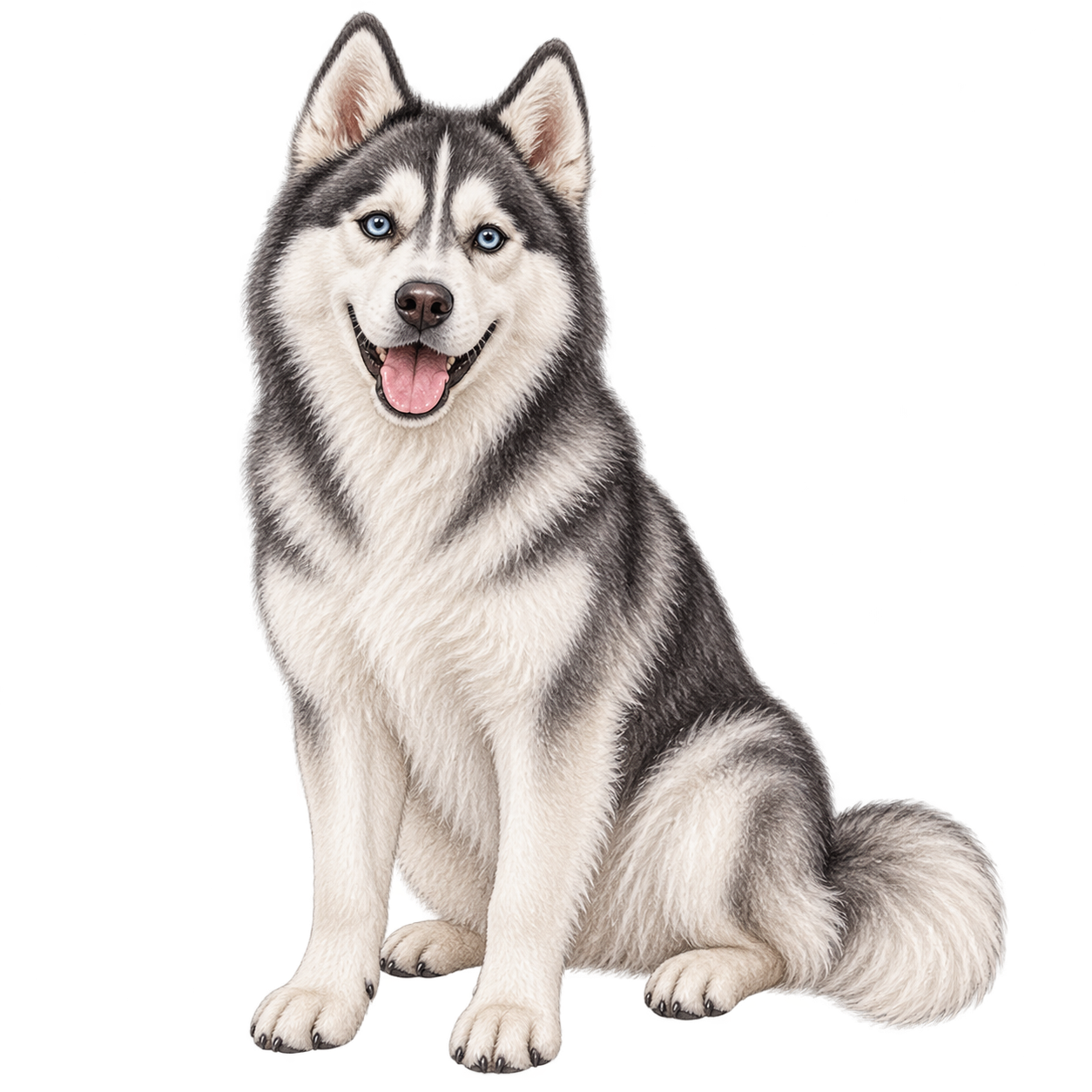
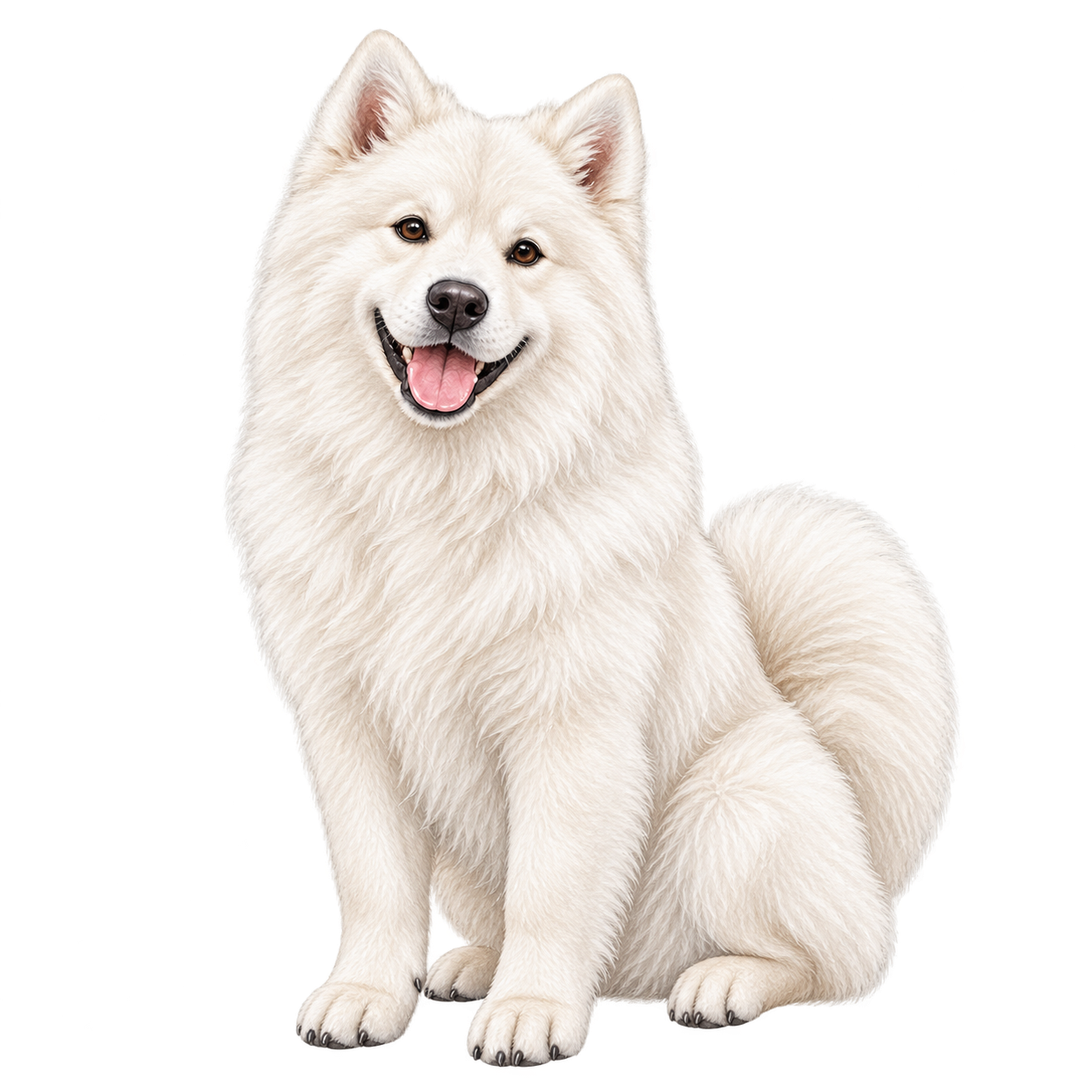
Frequently asked questions
- Malamute vs Siberian Husky?
- Malamutes are larger, heavier and built for hauling; Huskies are lighter and faster. Both are independent and shed heavily.
- Are Alaskan Malamutes good family dogs?
- Yes, for active families who can handle their strength, shedding and independence.
- Can Malamutes live in hot climates?
- With care — shade, air conditioning and exercise in cool hours — but they are happiest in cold weather.