Toy group
Silky Terrier
A toy with a terrier’s heart — silky, spirited and busy.
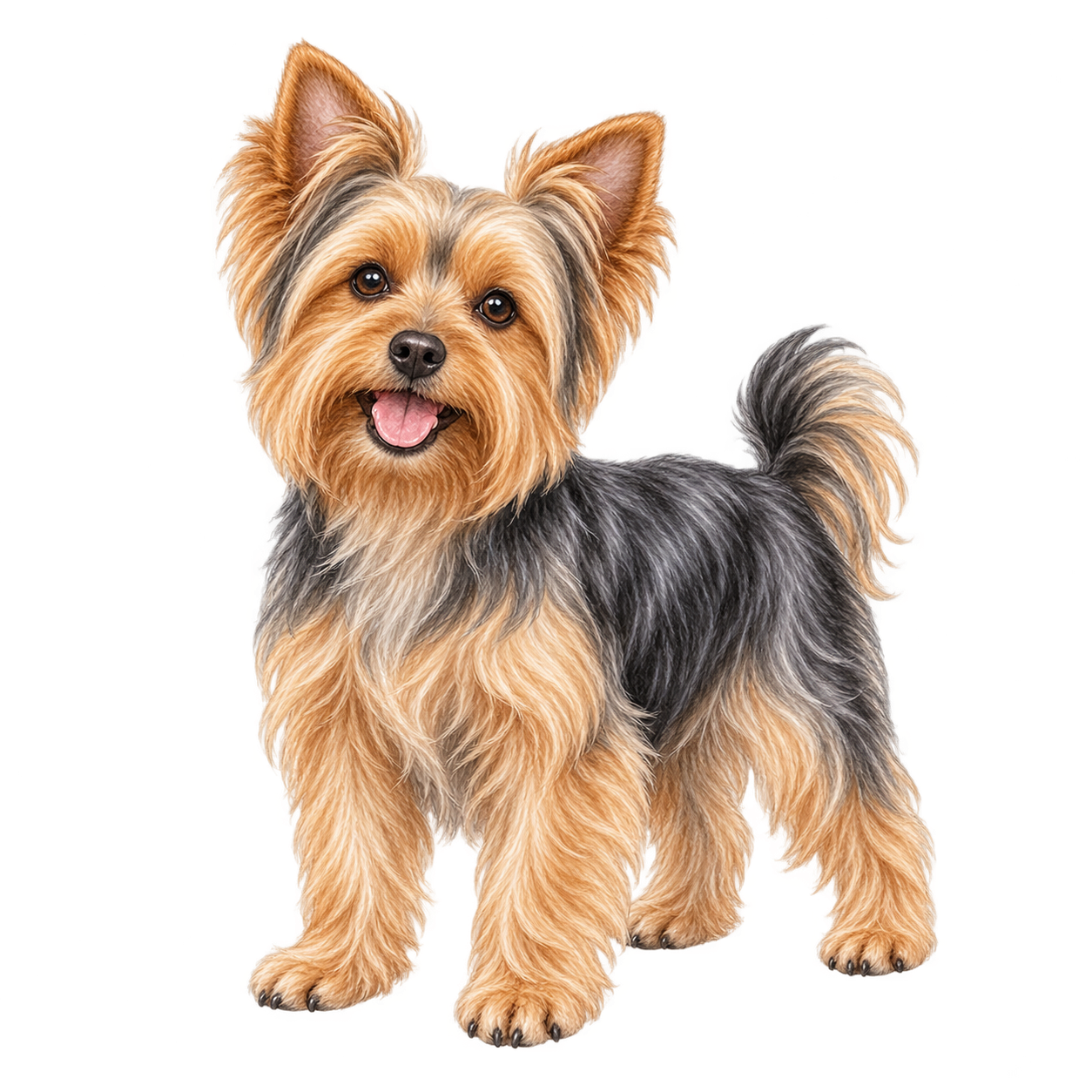
Silky Terriers are small, silky-coated terriers from Australia. They look like toy dogs but act like terriers: lively, curious and fearless, with a strong instinct to chase and bark.
- Height
- 9–10 in23–25 cm
- Weight
- 8–10 lb4–5 kg
- Life expectancy
- 13–15 years
- Size
- Toy
- Group
- Toy
- Origin
- Australia
Coat: Long, fine, glossy, silky single coat. Colours: Blue and tan.
At a glance
Ratings describe typical dogs of the breed on a 1–5 scale. Individual dogs vary with lines, upbringing and training.
Temperament
Silkies are friendly, alert and energetic. They love activity and exploration and bond closely with their families.
They are true terriers: bold, sometimes bossy with other dogs, and keen to chase small animals. Many are vocal watchdogs.
Living with a Silky Terrier
Exercise
About 30–45 minutes of walks and games daily. They enjoy exploring and digging.
Grooming
Brush several times a week to keep the silky coat tangle-free. Low shedding.
Training
Bright but independent; short, positive sessions work best. Teach a quiet cue.
Kids & other pets
Better with older children. Can be bossy with other dogs; unsafe with rodents.
Time alone
Tolerates moderate alone time once exercised, but may bark at noises; leave toys and block window views.
Home fit
Adapts well to apartments and smaller homes when daily needs are met.
Is a Silky Terrier right for you?
Take the Breed Fit quiz to see how a Silky Terrier matches your home, schedule and tolerance for shedding, barking and exercise — or find out which breed matches your personality with Dogsona.
Health
With good breeding and care, a Silky Terrier typically lives 13–15 years. These are the conditions most associated with the breed — not a prediction for any individual dog.
Patellar luxation
Loose kneecaps occur in toy breeds.
Legg-Calvé-Perthes disease
Degeneration of the hip joint in young small dogs.
Tracheal collapse
Weak windpipe cartilage causes a honking cough; use a harness.
Diabetes mellitus
More common than average in the breed; watch for increased thirst.
Ask a breeder for
- Patella evaluation
- Eye examination
- Legg-Calvé-Perthes evaluation
Sources: OFA CHIC breed requirements: Silky Terrier; Silky Terrier Club of America. This is general information, not veterinary advice — talk to your vet about your own dog.
Cost to own
After the first year, expect roughly $900–$1,800 a year for food, routine vet care, preventives, insurance and supplies (US estimate).
- Professional grooming every 6–8 weeks adds roughly $500–$900 a year.
- Pet insurance for a puppy typically runs $30–$60 a month; premiums rise with age and breed risk.
History
Silky Terriers were developed in Australia in the late 1800s by crossing Australian Terriers with Yorkshire Terriers. They were companions but also killed rats and snakes.
The breed was once called the Sydney Silky and became popular with American servicemen stationed in Australia during WWII. The AKC recognised the Silky Terrier in 1955.
Did you know?
- Silkies were once called Sydney Silky Terriers.
- They are larger than Yorkies, with a longer body.
- Silkies were bred to hunt snakes as well as rats.
Library guides for Silky Terrier owners
Grooming
Brushing
Silky Terrier coats mat without regular brushing.
Grooming
Bathing
How to bath a Silky Terrier without drying out the coat.
Training
Come (Recall)
High chase drive makes a reliable recall essential.
Grooming
Ear Cleaning
Ear care matters for this coat and ear type.
Exercise & Play
Dog Walking
Getting daily walks right for a Silky Terrier.
Grooming
Nail Clipping
Every dog needs regular nail care.
Similar breeds
Frequently asked questions
- Silky Terrier vs Yorkshire Terrier?
- Silkies are slightly larger and longer, with a more terrier-like temperament.
- Are Silky Terriers hypoallergenic?
- No dog is truly hypoallergenic, but Silkies shed very little.
- Do Silky Terriers bark a lot?
- They can be very vocal.