Crossbreeds
Cavapoo
A gentle, teddy-bear companion — Cavalier sweetness with a Poodle coat.
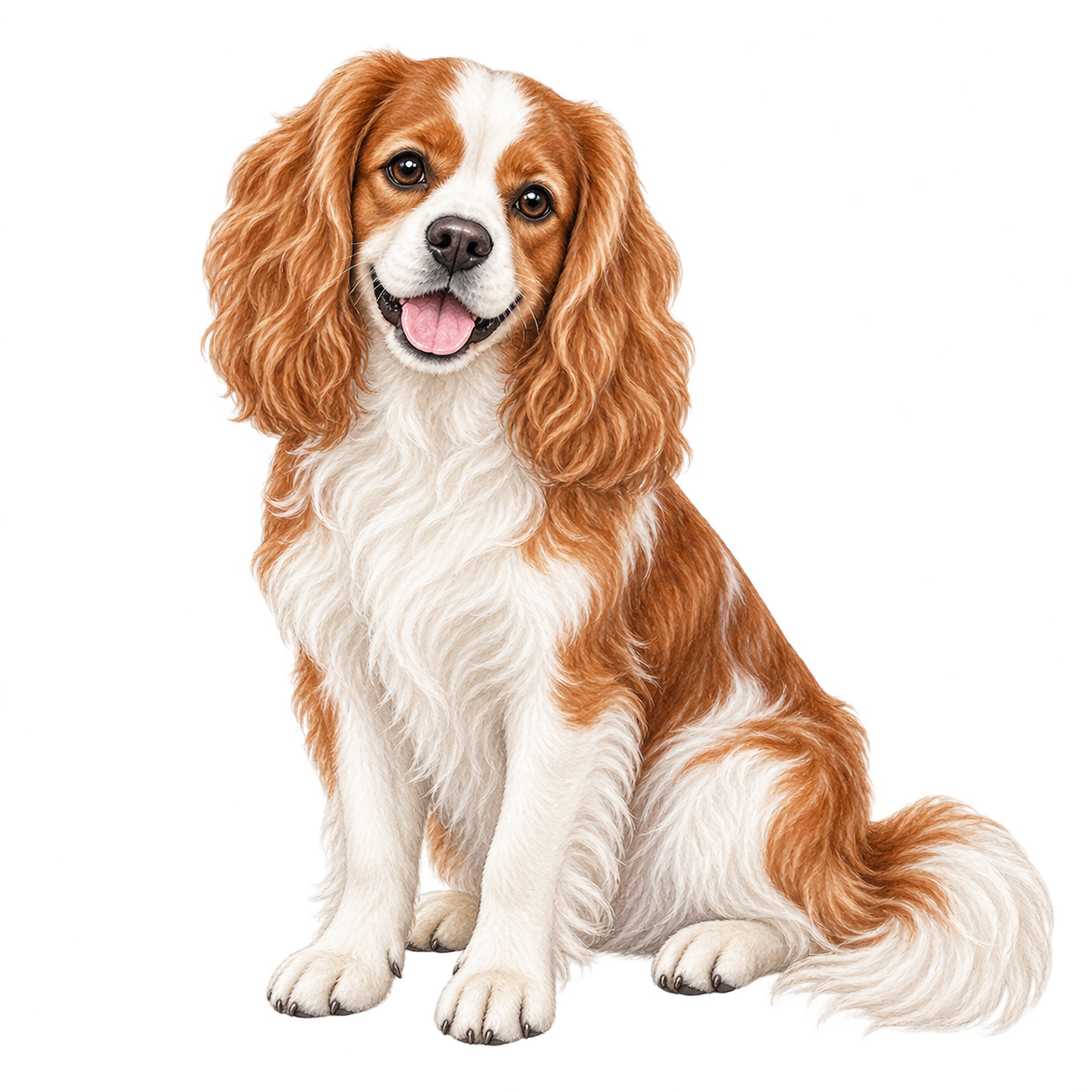
Cavapoos (also called Cavoodles) combine the affectionate Cavalier King Charles Spaniel with a small Poodle. They are gentle, sociable and adaptable companions, but they need regular grooming and plenty of company, and they can inherit the Cavalier’s heart problems.
A Cavalier King Charles Spaniel × Poodle (usually Miniature or Toy) cross. Not recognised by the AKC; size, coat and temperament vary more than in a purebred.
Parent breeds: Cavalier King Charles Spaniel × Poodle
- Height
- 9–14 in23–36 cm
- Weight
- 8–25 lb4–11 kg
- Life expectancy
- 12–15 years
- Size
- Small
- Group
- Crossbreeds
- Origin
- Australia and the United States
Coat: Soft, wavy to curly coat; shedding varies. Colours: Apricot, Red, Cream, Chocolate, Black, Tricolour, Blenheim.
At a glance
Ratings describe typical dogs of the breed on a 1–5 scale. Individual dogs vary with lines, upbringing and training.
Temperament
Cavapoos are loving, playful and eager to please. They usually get on with everyone — children, visitors, other dogs and cats — and adapt to both city and country life.
They are people-focused and often struggle when left alone. The Poodle side adds intelligence and trainability; the Cavalier side adds softness and a love of laps.
Living with a Cavapoo
Exercise
About 30–45 minutes of walks and play daily. They enjoy short games and trick training.
Grooming
Brush several times a week and book professional grooming every six to eight weeks. Clean the ears regularly.
Training
Eager and bright; reward-based training works very well. House-training needs consistency.
Kids & other pets
Excellent with children and other pets; gentle enough for most households.
Time alone
Prone to separation anxiety; they do best when someone is home for much of the day.
Home fit
Adapts well to apartments and smaller homes when daily needs are met.
Is a Cavapoo right for you?
Take the Breed Fit quiz to see how a Cavapoo matches your home, schedule and tolerance for shedding, barking and exercise — or find out which breed matches your personality with Dogsona.
Health
With good breeding and care, a Cavapoo typically lives 12–15 years. These are the conditions most associated with the breed — not a prediction for any individual dog.
Mitral valve disease
Inherited from the Cavalier side; ask for parents’ cardiology results.
Patellar luxation
Loose kneecaps are common in small dogs from both parent breeds.
Syringomyelia
A painful spinal condition seen in Cavaliers; MRI-screened parents lower the risk.
Progressive retinal atrophy
Inherited vision loss from Poodle lines; DNA testing is available.
Ear infections
Hairy, floppy ears trap moisture; clean them regularly.
Ask a breeder for
- Cavalier parent: cardiology exam and MRI for syringomyelia
- Both parents: patella and eye examinations
- DNA tests: prcd-PRA, episodic falling, dry eye / curly coat
Sources: OFA health testing guidance for Cavalier King Charles Spaniel and Poodle; American Cavalier King Charles Spaniel Club. This is general information, not veterinary advice — talk to your vet about your own dog.
Cost to own
After the first year, expect roughly $1,000–$2,000 a year for food, routine vet care, preventives, insurance and supplies (US estimate).
- Professional grooming every 6–8 weeks adds roughly $500–$900 a year.
- Pet insurance for a puppy typically runs $30–$60 a month; premiums rise with age and breed risk.
History
Breeders began crossing Cavaliers and Poodles in the 1990s, aiming for a small, friendly, lower-shedding companion. The Cavoodle became one of Australia’s most popular dogs.
Cavapoos are bred as first-generation crosses or multigenerational lines. Because they are a cross, the quality of the parents’ health testing matters enormously.
Did you know?
- In Australia, Cavapoos are called Cavoodles.
- Cavapoos consistently rank among Australia’s most popular dogs.
- Coat type can range from straight to tightly curled within the same litter.
Library guides for Cavapoo owners
Grooming
Brushing
Cavapoo coats mat without regular brushing.
Grooming
Bathing
How to bath a Cavapoo without drying out the coat.
Grooming
Ear Cleaning
Ear care matters for this coat and ear type.
Exercise & Play
Dog Walking
Getting daily walks right for a Cavapoo.
Grooming
Nail Clipping
Every dog needs regular nail care.
New Dog Owners
How to find a reputable dog breeder
What to ask a Cavapoo breeder about health screening.
Similar breeds
Frequently asked questions
- Are Cavapoos hypoallergenic?
- No dog is truly hypoallergenic. Many Cavapoos shed little, but it varies.
- Are Cavapoos good family dogs?
- Yes — they are gentle, affectionate and good with children.
- Do Cavapoos have health problems?
- They can inherit heart and spinal problems from Cavaliers, so choose a breeder who health-tests.