Terrier group
Russell Terrier
A short-legged bundle of terrier energy — clever, bold and relentless.
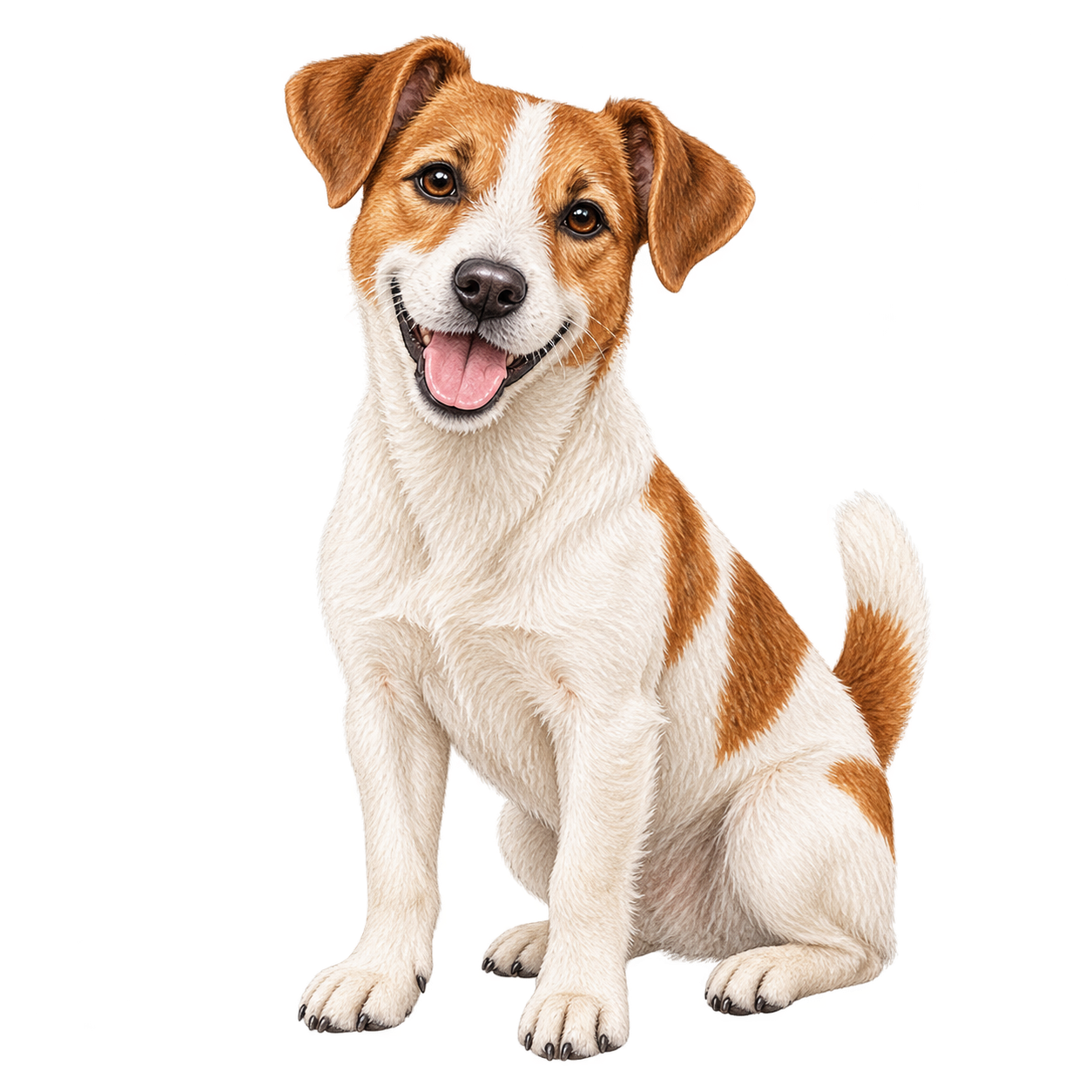
Russell Terriers are the shorter-legged, AKC-recognised cousins of the Parson Russell. They are lively, affectionate and intelligent, but extremely energetic, vocal and prey-driven.
- Height
- 10–12 in25–30 cm
- Weight
- 9–15 lb4–7 kg
- Life expectancy
- 12–14 years
- Size
- Small
- Group
- Terrier
- Origin
- England, developed in Australia
Coat: Smooth, broken or rough coat. Colours: White with black and/or tan markings.
At a glance
Ratings describe typical dogs of the breed on a 1–5 scale. Individual dogs vary with lines, upbringing and training.
Temperament
Russells are spirited, confident and fun. They bond closely with their families and love games, training and adventures.
They were bred to go to ground after foxes, so they dig, chase and can be scrappy with other dogs. Without enough exercise they become noisy and destructive.
Living with a Russell Terrier
Exercise
Needs 90 minutes or more of vigorous exercise daily, plus mental games.
Grooming
Weekly brushing; rough coats need occasional stripping. Moderate shedding.
Training
Very clever but independent; keep training short, fun and consistent.
Kids & other pets
Good with older children; can be dog-selective and unsafe with small pets.
Time alone
Bored Russells bark, dig and chew. Provide exercise and puzzles before absences.
Home fit
Can manage in an apartment with committed daily exercise; a house with outdoor space is easier.
Is a Russell Terrier right for you?
Take the Breed Fit quiz to see how a Russell Terrier matches your home, schedule and tolerance for shedding, barking and exercise — or find out which breed matches your personality with Dogsona.
Health
With good breeding and care, a Russell Terrier typically lives 12–14 years. These are the conditions most associated with the breed — not a prediction for any individual dog.
Primary lens luxation
The lens dislocates, causing pain and glaucoma; a DNA test is available.
Deafness
Linked to white coats; BAER testing identifies affected puppies.
Hereditary ataxia
Spinocerebellar ataxia causes loss of coordination; DNA tests exist.
Patellar luxation
Loose kneecaps occur in small terriers.
Ask a breeder for
- Eye examination and DNA test for primary lens luxation
- BAER hearing test
- Patella evaluation
Sources: OFA CHIC breed requirements: Russell Terrier; American Russell Terrier Club. This is general information, not veterinary advice — talk to your vet about your own dog.
Cost to own
After the first year, expect roughly $1,000–$2,000 a year for food, routine vet care, preventives, insurance and supplies (US estimate).
- Pet insurance for a puppy typically runs $30–$60 a month; premiums rise with age and breed risk.
History
Short-legged working terriers descended from Reverend John Russell’s lines were refined in England and, especially, Australia, where breeders established a standard for the smaller type.
The AKC recognised the Russell Terrier in 2012, distinct from the taller Parson Russell Terrier.
Did you know?
- The Russell Terrier was largely developed in Australia.
- It is shorter and longer in body than the Parson Russell Terrier.
- The AKC recognised the breed in 2012.
Library guides for Russell Terrier owners
Training
Come (Recall)
High chase drive makes a reliable recall essential.
Exercise & Play
Fetch
A fast way to meet a high exercise need.
Exercise & Play
Dog Road Work
Structured conditioning for high-stamina dogs.
Exercise & Play
Hide and Seek
Brain work that tires busy minds.
Training
Place / Go to Mat
Teaching a settle helps dogs that struggle to switch off.
Exercise & Play
Dog Walking
Getting daily walks right for a Russell Terrier.
Similar breeds
Frequently asked questions
- Russell vs Parson Russell Terrier?
- Russells are shorter-legged; Parsons are taller and squarer. Both are energetic working terriers.
- Are Russell Terriers good family dogs?
- For very active families, yes.
- Do Russell Terriers shed?
- Moderately.