Hound group
Harrier
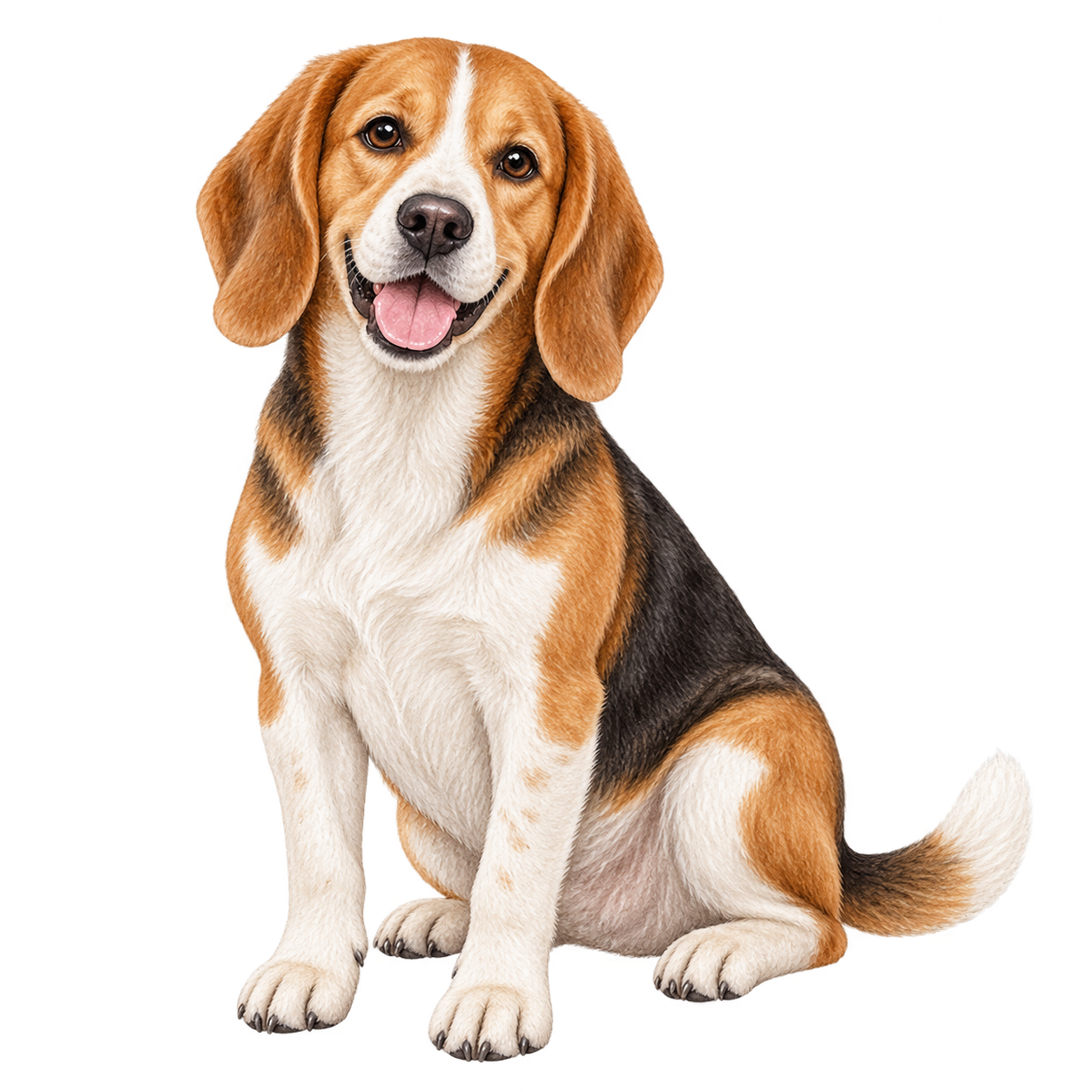
A cheerful, mid-sized pack hound — somewhere between a Beagle and a Foxhound.
Harriers are sturdy, friendly scent hounds bred to hunt hare in packs. They are outgoing, good with children and dogs, and full of stamina, with a voice to match.
- Height
- 19–21 in48–53 cm
- Weight
- 45–65 lb20–29 kg
- Life expectancy
- 12–15 years
- Size
- Medium
- Group
- Hound
- Origin
- England
Coat: Short, dense, hard coat. Colours: Tricolour, Lemon and white, Red and white, Any hound colour.
At a glance
Ratings describe typical dogs of the breed on a 1–5 scale. Individual dogs vary with lines, upbringing and training.
Temperament
Harriers are happy, sociable and tolerant. They generally love people, children and other dogs, and they thrive in company.
They are independent hunters with strong noses and prey drive. Without exercise they become noisy and escape-prone.
Living with a Harrier
Exercise
Needs 90 minutes to two hours of exercise daily, on a lead or in secure areas.
Grooming
Minimal: a weekly brush, weekly ear checks and regular nail trims. Check for ticks and burrs after country walks.
Training
Independent and scent-driven; patient, food-based training works best.
Kids & other pets
Excellent with children and other dogs; unsafe with small pets.
Time alone
Dislikes isolation; a canine companion and plenty of exercise help.
Home fit
Best suited to a house with secure outdoor space; apartment living is hard on this breed and its neighbours.
Is a Harrier right for you?
Take the Breed Fit quiz to see how a Harrier matches your home, schedule and tolerance for shedding, barking and exercise — or find out which breed matches your personality with Dogsona.
Health
With good breeding and care, a Harrier typically lives 12–15 years. These are the conditions most associated with the breed — not a prediction for any individual dog.
Hip dysplasia
Screened parents reduce the risk of joint disease.
Ear infections
Hanging ears need regular cleaning.
Epilepsy
Seizure disorders occasionally occur in the breed.
Ask a breeder for
- Hip evaluation
- Eye examination
Sources: OFA health testing guidance: Harrier; Harrier Club of America. This is general information, not veterinary advice — talk to your vet about your own dog.
Cost to own
After the first year, expect roughly $1,200–$2,500 a year for food, routine vet care, preventives, insurance and supplies (US estimate).
- Pet insurance for a puppy typically runs $30–$60 a month; premiums rise with age and breed risk.
History
Harriers have hunted hare in England since at least the 1200s; the Penistone pack was established in 1260. Hunters followed on foot or horseback.
The AKC recognised the Harrier in 1885, but it remains one of the rarest AKC breeds. Most Harriers still live in hunting packs in Britain and Ireland rather than as pets.
Did you know?
- The Penistone Harrier pack in England was founded in 1260.
- Harriers are among the rarest AKC breeds.
- The name may come from the Norman word “harier”, meaning hound.
Library guides for Harrier owners
Training
Come (Recall)
High chase drive makes a reliable recall essential.
Exercise & Play
Fetch
A fast way to meet a high exercise need.
Exercise & Play
Dog Road Work
Structured conditioning for high-stamina dogs.
Exercise & Play
Tug of War
An energy outlet that also builds impulse control.
Exercise & Play
Dog Walking
Getting daily walks right for a Harrier.
Grooming
Nail Clipping
Every dog needs regular nail care.
Similar breeds
Frequently asked questions
- Are Harriers good family dogs?
- Yes, for active families. They are friendly and good with children.
- Harrier vs Beagle?
- Harriers are larger and more athletic, with similar friendly, scent-driven temperaments.
- Do Harriers bark a lot?
- They bay, especially when bored or on a scent.