Working group
Dogue de Bordeaux
The French mastiff — massive, loving and famously drooly, with a short life.
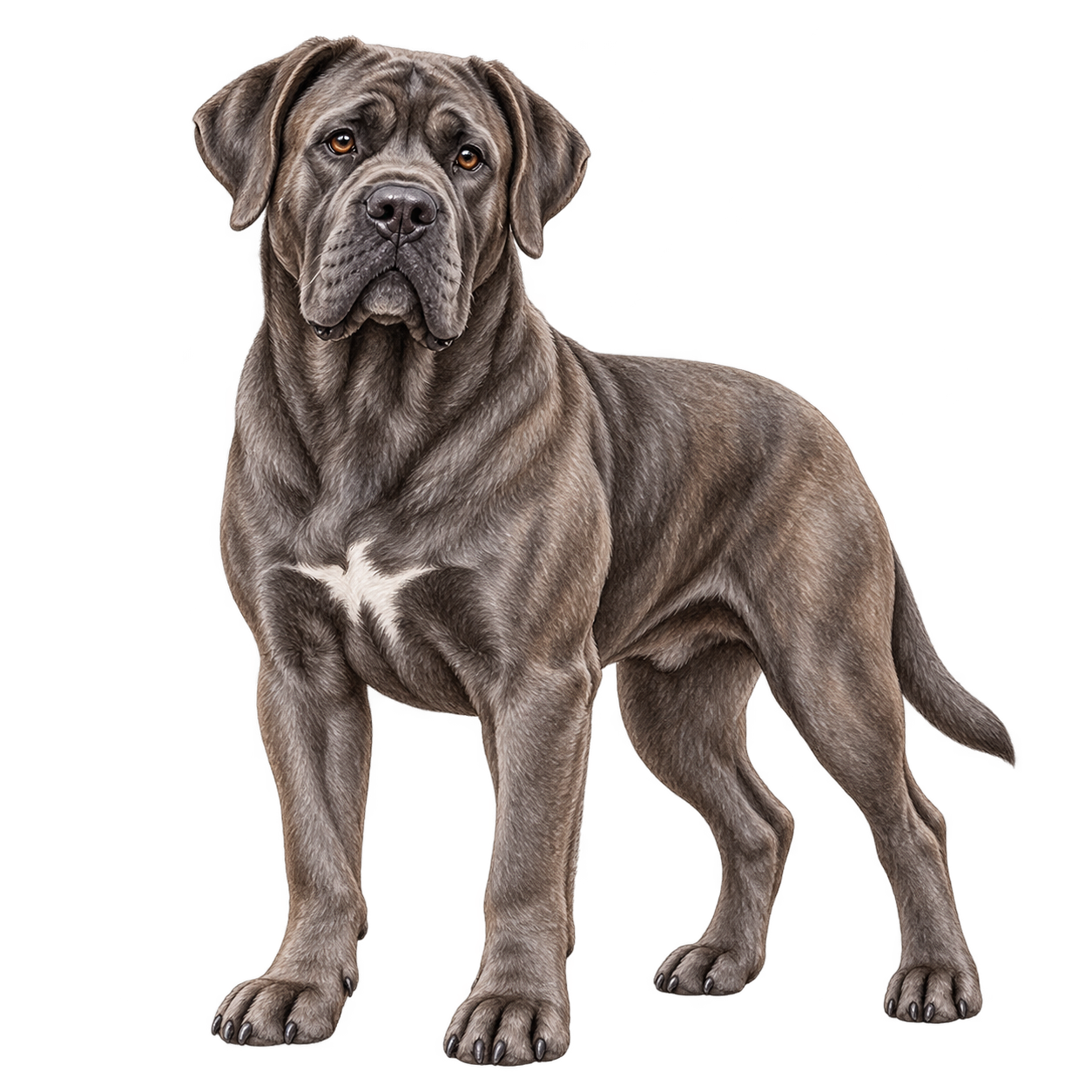
Dogues de Bordeaux are powerful, heavy-headed mastiffs with a devoted, sensitive nature. They are calm and affectionate with family, but stubborn, protective and prone to serious health problems and a short lifespan.
- Height
- 23–27 in58–69 cm
- Weight
- 99–110 lb45–50 kg
- Life expectancy
- 5–8 years
- Size
- Giant
- Group
- Working
- Origin
- France
Coat: Short, fine, soft coat on loose skin. Colours: Fawn, Mahogany, Isabella, With or without a black or brown mask.
At a glance
Ratings describe typical dogs of the breed on a 1–5 scale. Individual dogs vary with lines, upbringing and training.
Temperament
Dogues are loyal, affectionate and often clingy with their families. They are usually calm indoors and enjoy lounging near their people.
They are natural guardians and can be wary of strangers or dominant with other dogs. They are stubborn and sensitive, and training must start early while they are still manageable.
Living with a Dogue de Bordeaux
Exercise
Moderate: two walks a day and some play. Avoid heat, humidity and strenuous exercise, especially in young dogs.
Grooming
Weekly brushing, daily wiping of wrinkles and jowls, and regular nail trims. Expect a lot of drool.
Training
Stubborn but sensitive; short, positive sessions and early socialisation work best. Lead manners are essential.
Kids & other pets
Loving with their own children, though their size and strength need supervision. Often best with opposite-sex dogs.
Time alone
Tolerates moderate alone time but dislikes isolation; needs a cool, comfortable space in warm weather.
Home fit
Best suited to a house with secure outdoor space; apartment living is hard on this breed and its neighbours.
Is a Dogue de Bordeaux right for you?
Take the Breed Fit quiz to see how a Dogue de Bordeaux matches your home, schedule and tolerance for shedding, barking and exercise — or find out which breed matches your personality with Dogsona.
Health
With good breeding and care, a Dogue de Bordeaux typically lives 5–8 years. These are the conditions most associated with the breed — not a prediction for any individual dog.
Heart disease
Aortic stenosis and cardiomyopathy occur; cardiac screening of parents is important.
Gastric dilatation-volvulus (bloat)
A deep-chested giant breed at high risk.
Hip and elbow dysplasia
Screened parents and slow puppy growth reduce the risk.
Cancer
Lymphoma and other cancers contribute to the short average lifespan.
Skin fold dermatitis
Facial wrinkles need regular cleaning to prevent infection.
Ask a breeder for
- Hip and elbow evaluation
- Cardiac examination by a cardiologist
- Eye examination
Sources: OFA CHIC breed requirements: Dogue de Bordeaux; Dogue de Bordeaux Society of America. This is general information, not veterinary advice — talk to your vet about your own dog.
Cost to own
After the first year, expect roughly $2,000–$4,000 a year for food, routine vet care, preventives, insurance and supplies (US estimate).
- Food, medication and anaesthesia are dosed by weight, so every vet visit costs more for a big dog.
- Pet insurance for a puppy typically runs $30–$60 a month; premiums rise with age and breed risk.
History
Mastiff-type dogs have lived in France for centuries, used for guarding, hunting large game and, sadly, fighting. The breed takes its name from the Bordeaux region.
The Dogue nearly disappeared during the French Revolution and again after the World Wars. It gained international fame in the 1989 film “Turner & Hooch” and was recognised by the AKC in 2008.
Did you know?
- Hooch, from the 1989 film “Turner & Hooch”, was a Dogue de Bordeaux.
- The Dogue has one of the largest heads in the dog world relative to its body.
- The breed is also called the French Mastiff.
Library guides for Dogue de Bordeaux owners
Training
Heel and Loose-Leash Walking
A strong Dogue de Bordeaux needs loose-lead manners early.
Grooming
Ear Cleaning
Ear care matters for this coat and ear type.
Exercise & Play
Dog Walking
Getting daily walks right for a Dogue de Bordeaux.
Grooming
Nail Clipping
Every dog needs regular nail care.
New Dog Owners
How to find a reputable dog breeder
What to ask a Dogue de Bordeaux breeder about health screening.
New Dog Owners
The real cost of a puppy: what to budget before you bring one home
Budget for the first year and beyond.
Similar breeds
Frequently asked questions
- How long do Dogues de Bordeaux live?
- Typically only 5–8 years, due to heart disease, cancer and bloat.
- Are Dogues de Bordeaux good family dogs?
- Yes, for owners ready for their size, drool and health costs. They are loving and calm.
- Do Dogues drool?
- Yes, heavily.